Operators setting one room standard
A balanced jar gives the property a straightforward starting point when most rooms will carry the same coffee. The decision still needs to account for guests who want decaf or a stronger flavour.


For a standard hotel room tray, start with a coffee described as balanced, such as NESCAFÉ Gold Blend or Kenco Smooth, rather than assuming guests want a stronger roast. Add a clearly identified decaffeinated jar if the property wants to offer a caffeine-avoidance option, and reserve a more intense coffee for a deliberate choice. Plan replenishment around the portions actually served: NESCAFÉ estimates about 111 mugs from a 200g jar using its 1.8g serving guide, but that figure will not necessarily match a hotel’s dosing.
A balanced jar gives the property a straightforward starting point when most rooms will carry the same coffee. The decision still needs to account for guests who want decaf or a stronger flavour.
A separate, clearly identified decaffeinated jar lets guests choose it alongside the standard coffee, including during evening room use. It also becomes another product for staff to replenish.
Teams choosing jar sizes or refills need a consistent way to portion coffee and keep the correct product, storage and guest-facing information with any jar they replenish.
Decide what belongs on the standard tray, whether to offer a second coffee, and how the chosen jars will be portioned and replenished.
| Priority | What to check | Your needs |
|---|---|---|
| Standard flavour | Read the maker’s description of the exact jar. NESCAFÉ describes Gold Blend as smooth and rich; Kenco describes Smooth as balanced and rates it intensity 7 within its own range. | I need one familiar-style coffee on the standard tray without making a strong roast the default. Brand flavour descriptions are a starting point, not a guarantee of every guest’s preference. |
| Decaf choice | Check that the exact jar is labelled decaffeinated and can be distinguished from the standard coffee. Do not treat a decaf label as a promise of zero caffeine. | Guests avoiding caffeine should be able to identify a separate option, particularly if room refreshments are used later in the day. |
| Jar capacity | Set a portioning method and estimate cups from occupied-room use. NESCAFÉ’s guide uses 1.8g per 200ml mug and estimates about 111 mugs from a 200g jar; other portions will change the yield. | I want a jar size and replenishment schedule that fit room turnover, rather than ordering by jar weight alone. |
| Refill handling | Check the refill’s product identity and storage instructions, and retain the information needed for guest service. Keep jars clearly labelled when transferring coffee. | If staff refill retained jars, they need to avoid mixing products or leaving guests unable to tell which coffee they have. |
Kenco positions Rich, rated intensity 9 on its own scale, for people who prefer a robust cup. That is a different intended flavour from its Smooth jar, rated intensity 7.
Use a stronger jar when a bolder coffee is part of the intended room offer; consider a balanced description when selecting one standard jar.
NESCAFÉ’s estimate of about 111 mugs from a 200g jar assumes its 1.8g serving. A different portioning method changes how quickly an open jar is used.
Record cups used per occupied room and agree a staff dosing method before setting jar size and replenishment frequency.
Portions that differ from the planning assumption can leave opened coffee unused or require more frequent refills.
A transferred product can be misidentified if staff no longer have its original label and storage information. The Food Standards Agency’s food-business guidance also calls for allergen information and effective allergen management where relevant.
Keep the original pack or a controlled record for the exact product, and make sure the retained jar is identified correctly before it goes into a room.
A product page identifies a jar but cannot assure a hotel of supply for future room replenishment.
Check delivery availability for the property before standardising a jar, and identify an acceptable alternative with the intended flavour and caffeine role.
These product-line descriptions can help narrow a room-tray specification; inclusion here does not mean every named jar appears in the Joybuy selection below.
Its UK range includes Gold Blend and decaffeinated instant coffee. NESCAFÉ lists Gold Blend in 95g and 190g jars.
Kenco’s jar range includes Smooth, Rich and Decaf, giving a hotel distinct standard, stronger and decaffeinated options to consider.
UK retailer listings identify Pure Gold as a medium roast and Pure Indulgence as a dark-roast instant coffee.
Sainsbury’s lists Carte Noire Classique as freeze-dried instant coffee in a 100g jar.
Tesco provides an own-label route alongside its national-brand coffee listings, including Tesco Gold Instant Coffee 200g.
Sainsbury’s listings provide pack and product descriptions for Douwe Egberts and Carte Noire jars.
These jars cover a standard balanced-style coffee, separate decaffeinated choices and a more intense option for hotel room trays. Match pack size and flavour role to the property’s service plan.
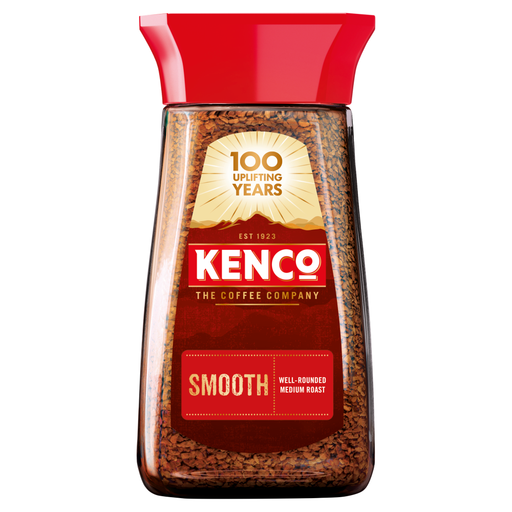 No image available
A 200g option for a standard room tray. Kenco describes Smooth as balanced and rates it intensity 7 within its own range; use the hotel’s portions to plan how often the jar needs replacing.
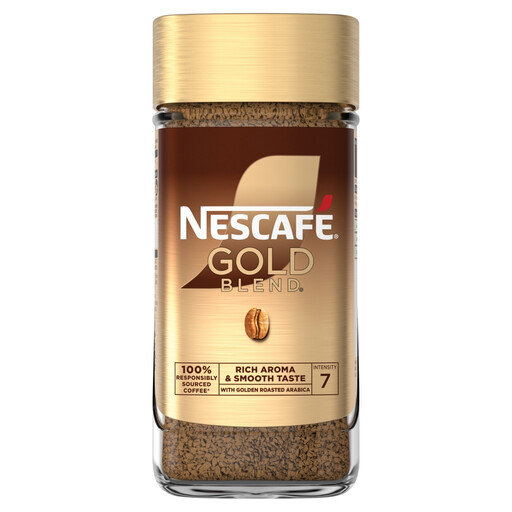 No image available
A 190g standard-tray candidate described by NESCAFÉ as smooth and rich. Check the exact pack’s ingredients and product information before ordering: the supplied listing descriptions conflict on composition.
 No image available
A 100g decaffeinated choice to identify separately from the standard room coffee. Do not describe decaf as caffeine-free; check the exact pack if guests need precise caffeine information.
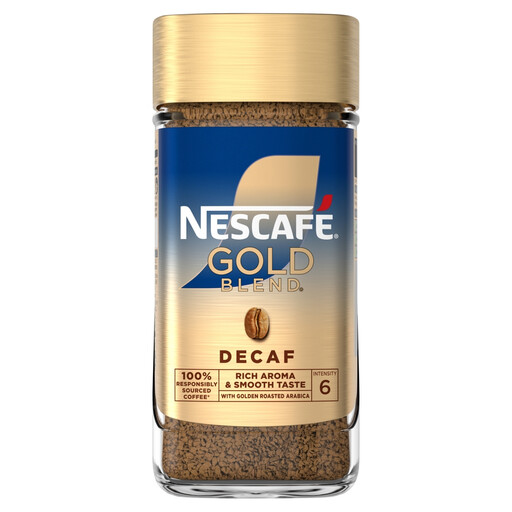 No image available
A 190g decaffeinated option for a separate room-tray choice. Keep it clearly distinguished from caffeinated Gold Blend and plan replenishment using the portions served at the property.
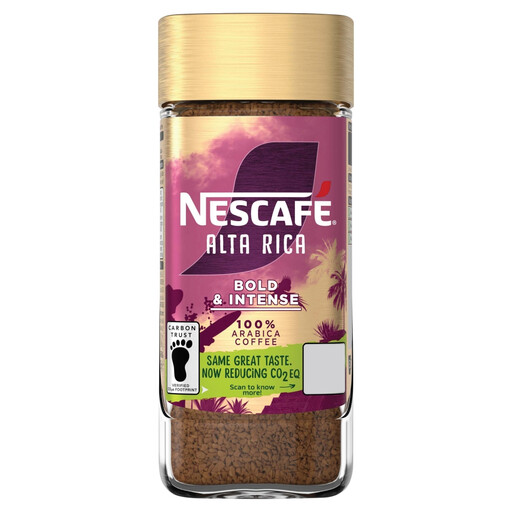 No image available
A 95g jar to consider when the hotel intends to offer a more intense coffee rather than relying on one neutral-style standard. Check the exact pack and expected room use before setting its replenishment schedule.
NESCAFÉ estimates about 111 mugs from a 200g jar when each 200ml mug uses its 1.8g serving. Treat that as a brand-specific planning example, then adjust the calculation for the hotel’s portions and actual room use.
A separate decaffeinated jar makes sense when the property wants to offer guests a caffeine-avoidance choice, including for later-day use. Label it distinctly from the standard coffee, and do not assume that decaffeinated means caffeine-free.
Refilling can be a practical procurement approach if staff keep the product correctly identified and follow its storage instructions. Retain the exact product and guest-facing information so a transferred coffee is not mistaken for another jar.
Food businesses need to provide allergen information and manage allergens effectively, according to Food Standards Agency guidance and Food Standards Scotland. Check the exact coffee and any accompaniments, such as milk, creamers or biscuits, rather than assuming the coffee jar covers the whole tray.
Not automatically: a stronger profile is a flavour choice, not a general measure of suitability. Kenco positions Rich at intensity 9 for people seeking a robust cup and Smooth at intensity 7 as balanced; those are ratings within Kenco’s range, not a universal cross-brand scale.