Airport café and kiosk operators
Choose a product staff can portion consistently during busy periods, with a pack size that fits replenishment plans and the site’s storage and glass-handling procedures.


For an airport food counter, choose a regular instant coffee with clear preparation instructions, then match the pack size to expected turnover: a larger jar needs dependable demand, while a 100g jar may be easier to manage for a quieter counter or second menu option. Before placing any glass jar at the beverage station, check the venue’s brittle-material controls; Food Standards Agency MyHACCP guidance advises keeping glass out of work areas where possible.
Choose a product staff can portion consistently during busy periods, with a pack size that fits replenishment plans and the site’s storage and glass-handling procedures.
A smaller pack may suit lower demand or a second coffee option. If flavour is part of the menu decision, compare the descriptions of the exact products being considered rather than relying on jar size alone.
A separately labelled decaffeinated product gives staff a distinct option to prepare and store apart from regular coffee.
Start with the serving instructions and expected number of cups, then check where the pack can be stored and used.
| Priority | What to check | Your needs |
|---|---|---|
| Repeatable preparation | Check the selected pack’s coffee measure and water instructions. NESCAFÉ UK & IE specifies approximately 1.8g with 200ml hot water for Original; Tesco gives 1–2 teaspoons per cup for Gold. | I want staff on different shifts to make the same menu drink without assuming that instructions for one coffee apply to another. |
| Pack size | Compare the stated weight with expected turnover and storage space. NESCAFÉ UK & IE lists Original in 100g, 190g and 300g jars; Sainsbury’s lists approximately 55 cups from Carte Noire Classique 100g at its suggested 1.8g serving. | At a busy counter, I may need fewer replenishment interruptions. For a quieter lounge or second coffee option, I would rather match the opened pack to demand. |
| Container handling | Confirm the delivered container material and the venue’s permitted storage and preparation locations. Food Standards Agency MyHACCP guidance advises keeping glass and other brittle materials out of work areas where possible. | I need a way to prepare coffee that fits our site’s brittle-material procedure, whether that permits a jar at the station or requires controlled storage elsewhere. |
| Decaf choice | Check that the product is explicitly labelled decaffeinated, and set up distinct labelling and storage for service. NESCAFÉ UK & IE describes Original Decaf as coffee with most caffeine removed. | If the menu includes decaf, I want staff to distinguish it from the regular coffee when taking and preparing orders. |
Food Standards Agency MyHACCP guidance advises keeping glass and other brittle materials out of work areas where possible. A domestic-style jar may therefore need a different storage or handling arrangement at a catering site.
Check the venue’s glass-management procedure before ordering jars in volume. If jars are permitted, establish where they are kept and what staff must do if one breaks.
A breakage can interrupt service while the area is cleaned and affected product is assessed.
A large jar needs enough demand to justify opening it, while a small jar may need frequent replacement during busy service.
Estimate cups using the chosen product’s serving instruction and compare that figure with expected demand. Sainsbury’s lists approximately 55 cups for Carte Noire Classique 100g at its suggested 1.8g serving.
A regular coffee does not fulfil an order for decaf. NESCAFÉ UK & IE describes its Original Decaf separately from Original and says most of its caffeine has been removed.
If decaf is on the menu, use an explicitly labelled product and make the distinction clear in storage, staff instructions and customer-facing descriptions.
The pack that arrives determines the ingredients, storage instructions and container staff will actually handle. An unsuitable substitution matters when the venue has an approved product specification.
On receipt, check the product name, pack size, ingredients, allergen information, best-before date, storage directions and container condition against that specification.
These product-line references help distinguish preparation and pack options; they do not establish which products a particular supplier can deliver.
NESCAFÉ UK & IE lists Original and Original Decaf in 100g, 190g and 300g sizes.
Kenco describes Smooth as a medium-roast blend of freeze-dried instant coffee and roast-and-ground coffee.
Joybuy UK lists Douwe Egberts Pure Gold Medium Roast 190g in its instant-coffee category.
Sainsbury’s describes Classique 100g as freeze-dried instant coffee in a jar.
Tesco lists its Gold 200g as a freeze-dried coffee made from Arabica and Robusta beans.
Sainsbury’s lists an own-label Gold Roast 200g instant coffee as well as branded instant-coffee products.
These Joybuy products cover regular and decaffeinated instant coffee for a counter or lounge. Match each pack to turnover, its own preparation instructions and the venue’s container-handling rules.
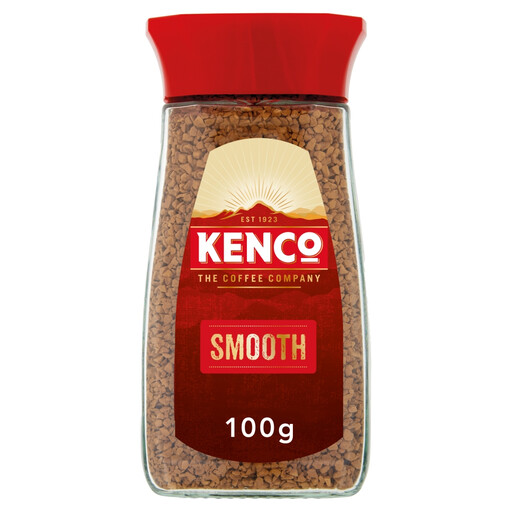 No image available
This 100g instant coffee is an option to assess for a lower-volume counter or second coffee line. Check the delivered pack’s preparation directions and container material before setting service and storage procedures.
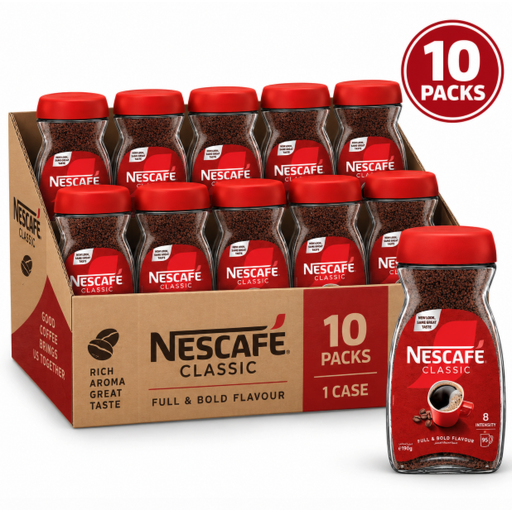 No image available
Ten 190g jars suit consideration where regular-coffee demand and storage space justify that quantity. Confirm the delivered pack’s serving instructions and the venue’s glass-handling procedure before putting jars into service.
 No image available
This 300g decaffeinated coffee is a separate menu option to consider where decaf demand supports the pack size. Keep it clearly distinguished from regular coffee, and check its preparation directions and packaging before use.
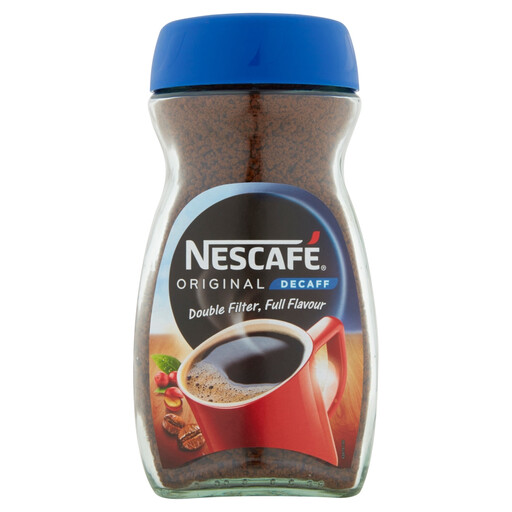 No image available
This 200g decaffeinated option has a smaller stated pack weight than the 300g decaf product above. Check the current pack’s serving instructions and container against the site’s procedures, and label the decaf service position clearly.
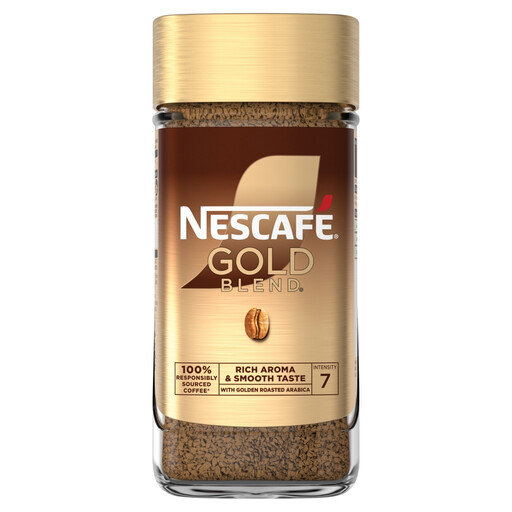 No image available
This 190g regular instant coffee is an option to assess against counter turnover. Check the delivered pack’s ingredients before relying on a composition specification, and confirm its serving directions and container-handling requirements.
Check the venue’s glass-management procedure before using one at the beverage station. Food Standards Agency MyHACCP guidance advises keeping glass and other brittle materials out of work areas where possible, so permitted storage and handling arrangements matter.
Use the preparation directions for the exact product and give staff a consistent measuring method. NESCAFÉ UK & IE specifies approximately 1.8g with 200ml hot water for Original, while Tesco specifies 1–2 teaspoons per cup for Gold; those instructions should not be treated as interchangeable.
Consider a smaller jar when the coffee is a second menu option or demand is lower, then compare its stated servings with expected turnover. Sainsbury’s estimates approximately 55 cups from Carte Noire Classique 100g using its suggested 1.8g serving; a busy counter may need to replenish that size more often.
Choose a product explicitly labelled decaffeinated and distinguish it from regular coffee in storage, preparation and menu wording. NESCAFÉ UK & IE says most caffeine is removed from Original Decaf; decaffeinated does not mean the product should be described as caffeine-free.
Follow the delivered pack’s storage instructions and inspect its label and container against the approved product specification. The ASDA listing for Kenco Smooth 190g specifies a dark, dry place; storage directions for another product or pack should be checked separately.