First-time instant-coffee buyers
If you are stocking a kitchen and do not yet know which flavour you prefer, compare the jar weight and the product’s own flavour description. A smaller jar limits how much you commit to before trying it.


If you have not settled on a flavour, a 100g jar lets you try less coffee than a 200g or 300g jar. A larger jar makes more sense when you expect to use it regularly; either way, compare the exact product’s flavour description and caffeine information before choosing.
If you are stocking a kitchen and do not yet know which flavour you prefer, compare the jar weight and the product’s own flavour description. A smaller jar limits how much you commit to before trying it.
If you track caffeine from coffee and other foods or drinks, check the exact jar rather than relying on its brand name. Pregnancy calls for particular attention: the NHS advises no more than 200mg of caffeine a day during pregnancy.
Start with how much you expect to use, then compare flavour descriptions, caffeine information and preparation instructions on the jars you are considering.
| Priority | What to check | Your needs |
|---|---|---|
| Flavour direction | Read the exact jar’s roast and intensity wording. Sainsbury’s describes Kenco Smooth 200g as balanced and rounded, with intensity 7; Tesco describes Gold 200g as a Robusta and Arabica blend with a rich, smooth profile. These are product descriptions, not taste-test results. | I am unsure which flavour I will enjoy, so the stated profile gives me a starting point rather than a promise about how the coffee will taste. |
| Jar size | Compare weights and the suggested serving. Sainsbury’s lists approximately 55 cups from each Carte Noire 100g jar at a suggested 1.8g per cup; using more per cup changes that figure. | A smaller jar appeals if I am trying instant coffee for the first time. If I already know I will drink it regularly, I can consider a larger one. |
| Caffeine | Check whether the exact product is regular or decaffeinated and read its serving information. NESCAFÉ UK & IE states 50mg to 90mg of caffeine per 2g serving for its Original and Gold instant coffees. | I want to account for coffee alongside other caffeine sources. During pregnancy, the NHS advises no more than 200mg of caffeine a day and estimates 100mg in a cup of instant coffee. |
| Preparation and storage | Follow the jar’s own instructions. Tesco tells shoppers to use 1–2 teaspoons of Gold instant coffee per cup with hot, not boiling, water and to store the jar in a cool, dark place. | I want to know how to make a cup and where I can keep the opened jar in my kitchen. |
Jars can differ in stated flavour, serving guidance and size, even when the brand is familiar. A brand name does not tell you whether a particular jar will suit your preferences.
Compare the wording and weight on the exact product. If you are undecided about flavour, consider trying a smaller jar first.
Coffee is only one possible contribution to daily caffeine intake. The NHS advises no more than 200mg a day during pregnancy and estimates 100mg in a cup of instant coffee.
Check the coffee’s serving information and account for caffeine from other foods and drinks when it matters to your choice.
A product page can remain visible when its item is out of stock.
Check live availability, jar weight and the exact variant before adding it to your first shop.
NESCAFÉ Original and Gold are regular instant-coffee lines for shoppers comparing caffeine information as well as flavour.
Sainsbury’s describes Kenco Smooth 200g as balanced and rounded, with intensity 7.
Tesco describes its Gold Instant Coffee 200G as a freeze-dried Robusta and Arabica blend with a rich, smooth profile.
Sainsbury’s lists 100g Classique and Intense jars with different stated flavour directions.
These Joybuy options include a 100g Kenco Smooth jar and two larger NESCAFÉ decaffeinated jars. Compare size and whether you want decaffeinated coffee before choosing.
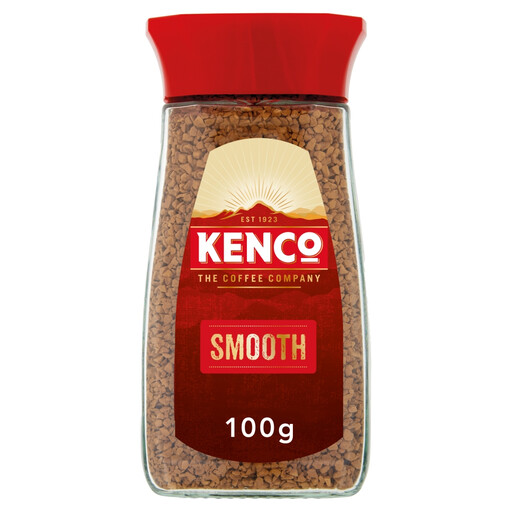 No image available
The 100g jar is a smaller amount to try if you are still deciding whether Kenco Smooth suits you. Check the label’s caffeine information if you need to track your intake.
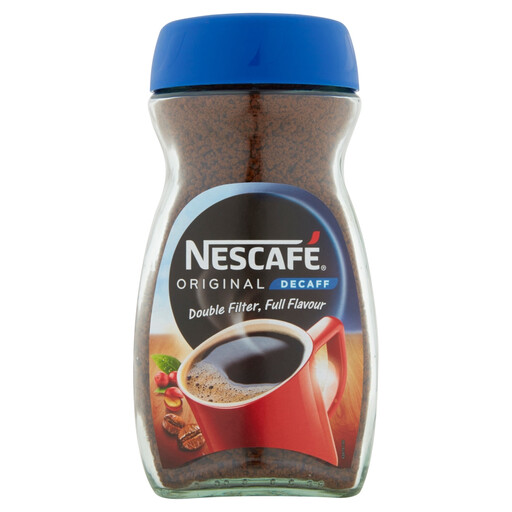 No image available
This 200g decaffeinated jar is an option if you expect to use more than a small trial jar. Check its label if you need precise caffeine information.
 No image available
This 300g decaffeinated jar means buying more coffee before you have tried it, so consider how regularly you expect to use it. Check the exact label if you need precise caffeine information.
A 100g jar limits the amount you buy while testing a flavour; consider 200g if you already expect to use it regularly and have space to store it. As a serving reference, Sainsbury’s lists approximately 55 cups from its Carte Noire 100g jars when using 1.8g per cup.
Follow the instructions on your jar. Tesco’s directions for Gold Instant Coffee 200G say to use 1–2 teaspoons per cup and add hot, not boiling, water; you can add milk if you prefer.
Follow the storage directions on the exact product. Tesco says to keep its Gold Instant Coffee 200G in a cool, dark place, while Sainsbury’s listing for Kenco Smooth 200g specifies a dark, dry place.
The NHS advises no more than 200mg of caffeine a day during pregnancy and estimates 100mg in a cup of instant coffee. Account for caffeine from other foods and drinks as well as coffee; ask your maternity team about individual circumstances.