What should you check first?
Choose between regular and decaf before comparing flavour and jar size. A smaller jar is a pack-size choice within either route, not a separate caffeine category.
Decaf instant coffee
Consider it when: you want to reduce caffeine while keeping an instant-coffee jar at home.
Bear in mind: decaf does not establish zero caffeine, so check the jar and count other caffeine sources if you are tracking your daily total.
Regular instant coffee
Consider it when: caffeine reduction is not your deciding factor and flavour is the more useful way to choose.
Bear in mind: flavour descriptions do not tell you how much caffeine a serving contains.
| Priority |
What to check |
Your needs |
| Caffeine |
Check whether the jar is regular or decaf, its serving guidance and any stated caffeine per serving. The NHS recommends no more than 200mg of caffeine a day during pregnancy and breastfeeding and estimates 100mg in a cup of instant coffee; amounts can vary. |
I want to account for coffee alongside tea, cola, chocolate and other caffeine sources when the NHS daily guidance applies to me. |
| Preparation |
Check the directions for the amount of coffee and water. The Kenco Smooth and Carte Noire Classique directions describe preparation with hot water. |
A drink I can make with hot water suits a short break when I do not want to use brewing equipment. |
| Flavour |
Read flavour descriptions as the brand’s positioning, not a caffeine scale. Kenco describes Smooth as rounded and not overly bitter; its intensity rating of 7 is a Kenco product description. |
If I prefer a less assertive taste, I want to compare the stated flavour profile without assuming that “smooth” means less caffeine. |
| Jar size |
Compare net weight and suggested serving size. Sainsbury’s estimates about 55 cups from a 100g Carte Noire Classique jar using its suggested 1.8g serving; check current availability for any jar you choose. |
For an unfamiliar blend, I may prefer a smaller jar. For repeated use, I want to know how the stated serving size relates to the pack. |
Instant coffee jars on Joybuy
These jars include decaf choices for managing caffeine and regular choices for households selecting by flavour or pack size. Compare each exact jar’s label and serving directions before choosing.
 No image available
Kenco Decaff Instant Coffee 100g
A 100g decaf jar to consider if you want a smaller pack for hot-water preparation. The product directions specify one to two teaspoons per cup; check the label for caffeine information if you are tracking your intake.
Joybuy
 No image available
NESCAFÉ Gold Blend Decaf Coffee 190g
This 190g decaffeinated soluble-coffee jar is a larger decaf option than the 100g Kenco jar. Its directions describe adding hot water and stirring; check the jar for serving and caffeine information.
Joybuy
 No image available
NESCAFÉ Original Decaff Coffee 300g
The 300g format is worth comparing if your household expects repeated use of a decaf jar. Nescafé says most caffeine is removed from Original Decaf; check the jar’s serving information rather than treating decaf as caffeine-free.
Joybuy
 No image available
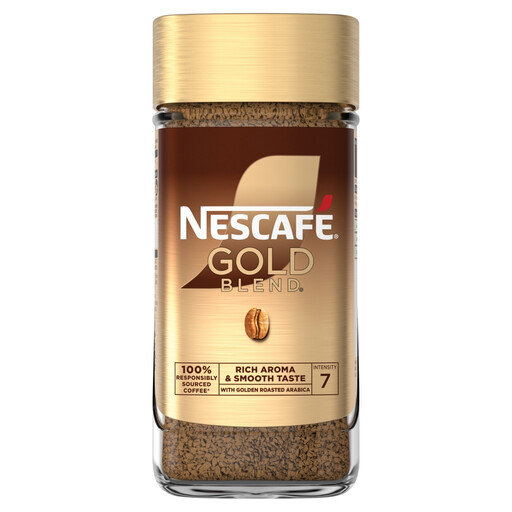
NESCAFÉ Gold Blend Coffee 190g
This 190g regular soluble-coffee jar is for a household member choosing regular rather than decaf coffee. Nescafé states that its Gold instant coffees contain 50–90mg of caffeine per 2g serving; that brand range is not a measurement of this individual jar. Check the pack for its exact composition and directions.
Joybuy
 No image available
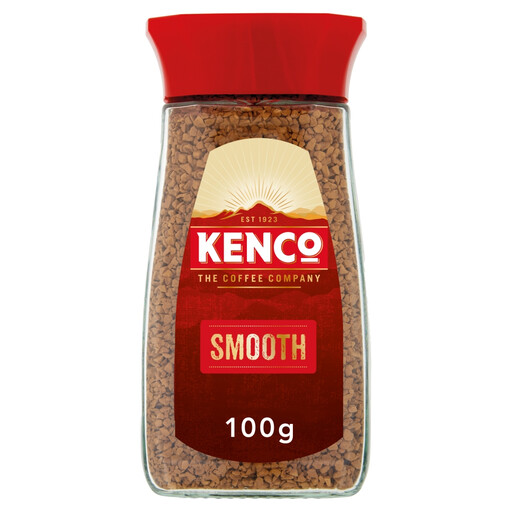
Kenco Smooth Coffee 100g
A 100g regular instant-coffee jar for someone considering Kenco’s smooth flavour description and a smaller pack. It contains caffeine and is prepared with hot water. Check the pack for its exact composition and caffeine information if those details affect your choice.
Joybuy
Common questions
Can I drink instant coffee during pregnancy?
The NHS says to have no more than 200mg of caffeine a day during pregnancy and estimates about 100mg in a cup of instant coffee. Amounts can vary, so account for the coffee you make and other caffeine sources, including tea, cola and chocolate.
Is decaf worth considering while breastfeeding?
Decaf is a relevant choice if you want to reduce caffeine from coffee. The NHS recommends no more than 200mg of caffeine a day while breastfeeding, and Nescafé describes Original Decaf as having most caffeine removed rather than stating that it is caffeine-free.
Does an “intense” coffee contain more caffeine?
“Intense” is not a universal measure of caffeine. Check the product’s caffeine information and serving size instead; Nescafé states a range of 50–90mg per 2g serving for its regular Original and Gold instant coffees, not for every brand or variant.
How do I compare a small jar with a larger one?
Compare pack weight alongside each jar’s suggested serving, then consider how often your household will use it. Sainsbury’s estimates about 55 cups from a 100g Carte Noire Classique jar at a suggested 1.8g per cup; another product’s serving directions may differ.
Do instant-coffee jars require a coffee machine?
No coffee machine is needed for the instant coffees described here, but you do need hot water. Follow the individual jar’s directions for the amount of coffee and how to prepare it.


