Students making occasional cups
A small jar can stay in accommodation or a shared kitchen without taking up the space of a larger supply. Check that you will have hot water and a mug where you plan to make coffee.


For occasional cups between lectures, a 95g–100g jar is a practical starting point if you have somewhere to keep it and access to a mug and hot water. A larger jar makes more sense for regular use or sharing; choose plain coffee if you want to add your own milk and sugar, or an explicitly labelled decaf product if that is your preference.
An instant coffee jar works for a lecture-lunch cup when you can store it and have a mug and hot water available.
A small jar can stay in accommodation or a shared kitchen without taking up the space of a larger supply. Check that you will have hot water and a mug where you plan to make coffee.
A plain instant coffee jar leaves those additions to you. A pre-mixed 3-in-1 sachet is a different format: Nescafé says its Original 3-in-1 contains coffee, milk and sugar.
Look for an explicitly labelled decaf jar rather than selecting a standard instant coffee by its size or flavour description. Check the exact pack if the caffeine information matters to your choice.
Start with where you will make the coffee and how often you will use the jar. Then compare size, flavour description and whether you want plain or decaf coffee.
| Priority | What to check | Your needs |
|---|---|---|
| Preparation | Check that you can access hot water and a mug. For Nescafé Original, a Sainsbury's listing gives 1 teaspoon (1.8g) and 200ml hot water as its mug preparation. | I want to make a cup between lectures without bringing a coffee machine, so somewhere to prepare it matters as much as the jar. |
| Jar size | Compare the stated weight with how often you expect to use it and where it will be stored. Nescafé lists Original jars in 100g, 190g and 300g sizes; Kenco lists Smooth in 95g and 100g sizes. | For occasional cups and limited cupboard space, I would start with a smaller jar. If several people will use it regularly, a larger one may be more practical. |
| Flavour | Read the description for the exact coffee rather than treating jar size as a flavour guide. Kenco describes Smooth as rounded and balanced; Nescafé describes Original as fuller and bolder. These are the brands' descriptions, not taste-test results. | I would use those descriptions to narrow the choice, knowing that they cannot predict which cup I will personally prefer. |
| Decaf | Check that the exact jar is labelled decaf and read its serving information. Nescafé lists Original Decaf separately from Original; Kenco also has a separate Decaf range. | If I want decaf, I need the labelled version rather than assuming a standard jar has the same caffeine content. |
| Additions and format | Decide whether you want plain coffee or a pre-mixed serving. Nescafé says its Original 3-in-1 sachet contains milk and sugar and gives 8.4g sugars per mug when prepared with one sachet and 200ml water. | A plain jar suits me if I want to choose my own additions; a single sachet is a different option when carrying one serving is more important. |
| Refills | Check that you have a suitable jar before buying a refill. Nescafé offers an Original paper refill pack and says it can go in home kerbside paper recycling; check local collection arrangements. | If I already keep a jar in the kitchen, a refill may fit my routine. Otherwise, I need a container for the coffee. |
Nescafé Original 3-in-1 includes milk and sugar. Its stated preparation contains 8.4g sugars per mug, so it does not offer the same control over additions as a plain jar.
Choose plain instant coffee if you want to add milk or sugar yourself; read the sachet ingredients if you prefer a pre-mixed serving.
Nescafé Original is listed in sizes from 100g to 300g. A larger jar takes more storage space, which may matter in accommodation or a shared kitchen.
Match the size to expected use: consider a 95g–100g jar for occasional cups and a larger jar for regular use or sharing.
Nescafé states that Original and Gold contain 50mg–90mg caffeine per 2g serve. That range is specific to those coffees, not a figure for every instant coffee.
If you want decaf, select a jar explicitly labelled as such and check its own pack information.
These brand and retailer references help distinguish jar styles and formats; they do not imply that every product in a range is among the Joybuy options below.
Nescafé lists Original and Original Decaf jars in 100g, 190g and 300g sizes.
Kenco lists Smooth in 95g and 100g jars and Decaf in 95g and 190g jars.
Tesco lists Douwe Egberts Pure Gold and Pure Decaffeinated instant coffees in 190g formats.
A Tesco listing identifies a 150g Carte Noire instant coffee refill.
Tesco lists Finest Americano Barista Style and Intenso Barista Style instant coffees in 100g formats.
Sainsbury's provides a retailer listing for a 100g Nescafé Original jar.
These Joybuy options cover smaller Smooth and decaf coffees for occasional cups, alongside larger Smooth and decaf sizes to consider for regular use or sharing. Check the exact pack details when choosing between variants.
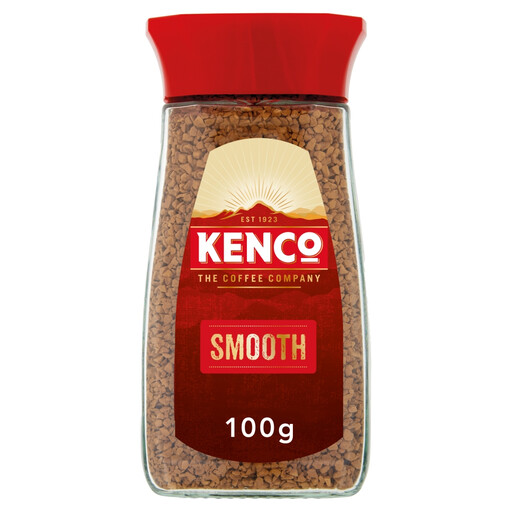 No image available
The 100g size is an option for a smaller kitchen supply and occasional cups. Kenco describes its Smooth coffee as rounded and balanced; taste remains a personal choice. Choose a separately labelled decaf coffee if that is what you want.
 No image available
This 100g instant coffee is labelled decaf and offers a smaller size for occasional cups. If a particular remaining caffeine amount matters, check the information on the exact pack.
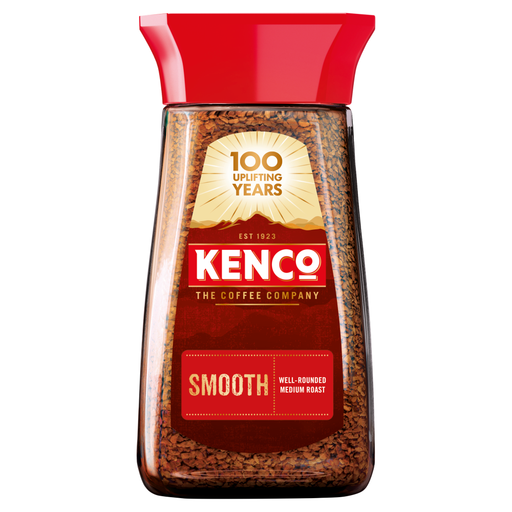 No image available
The 200g size is worth considering for more regular use or sharing, but it takes more storage space than a 100g option. Kenco's Smooth description offers a flavour direction, not a guarantee of personal preference.
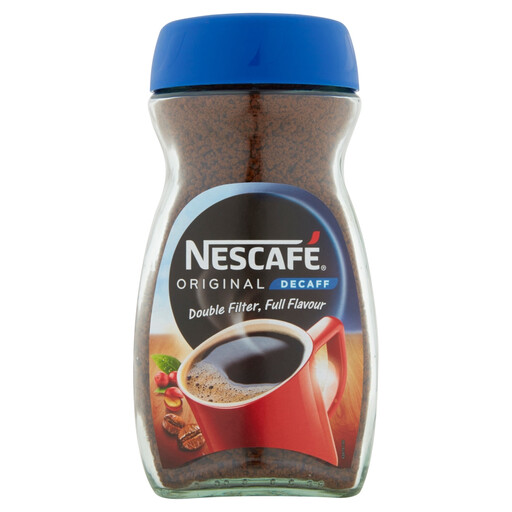 No image available
This 200g decaf coffee is a larger supply than the small-jar options for occasional cups. Check your storage space and the exact pack label, including its serving and caffeine information, before choosing it.
 No image available
This 300g decaf option is a larger supply to consider for regular use or sharing, rather than a compact jar for occasional lecture-lunch cups. Check the exact pack label if its serving or caffeine details affect your choice.
Follow the instructions on your chosen pack. For Nescafé Original, Sainsbury's gives 1 teaspoon (1.8g) with 200ml hot water as its basis for one mug; that serving is specific to the listed product.
No. Nescafé Original 3-in-1 sachets contain coffee, milk and sugar, whereas a plain coffee jar lets you choose any additions yourself. Nescafé states 8.4g sugars per mug for one 3-in-1 sachet prepared with 200ml water.
Choose a coffee explicitly labelled decaf and check its exact pack information. Nescafé lists Original Decaf separately from Original, and Kenco has a separate Decaf product; neither label should be assumed from a standard jar's flavour or size.
A refill is practical if you already have a suitable container for the coffee. Nescafé offers an Original paper refill and says the pack can be recycled through home kerbside paper collection; check the arrangements where you live.
Yes. The format can change what is in the cup: Nescafé Original 3-in-1 contains milk and sugar, while Nescafé describes Original Decaf jars as containing coffee only. Read the label on the particular product you intend to use.