Managers with a kettle-only coffee point
If staff make their own drinks from hot water at lunch, a soluble instant jar fits the equipment already in place. Whole beans require a separate way to grind and brew them.


Choose a soluble instant-coffee jar for a workplace lunch point that has hot water but no grinder or brewer. Whole beans are an option when the canteen can grind, brew and clean up during service; pack size, storage and the choice of coffee then matter within either format.
If staff make their own drinks from hot water at lunch, a soluble instant jar fits the equipment already in place. Whole beans require a separate way to grind and brew them.
A smaller tin can sit alongside a communal jar when staff want another flavour or preparation option. Compare the stated coffee type, preparation instructions and pack weight before deciding how much to keep on hand.
Whole beans are worth considering when the site can grind and brew coffee, clean the equipment and replenish it through lunch service. Taylors of Harrogate and Union offer bean or brew-method-dependent products, not coffee that dissolves in hot water.
Choose when: staff need to prepare coffee at a shared hot-water point without grinding or brewing.
Trade-off: the service is simple, but a jar does not provide freshly ground coffee.
Choose when: a suitable grinder and brewer are available and the canteen can manage preparation during lunch.
Trade-off: beans add grinding, brewing and cleaning steps; they cannot be used as a soluble jar at a hot-water-only point.
| Priority | What to check | Your needs |
|---|---|---|
| Preparation | Check whether the coffee is soluble or requires grinding and brewing. Confirm which equipment is available during lunch service. | Staff need to make a cup from the hot-water point without waiting for a separate brewing process. |
| Pack size | Compare net weights and how often packs would need replacing. The referenced instant formats include 95 g, 200 g and 300 g packs. | A shared jar may be used throughout lunch, so I want a pack size that fits the canteen’s replenishment routine. |
| Coffee choice | Read the named product’s coffee type and preparation guidance rather than assuming similar-looking tins contain the same coffee. Check whether a second option needs its own serving space. | I want to offer another choice without changing a hot-water-only setup. |
| Storage | Check the pack’s storage instructions, date marking and any directions for use after opening. | An opened communal pack needs a place where staff can store and access it as its label directs. |
| Drink service | Review hot-water equipment, cup handling and spill arrangements. If additions such as milk or syrups are offered, keep their ingredient and allergen information accessible. | The coffee point needs to work safely during a busy lunch, including when staff add other ingredients. |
Whole beans do not dissolve in hot water. Union recommends cafetière or filter brewing for its House Roast, while Taylors sells Rich Italian as beans.
Check the equipment at the actual coffee point before ordering. Use a soluble product if staff have only a kettle, boiler or hot-water dispenser.
A bean service also needs time for preparation and equipment cleaning.
A 95 g tin and a 300 g pack need different replenishment plans, particularly when several people use the coffee point at lunch.
Compare net weights and expected use before deciding which pack will serve as the communal supply and which is a secondary choice.
Milk, dairy alternatives and syrups can introduce allergens. Food Standards Agency guidance for food businesses addresses allergen information for both prepacked and non-prepacked food and drink.
Keep information for each addition available to customers and review it when an ingredient or product changes.
Hot water, cups and spills need attention regardless of which coffee is served. The Health and Safety Executive provides risk guidance for catering and hospitality settings.
Assess the site’s dispenser or kettle, its position, cup handling, cleaning and access arrangements before setting up self-service.
These examples show how preparation method and pack format differ; they do not imply that every product from a brand uses the same format.
Prontissimo Bilanciato is a 300 g fully soluble coffee in Lavazza’s business range.
Classico is a 95 g instant-coffee tin that illy describes as suitable for hot or cold preparation.
Rich Italian is a whole-bean option listed in 200 g, 454 g and 1 kg formats.
House Roast offers a brewing route, with 200 g and 1 kg whole-bean options; Union recommends cafetière brewing.
Italian Style Instant Coffee is a 200 g freeze-dried jar for a retail-sourced instant-coffee point.
Italian Style Instant Coffee appears as a 100 g product in Waitrose’s instant-coffee range.
These two decaffeinated soluble coffees are options for a canteen using hot-water service. Compare their pack weights and check which fits the amount your coffee point uses.
 No image available
A 300 g jar of decaffeinated soluble coffee for a hot-water coffee point. Store in a cool, dry place as directed for this product; check the pack’s preparation guidance and whether its taste suits staff preferences.
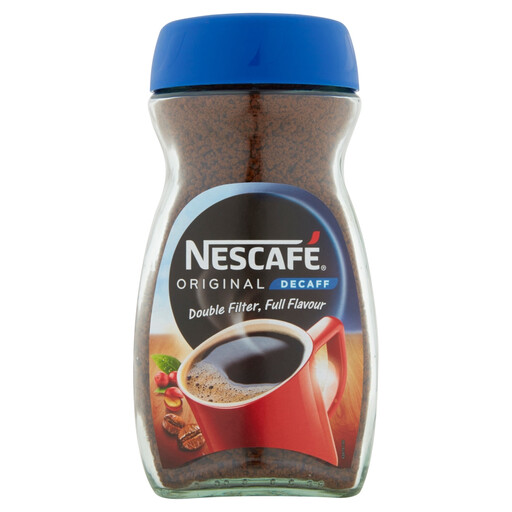 No image available
A 200 g jar of decaffeinated soluble coffee for hot-water service. The pack is smaller than the other option shown here; store it in a cool, dry place and check its preparation guidance and taste before making it a regular canteen choice.
Use a soluble instant jar when staff have hot water but no grinder or brewer. Choose whole beans only when the canteen has compatible equipment and can accommodate grinding, brewing and cleaning during service.
Follow the instructions on that product’s pack, including its storage conditions and any guidance for use after opening. Check the date marking when setting up the canteen’s replenishment routine.
For a canteen operating as a food business, check the ingredients in additions such as milk, dairy alternatives and syrups. Food Standards Agency guidance says food businesses must provide allergen information for prepacked and non-prepacked food and drink; keep that information accessible and update it when products change.
Assess the kettle or dispenser, its placement, hot-cup handling and spill response for the actual site. These service risks remain whether the canteen stocks instant coffee or brews beans.
It can, but plan for its net weight and how often the canteen will need to replace it. The 95 g illy Classico tin is smaller than the referenced 200 g M&S jar and 300 g Lavazza soluble-coffee pack, so it may be more practical as a separate choice at a busy coffee point.