What matters when choosing a jar?
Start with the regular coffee you expect to serve, then check the pack’s yield and decide whether a second option is worth bringing.
| Priority | What to check | Your needs |
|---|
| Flavour |
Read the exact product’s roast and flavour description. Compare intensity numbers only within the same maker’s scale; they are not a taste ranking across brands. |
If I can bring only one regular jar for an unfamiliar crowd, I would start with a smooth or medium-profile option. A dark-roast coffee makes more sense as an extra choice when I expect requests for it. |
| Servings |
Check the pack’s stated serving count or dose and water volume. Nescafé UK & IE recommends approximately 1.8g with 200ml hot water for NESCAFÉ Original; Sainsbury’s lists 55 servings for its Gold Roast 200g pack. |
I want enough coffee, water and cups for the likely demand without choosing a larger jar on weight alone. |
| Decaf |
Look for an explicit decaffeinated designation on the product. Keep the regular and decaf jars clearly identified when serving. |
If guests may ask for coffee without caffeine, I need a distinct decaf option rather than relying on a regular coffee described as mild. |
| Storage |
Follow the exact pack’s storage directions and close it between uses. JDE Professional advises keeping its Pure Gold packaging cool, dry and tightly sealed. |
I may have coffee left after an outdoor sale, so I need a container I can close and store as directed. |
| Drink additions |
If you operate a food business, keep current allergen information for ingredients added to prepared drinks. The Food Standards Agency says retail and catering food businesses must provide allergen information for prepacked and non-prepacked food and drink. |
If I sell coffee with milk or other additions, I need to be able to tell customers what is in the drink, not just what is in the coffee jar. |
Brand and retailer references
These references describe particular coffees or ranges, not a ranking of brands or a statement about which products a retailer currently carries.
Nescafé
NESCAFÉ Original is a regular instant coffee offered in jar and refill formats.
- Nescafé UK & IE recommends approximately 1.8g with 200ml hot water for Original, which gives a preparation basis for planning drinks.
- Original is not a decaf choice; select a separately designated decaffeinated product if that matters to visitors.
Kenco
Kenco positions Smooth as a regular coffee for people seeking full flavour without an overly strong or bitter taste.
- Kenco GB describes Smooth as a blend of freeze-dried instant coffee and roast-and-ground coffee, with an intensity rating of 7 on its own scale.
- The maker’s flavour description is not an independent taste comparison or a decaf designation.
Douwe Egberts
Pure Gold is a freeze-dried option described by JDE Professional as mild and balanced.
- JDE Professional identifies Arabica and Robusta coffee in its Pure Gold professional product.
- Its professional pack details should not be applied to a different retail jar; check the pack you intend to use.
Carte Noire
Intense is a dark-roast option for visitors who specifically want that flavour profile.
- Sainsbury’s describes the Intense 100g listing as an Arabica-and-Robusta blend making approximately 55 cups at its suggested 1.8g serving.
- Its dark-roast positioning makes it a distinct flavour choice, not an automatic substitute for a smooth or medium-profile jar.
Sainsbury’s
Gold Roast is an own-label instant coffee with a stated serving count on its 200g listing.
- Sainsbury’s identifies the 200g Gold Roast pack as freeze-dried instant coffee containing 55 servings.
- Use that serving count for the named pack, not for other own-label jars.
Tesco
Tesco’s instant-coffee range provides a retailer reference for checking branded coffees, own-label products and refills.
- Different pack formats let you compare the preparation and storage details of the products you are considering.
- A category listing does not establish which individual coffee will suit your visitors or be available when you shop.
Joybuy coffee options
These options cover a single smooth regular coffee, a multipack for repeated demand and a separate decaf choice for visitors who request one. Choose quantities using the preparation details on the pack you buy.
 No image available
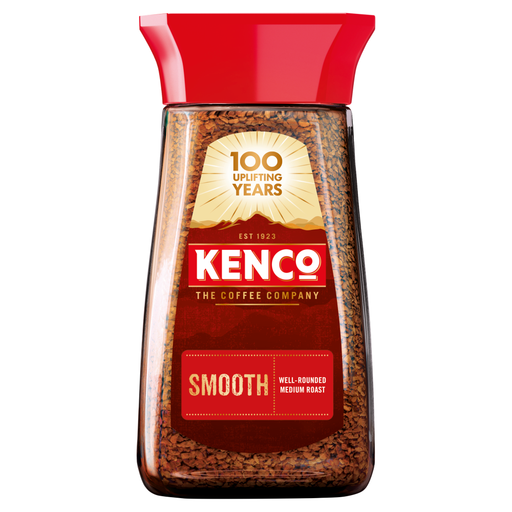
Kenco Smooth Instant Coffee 200g
A single smooth-profile regular coffee for a stall offering one main jar. The 200g product is prepared with hot water; Joybuy’s product guidance says to use 1–2 teaspoons per drink. Check the pack’s serving guidance when planning the number of cups.
View on Joybuy
 No image available
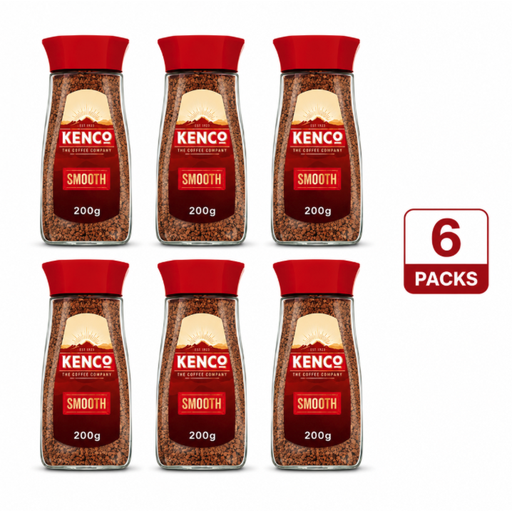
Kenco Smooth Instant Coffee 200g x 6
Six 200g units may suit repeated refreshment demand, but consider whether you will use that quantity. Check the physical pack for its ingredients and preparation guidance: the product description and Kenco GB’s description of Smooth differ on the coffee’s composition.
View on Joybuy
 No image available
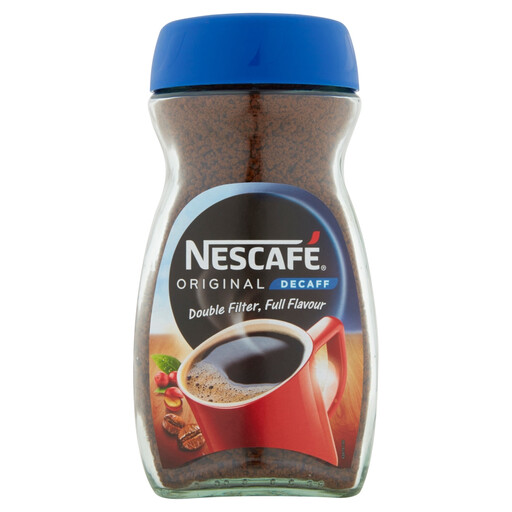
NESCAFÉ Decaf (New Shape) 200g
This explicitly designated decaffeinated 200g coffee provides a separate choice when visitors ask for decaf. Keep it distinct from the regular jar and check its pack instructions before estimating servings.
View on Joybuy
Common questions
How many coffees will one jar make?
Use the serving statement or preparation dose on the exact pack. Nescafé UK & IE recommends approximately 1.8g with 200ml hot water for NESCAFÉ Original, while Sainsbury’s states 55 servings for its Gold Roast 200g pack. Jar weight alone does not give a universal cup count.
Should the only regular coffee be smooth or strong?
For visitors whose preferences you do not know, a smooth or medium-profile jar is a reasonable starting choice. Bring a dark-roast option as well if you expect requests for it; Kenco describes Smooth as full-flavoured without being overly strong or bitter, while Sainsbury’s describes Carte Noire Intense as a dark roast.
When is a decaf jar worth bringing?
Bring a separately labelled decaf jar when visitors are likely to ask for it and the expected demand justifies another jar. Do not infer caffeine content from words such as “mild” or “smooth” on a regular coffee.
Do I need to register if I sell prepared coffee?
If you are starting or taking over a food business, the Food Standards Agency says you must register with your local authority at least 28 days before trading or food operations start. Whether your car boot sale activity is a food business is a question to check with the relevant local authority; also check the event organiser’s requirements.
What allergen information matters for coffee with milk or other additions?
The Food Standards Agency says retail and catering food businesses must provide allergen information for prepacked and non-prepacked food and drink. If you sell prepared coffee, keep current ingredient and allergen information for additions such as milk, whiteners, syrups or toppings, using the products actually served.


