Hosts serving a mixed group
A regular main jar keeps preparation straightforward. If some guests avoid caffeine, offer a separate, clearly labelled decaf jar rather than expecting one coffee to cover both preferences.


For a mixed coffee morning, a regular instant coffee in a 190g or 200g jar is a practical starting point; add a clearly labelled decaf jar if you expect guests who avoid caffeine. Use the jar’s serving instructions and its roast or flavour description to narrow the choice, but do not assume that a coffee described as smooth will suit everyone.
The guest list and the way you will serve drinks matter more than choosing a jar by its flavour description alone.
A regular main jar keeps preparation straightforward. If some guests avoid caffeine, offer a separate, clearly labelled decaf jar rather than expecting one coffee to cover both preferences.
Check the jar weight and the suggested amount per cup before planning how to serve a group. Serving counts on different jars may be based on different measures of coffee.
Look for an explicitly decaffeinated jar and keep it distinct from the regular coffee at the serving point. Kenco, for example, describes its Decaf coffee as caffeine-free and lists 95g and 190g jar sizes.
Choose the regular and decaf options your guests need, then check the pack instructions so you can prepare cups consistently.
| Priority | What to check | Your needs |
|---|---|---|
| Serving a group | Check the jar weight and the suggested measure per cup. Do not compare stated serving counts without checking the dose behind them: Sainsbury’s lists 55 servings for its 200g Rich Roast and approximately 111 for its 200g decaf. | I want a measure I can use consistently while making several drinks, with room for guests to adjust their cups. |
| Flavour choice | Read roast and flavour descriptions as guides, not guarantees of preference. NESCAFÉ describes Gold Blend as medium roast; Kenco’s intensity rating of 7 describes its own products, not a cross-brand scale. | If I do not know everyone’s preferences, I would rather avoid making a particularly distinctive coffee the only regular option. |
| Decaf | Choose a jar explicitly labelled decaffeinated. Check its exact size and the retailer’s current listing before shopping. | Some guests may avoid caffeine, so I want them to be able to identify the decaf jar without confusing it with the regular one. |
| Pack information | Read the physical jar label for ingredients, dietary information and preparation instructions. Check availability before relying on a particular product. | When serving guests with dietary requirements, I need the information on the jar I actually use. |
Words such as smooth, rich and aromatic describe how a product is positioned; they cannot establish what an unfamiliar group will prefer.
If preferences are unknown, consider a regular jar described as medium roast or smooth, and let guests add milk or sugar separately. Choose a more distinctive profile as the only jar when you know the group wants it.
A regular coffee does not give guests who avoid caffeine a decaf choice. Kenco identifies its Decaf product separately from its regular coffees.
If decaf is relevant to your guest list, buy an explicitly labelled decaf jar and mark it clearly where drinks are made.
The Tesco and Sainsbury’s Carte Noire Classique listings checked on 2 October 2026 showed it out of stock. A named coffee may therefore be difficult to use as the sole plan for an event.
Check availability shortly before shopping and have another acceptable regular or decaf option in mind.
These descriptions concern the named jars and product lines, not every coffee made by each brand.
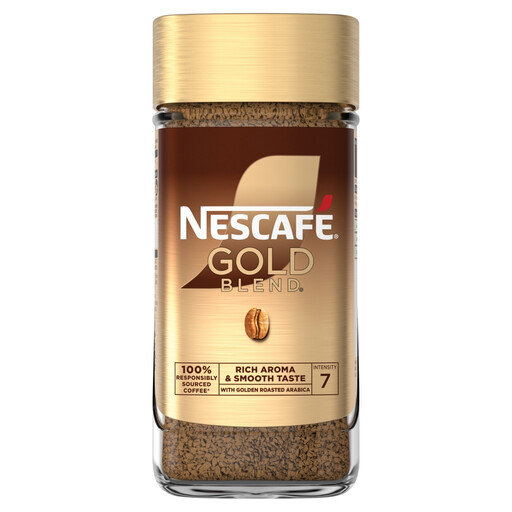
Gold Blend is a medium-roast regular coffee that NESCAFÉ offers in 95g and 190g jars.
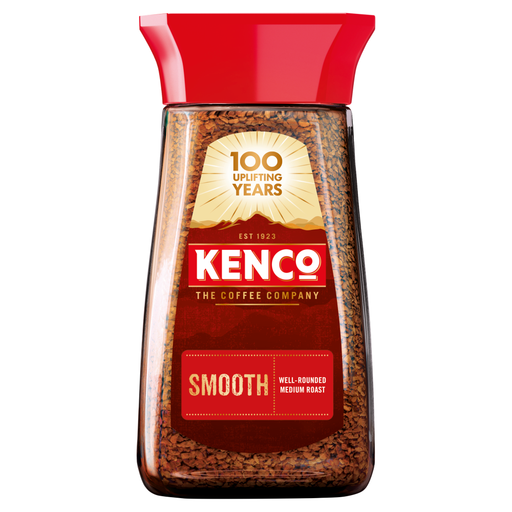
Kenco has separate Smooth and Decaf instant-coffee lines for hosts considering a regular jar and a decaf choice.
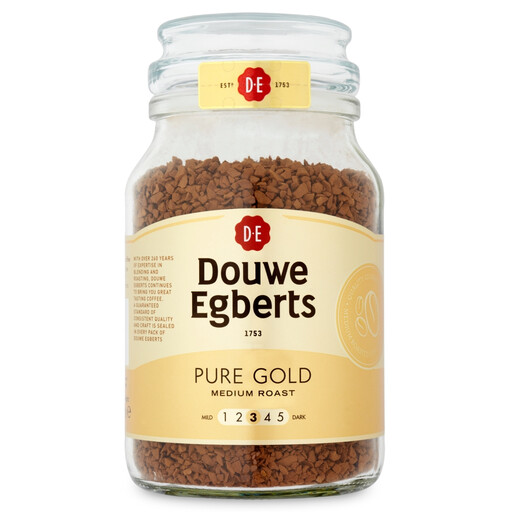
Pure Gold is listed by Sainsbury’s as a 190g, freeze-dried medium-roast coffee with strength 3.
Classique is described in retailer listings as an Arabica-rich, freeze-dried coffee for guests who specifically want that stated profile.
Tesco Gold is listed as a 200g freeze-dried instant coffee made with Arabica and Robusta beans.
Sainsbury’s lists separate 200g Rich Roast regular and decaffeinated instant coffees.
These jars cover regular coffees for the main serving table and a separate decaf option. Choose between them using the flavour description, jar size and the instructions on the pack.
 No image available
A regular main-jar option when you want a medium-roast description to guide the choice. NESCAFÉ suggests one teaspoon of Gold Blend for a 200ml mug; its smooth-taste description does not predict every guest’s preference.
 No image available
A 200g regular-coffee jar to consider for the main serving table. If its precise roast profile matters to your group, check the current jar label before choosing it.
 No image available
A 190g regular jar for hosts considering a coffee labelled medium roast. Read its preparation instructions before serving so you can use a consistent measure for each cup.
 No image available
An explicitly labelled decaf jar to offer alongside regular coffee when guests avoid caffeine. Keep the two jars clearly identified at the serving point and follow this jar’s own preparation instructions.
Start with the instructions for the jar you are serving. NESCAFÉ specifies one teaspoon, or 1.8g, of Gold Blend for a 200ml mug; Tesco Gold suggests one or two teaspoons per cup, while Sainsbury’s Rich Roast suggests one teaspoon. Guests can then adjust their drinks with milk or sugar.
Follow the instructions on the particular jar. Tesco Gold and Sainsbury’s Rich Roast both specify hot, not boiling, water; the checked Carte Noire Classique guidance says water just off the boil.
One regular jar can cover the group if everyone wants regular coffee. If you expect guests who avoid caffeine, put out a separate, clearly labelled decaf jar; Kenco, for example, describes its named Decaf product as caffeine-free.
Read the label on the physical jar before serving, especially when a guest has an allergy, intolerance or other dietary requirement. Product information can change, so do not rely solely on an older online description.