Everyday coffee drinkers choosing by taste
If a familiar brand offers several jars, compare its smooth, bold and dark-roast descriptions to find the profile you want.


Choose by the flavour you want and whether you need decaffeinated coffee: a smooth-labelled jar suits a less pronounced cup, while a bold or dark-roast description points towards a more pronounced one. Before adding a jar to a grocery order, check its exact size, stated servings, ingredients and availability; flavour descriptions and intensity numbers are not a common scale across brands.
If a familiar brand offers several jars, compare its smooth, bold and dark-roast descriptions to find the profile you want.
Look for an explicitly decaffeinated jar rather than relying on words such as “smooth” or “mild”, which describe flavour.
Jar weight, stated servings, ingredients and availability can all matter when choosing which product to add to a delivery order.
Start with flavour and caffeine labelling, then compare the exact packs and product information in your basket.
| Priority | What to check | Your needs |
|---|---|---|
| Flavour profile | Read the roast and flavour description for the exact jar. Compare intensity numbers cautiously: brands do not establish them as a shared scale. | I prefer a rounded cup, or I want a more pronounced flavour. A smooth, bold or dark-roast description helps me narrow the choice, but cannot tell me exactly how it will taste. |
| Caffeine labelling | Check whether the jar explicitly says “decaffeinated”. Do not use smoothness or roast wording as a measure of caffeine content. | If reducing caffeine matters to me, I will choose a jar labelled decaffeinated rather than one described only as mild. |
| Jar size and servings | Compare pack weight and each listing’s stated servings. Check the amount of coffee used per serving before treating serving counts as comparable. | A jar needs to fit how often I make coffee. I would check both its weight and preparation instructions, not assume two jars last equally long because they look similar. |
| Ingredients and availability | Review the current ingredients and allergen information, then check availability for your order. Read the delivered label if ingredients matter to your choice. | I need the jar that arrives to match my requirements, particularly if I am checking ingredients or allergens. An older product image is not enough to make that decision. |
| Storage and format | Check the pack’s storage instructions and whether the product is a jar or refill. Nescafé advises keeping its coffee lid tightly closed. | I want a format that works in my cupboard and storage instructions I can follow after opening it. |
Kenco’s intensity rating and another brand’s strength label do not establish which jar you will find stronger-tasting.
Use each jar’s roast and flavour description as a starting point, and consider a smaller pack when trying an unfamiliar profile.
Sainsbury’s listings state 111 mugs for a 190g Nescafé Gold Blend jar and 55 servings for its 200g Gold Roast jar. Those are product-specific serving statements, not an identical measure of cup size or strength.
Check the stated amount of coffee per cup alongside the weight and serving count of each jar.
Smooth describes a flavour profile; it does not establish that caffeine has been removed.
Choose a product explicitly labelled decaffeinated if that distinction matters to your order.
Ingredients and product details can change, while availability can differ when you place an order. This is especially important when checking allergens.
Review the current listing before checkout and the delivered label before use. If allergen information is unclear, ask the retailer or manufacturer.
These examples show different jar descriptions and listing details; a brand’s inclusion does not establish that a particular product is available for your delivery.
Its range includes Original, Gold Blend and decaffeinated jars, giving shoppers several labelled profiles to compare.
Smooth and Decaf offer distinct labelling for shoppers choosing by flavour description or decaffeination.
Pure Gold and Pure Decaff provide regular and decaffeinated jar options.
Intense is described on a Sainsbury’s listing as a dark-roast Arabica-and-Robusta blend.
Tesco’s grocery listings provide product details for jars including Kenco Smooth and Douwe Egberts Pure Decaff.
Its listings include own-label Gold Roast as well as branded instant-coffee jars.
These jars cover decaffeinated options and two smooth-labelled regular coffees. Compare the exact pack details and delivery availability when choosing for your grocery order.
 No image available
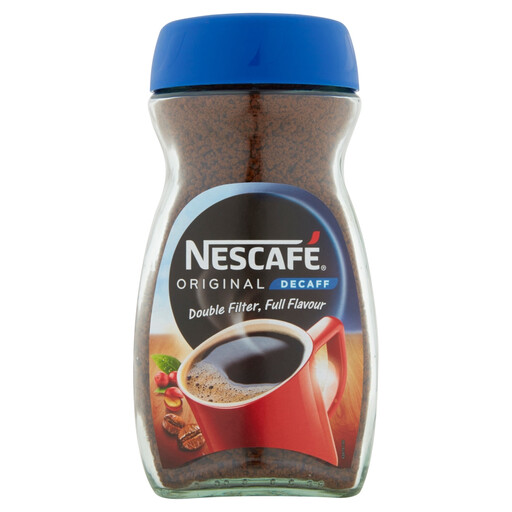
A 300g jar labelled decaffeinated soluble coffee for shoppers choosing a larger decaf pack. Compare its preparation instructions and current availability before ordering.
 No image available
A 200g jar labelled decaffeinated soluble coffee. Check the current preparation instructions and availability for your order.
 No image available
A 190g Gold Blend jar labelled decaffeinated soluble coffee. Its smooth flavour wording is a product description, not an independent taste assessment.
 No image available
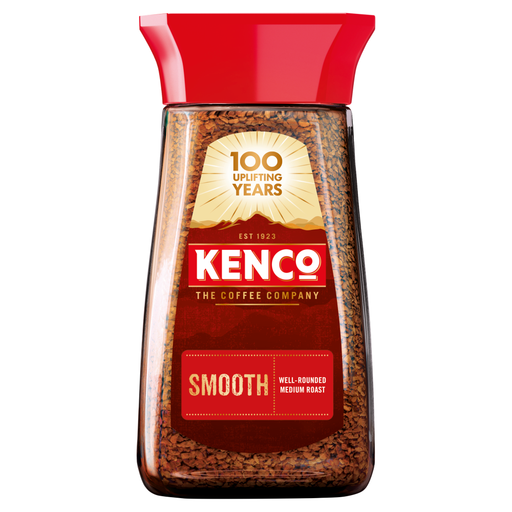
A 200g jar positioned as a smooth-flavoured regular coffee; its listing says it contains caffeine. If roast profile matters to you, check the exact label because the supplied descriptions differ in their roast wording.
 No image available
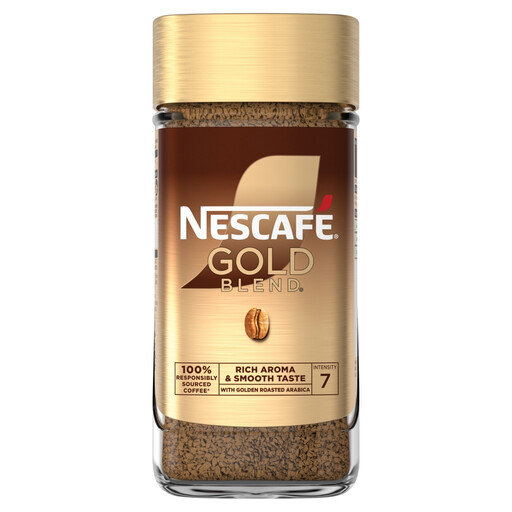
A 190g jar of soluble coffee positioned as smooth-flavoured. Check the current ingredients and delivered label if its composition matters to you, as the supplied descriptions differ on whether roast-and-ground coffee is included.
Start with the exact jar’s roast and flavour description: Kenco describes Smooth as rounded, Nescafé describes Original as bold, and Sainsbury’s describes Carte Noire Intense as dark-roasted. These are brand or retailer descriptions rather than comparable taste measurements, so a smaller pack may be sensible when changing profiles.
Not necessarily. “Smooth” describes flavour, not caffeine content. If you want decaf, look for an explicitly decaffeinated product such as Kenco Decaf or Douwe Egberts Pure Decaff and check the exact jar’s label.
Check the current jar weight, stated servings, preparation instructions, ingredients and availability for your order. Retailer product information can change, so use the delivered label for a final ingredient or allergen check.
Follow the instructions on your jar. Nescafé advises keeping its coffee lid tightly closed; check the pack for any additional storage directions.
Read the current listing’s ingredient and allergen information before ordering, then check the delivered label because formulations can change. If anything is unclear for your requirement, contact the retailer or manufacturer before using the product.