What should you check before choosing?
Start with the cup you want at lunch, then choose the size and packaging format you can use and store comfortably.
| Priority |
What to check |
Your needs |
| Preparation and storage |
Read the serving and water directions for the exact coffee. Check its instructions for closing the jar and storing it between uses. |
I want to make a cup during a short break and put the coffee away without leaving the jar open on my desk. |
| Jar size |
Check the grams in each jar and the number of jars in a multipack. Consider whether you have room to store them and will use that quantity. |
For regular lunch coffees, I may want a larger jar; for an unfamiliar blend, I would rather try a smaller one. |
| Caffeine |
Check whether the product is regular or decaf, then look for caffeine information tied to its serving size. An intensity number is not a caffeine measurement. |
I want to keep track of caffeine across my drinks, not assume a milder-tasting coffee contains less of it. |
| Flavour |
Read the maker’s roast and flavour description for the exact product. Compare intensity numbers cautiously because brands do not necessarily use the same scale. |
A smooth or richer flavour matters to me, but I would try a smaller jar before committing to a large quantity of a new blend. |
| Refills and disposal |
Check that you have a suitable clean, dry container for a refill. Read the packaging instructions and your local authority’s collection guidance for each component. |
I would like to reuse a container, but only if I can store the coffee appropriately and dispose of the packaging as instructed locally. |
Brand ranges to consider
These brand references help distinguish regular coffee, decaf, flavour-led jars and refills; they do not imply that every product in a range appears below.
NESCAFÉ
Original and Original Decaf give shoppers separate regular-coffee and decaf routes.
- NESCAFÉ UK & IE states that Original and Gold contain 50–90mg of caffeine per 2g serve.
- A flavour-intensity label should not be used in place of caffeine information for the exact product.
Kenco
Smooth, Rich, Decaf and refill products offer different flavour, caffeine and packaging choices within the range.
- Kenco describes Smooth as intensity 7 without an overly strong or bitter taste.
- A packaging comparison for one Kenco refill should not be assumed to apply to every refill size or format.
Douwe Egberts
Pure Gold 190g is a medium-roast instant-coffee jar listed by Tesco.
- The Tesco listing identifies the 190g Pure Gold product and its medium-roast positioning.
- Check the exact jar’s description if its roast and flavour profile are central to your choice.
Carte Noire
Classic and Espresso provide distinct flavour descriptions in Tesco’s instant-coffee listings.
- Tesco describes Espresso 100g as Arabica-rich with an intense aroma and Classic 200g as rich and velvety.
- Check the specific product listing before planning to buy either jar.
Tesco
Tesco Gold Instant Coffee 200g is an own-label jar to consider alongside branded instant coffees.
- Tesco identifies Gold 200g as freeze-dried instant coffee made with Robusta and Arabica beans.
- Use the current pack or listing to check the details relevant to your choice.
Sainsbury’s
Gold Roast Instant Coffee 200g is an own-label jar with preparation and storage directions on its product listing.
- Sainsbury’s lists 55 servings for the 200g jar.
- Follow the directions on the particular pack for preparation, storage and disposal.
Instant coffee options on Joybuy
These jars cover regular and decaf coffee for a working-from-home lunch, including single jars and multipacks. Choose a quantity that fits your routine and storage space; use the exact pack details for serving and caffeine checks.
 No image available
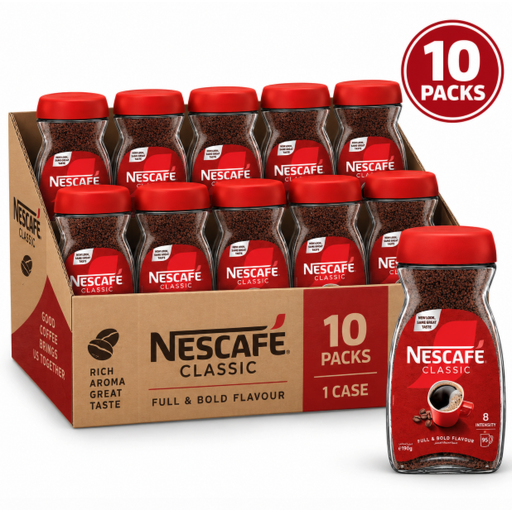
NESCAFÉ Classic Original 190g, pack of 10
For repeat lunch coffees, this pack supplies ten 190g jars of regular instant coffee. Consider whether you have room for the full pack, and check the exact jar’s serving and caffeine information if you track intake.
View on Joybuy
 No image available
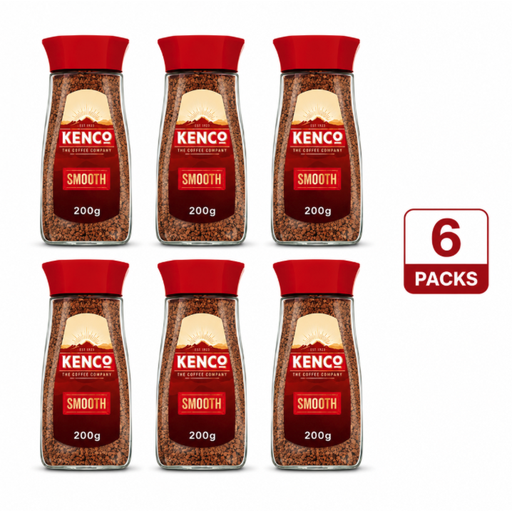
Kenco Smooth 200g, pack of 6
Consider this Kenco Smooth multipack if it is a flavour you already use for lunch. It contains six 200g jars; check that the quantity suits your storage space before choosing it over a single jar.
View on Joybuy
 No image available
NESCAFÉ Original Decaf 300g
This 300g decaf jar suits a lunch routine where reducing caffeine is the reason for choosing a different coffee. If you need to track intake precisely, check the exact pack’s serving and residual-caffeine information.
View on Joybuy
 No image available
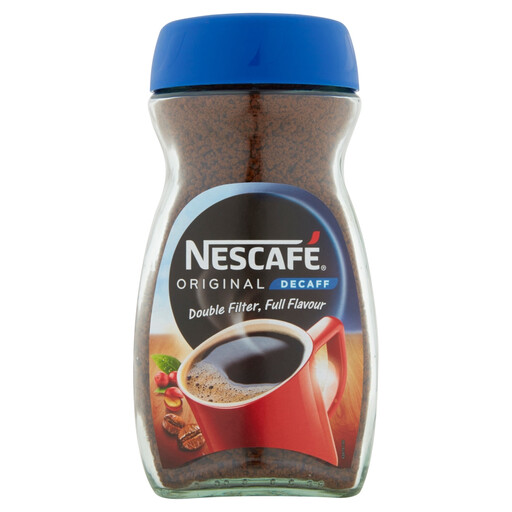
NESCAFÉ Decaf (New Shape) 200g
This 200g decaf jar is another size to consider when reducing caffeine at lunch. Use the pack’s serving, caffeine and storage directions for the way you plan to prepare and keep it.
View on Joybuy
 No image available
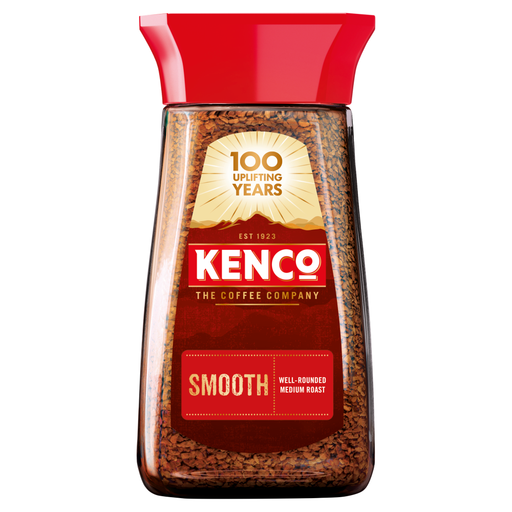
Kenco Smooth 200g
This single 200g jar lets you choose Kenco Smooth without taking home a multipack. If the roast designation or caffeine per serving affects your decision, check those details on the exact pack.
View on Joybuy
Questions about jars, caffeine and storage
Does a higher intensity number mean more caffeine?
No. NESCAFÉ explains that intensity scales generally describe roast and flavour character, not caffeine content. Check the exact coffee’s caffeine information, or choose a decaf variant if reducing caffeine is your main reason for switching.
How should I store an opened instant-coffee jar?
Follow the directions on its label. Sainsbury’s says to keep its Gold Roast jar in a cool, dry place and replace the cap after use, so close that jar between lunch breaks rather than leaving it open on a desk.
Can a refill replace another glass jar?
Yes, if you already have a clean, dry container suitable for storing the coffee. Kenco presents its Rich refill as a way to refill a jar or other container; check the particular refill’s storage and disposal instructions before buying.
Can I recycle an instant-coffee jar and lid at home?
Check the exact packaging and your local authority’s collection instructions. NESCAFÉ states that its Original jar and lid are recyclable, while WRAP notes that the specifics of household collections can vary.
What caffeine information matters during pregnancy?
NHS guidance says not to have more than 200mg of caffeine a day during pregnancy. Account for caffeine from all relevant foods and drinks, and check the exact coffee and serving rather than using its flavour-intensity number as a caffeine measure.


