Buyers serving mixed preferences
If one regular coffee will serve most lunchtime users, compare the stated smooth, medium and bolder profiles rather than assuming that everyone wants the same strength of flavour.


For a shared lunchtime service, start with a clearly labelled regular jar and choose its stated flavour profile and preparation directions to suit the people using it. Add a separate decaffeinated jar if the canteen wants that choice; consider a bolder coffee or a refill routine only when staff preferences and the canteen’s storage and labelling arrangements make them suitable.
If one regular coffee will serve most lunchtime users, compare the stated smooth, medium and bolder profiles rather than assuming that everyone wants the same strength of flavour.
A separately identified decaffeinated product lets staff choose it without having to guess whether the regular jar meets their preference.
Choose a serving routine that keeps jars dry and identifiable, and accounts for milk, whitener or other additions offered alongside the coffee.
Choose the regular coffee by flavour and serving directions, then decide whether a separate decaf choice and a refill routine fit the way the drinks station operates.
| Priority | What to check | When it matters to me |
|---|---|---|
| Flavour profile | Read the product’s smooth, medium or intense description. If considering a bolder jar, check whether staff actually request that style. | I’m serving people with different tastes, so I want to choose the standard coffee deliberately rather than make a strong-tasting option the only one. |
| Decaf choice | Look for an explicitly decaffeinated product and give it a distinct jar label and serving position. | Some staff want decaf at lunch; I need them to be able to distinguish it from the regular coffee. |
| Preparation and storage | Check the directions for the particular jar, including the spoon measure, water instructions and storage conditions. For example, NESCAFÉ UK & IE gives approximately 1.8g in 200ml hot water for Original; Sainsbury’s Gold Roast specifies one teaspoon with hot, not boiling water. | Several people use the drinks station, so clear directions help us follow the same serving routine and keep the jar stored as instructed. |
| Refill routine | Confirm that the refill matches the coffee in the reusable container. Keep that container clean, dry and labelled, with the product information available. | I’d consider refills if our canteen can maintain a suitable container and still make its contents clear to everyone using it. |
| Drink additions | Check the current labels for coffee, milk, whitener and other additions, and manage their information and handling at the drinks station. The Food Standards Agency’s guidance addresses allergen information and handling for food businesses in retail and catering. | Our canteen offers additions to black coffee, so I need to account for the finished drink and how those additions are served. |
A fuller or darker-roast profile is a matter of preference, not an automatic improvement for a group with mixed tastes.
Compare the stated profiles for the standard jar, and add a bolder choice if staff ask for one.
A regular jar should not be mistaken for a decaffeinated option, particularly at a shared self-service station.
If offering decaf, buy a product designated as decaffeinated and label its place and scoop distinctly.
Decanting makes it harder to identify the coffee if its container is not labelled; moisture also conflicts with the cool, dry storage directions given for several listed coffees.
Use a clean, dry, labelled container and keep the relevant product information available. Handle milk and whitener as separate additions.
The pack being served is the practical reference for its ingredients, directions and date marking.
Check its label, best-before date and any applicable allergen information before putting it into service.
These examples help distinguish jar styles and formats; they are not a ranking of brands or a statement about what is currently in stock.
NESCAFÉ UK & IE lists Original in 100g, 190g and 300g jars and also identifies an Original Decaf product.
Kenco lists Smooth, Rich and Decaf instant coffees in jars, as well as refill products.
Waitrose & Partners lists Pure Gold as a 190g freeze-dried instant coffee with a medium-roast, strength-3 description.
Sainsbury’s lists 100g Classique and Intense instant-coffee products.
Tesco Groceries lists own-brand Gold and Classic instant coffees in 200g formats, alongside decaffeinated jars.
Sainsbury’s lists Gold Roast, Gold Roast Decaffeinated, Rich Roast and Colombian-origin instant-coffee options.
These options cover regular Kenco Smooth coffee and separately designated NESCAFÉ decaf products for a shared lunchtime drinks station. Check each pack’s directions before setting a common serving instruction.
 No image available
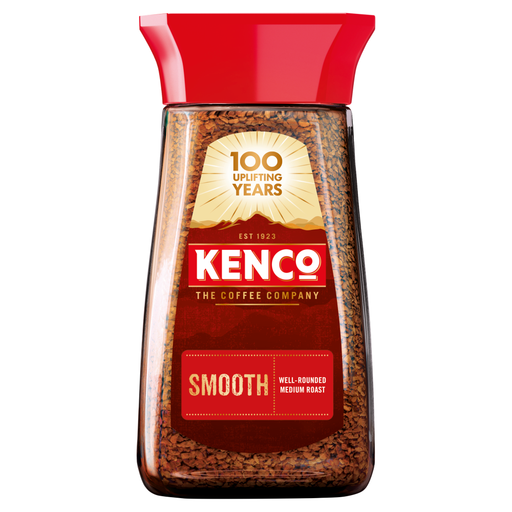
A regular Smooth option for a canteen choosing a balanced flavour profile. The Joybuy product information specifies 1–2 teaspoons with hot water and cool, dry storage; choose a consistent instruction for shared service.
 No image available
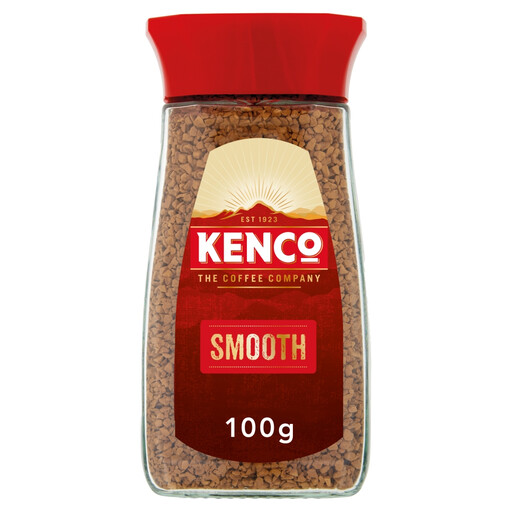
A smaller Kenco Smooth option for the regular-coffee position. Check the pack’s preparation directions before setting a shared spoon measure.
 No image available
A separately designated decaffeinated option for the lunch station. Keep it clearly labelled apart from regular coffee and follow the pack’s serving directions.
 No image available
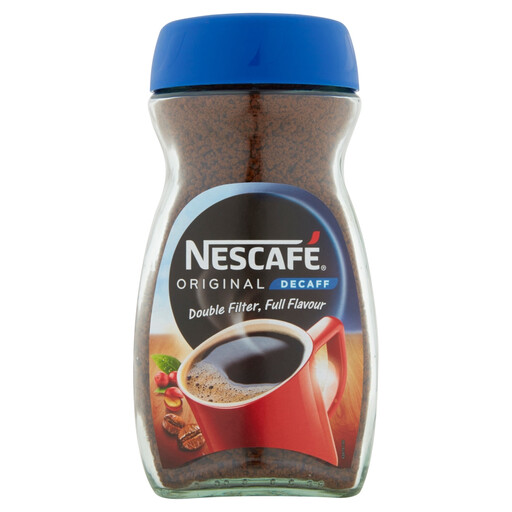
Another separately designated decaf option, in a 200g format. Identify its position at the drinks station and check the pack before setting a serving measure.
Add a separately labelled decaf product if the canteen wants to serve people who do not choose regular caffeinated coffee. NESCAFÉ Original Decaf and Kenco Decaf are designated options; do not use a regular jar as a substitute for that choice.
Start with the directions for the particular coffee being served. NESCAFÉ UK & IE specifies approximately 1.8g of Original in 200ml hot water, while Sainsbury’s Gold Roast calls for one teaspoon with hot, not boiling water; do not assume the same measure applies to every jar.
Follow its pack directions and replace the cap after use. Product listings for Douwe Egberts Pure Gold and Carte Noire Intense specify cool, dry storage, which is particularly relevant at a busy shared drinks station.
Account for milk, whitener and other additions as well as the coffee itself, using the current product labels and the canteen’s handling arrangements. The Food Standards Agency’s guidance addresses allergen information, management and staff training for food businesses in retail and catering in England, Northern Ireland and Wales; confirm how it applies to the particular service, and consult Food Standards Scotland guidance for a canteen in Scotland.
A refill can work when the canteen has a suitable clean, dry container and can keep the coffee correctly identified. Kenco’s packaging-material claim compares its refill with a specified 190g glass jar and lid; it does not replace the need for clear product information and careful storage.