Later-afternoon coffee drinkers
If you want less caffeine from the cup you have with a snack, compare regular and decaffeinated jars. Check the exact label if even small amounts of caffeine matter to you.


Choose a decaffeinated jar if reducing caffeine from your afternoon cup matters most; choose a regular coffee according to the flavour you prefer, without treating roast or intensity labels as measures of caffeine. Then check the pack size and storage instructions against how often you will use the jar. Decaf does not necessarily mean caffeine-free, and strength scales are not directly comparable across brands.
If you want less caffeine from the cup you have with a snack, compare regular and decaffeinated jars. Check the exact label if even small amounts of caffeine matter to you.
Choose a flavour description that appeals to you, then consider whether the jar size suits how often you make coffee and where you will store it.
If you plan to keep an existing jar, check whether a refill of the coffee you want is available and follow the storage directions for both pack and jar.
Decide whether you want regular or decaffeinated coffee, then narrow the jars by flavour style, pack size and storage needs.
| Priority | What to check | Your needs |
|---|---|---|
| Caffeine | Check whether the exact jar is regular or decaffeinated and whether its label gives caffeine information per serving. Nescafé UK & IE states that its Gold and Original instant coffees contain 50–90 mg per 2 g serving; that figure does not describe other products or cup sizes. | I want to reduce caffeine from an afternoon cup, or account for it alongside other drinks I have that day. Decaf is the route to consider, but not a promise of zero caffeine. |
| Flavour style | Read the roast and flavour descriptions. Sainsbury’s describes Douwe Egberts Pure Gold as medium roast and Pure Indulgence as dark roast; Kenco’s intensity 7 belongs to its own product scale. | Would a medium-roast description suit me, or am I looking for a darker, richer-style coffee with my snack? I would not use different brands’ strength numbers as a shared scale. |
| Jar size and storage | Check the weight, the pack’s best-before information and its instructions after opening. For example, the Carte Noire Classique listing at Sainsbury’s specifies cool, dry storage. | If I drink instant coffee only occasionally or am trying a new flavour, I may prefer to commit to a smaller jar. A larger jar makes more sense when I expect to use it and can store it as directed. |
| Refill format | Check that a refill is for the product you intend to use, note its pack weight and read its storage directions. Kenco lists a Smooth paper refill among its products. | I would like to keep using a jar I already have, provided the available refill matches the coffee I want. |
Decaffeinated coffee can still contain naturally occurring caffeine. For example, the Douwe Egberts Pure Decaffeinated Joybuy listing states a level below 0.1%.
If small amounts matter to you, read the label for the exact jar rather than relying on the word “decaf” alone.
Kenco’s intensity 7 and Douwe Egberts’ strength 3 or 4 are product descriptions, not a shared measurement scale. Comparing the numbers alone could point you towards a flavour you did not intend to choose.
Start with each product’s roast and flavour wording. Consider a smaller jar when trying an unfamiliar profile.
A jar size is useful only if it suits your rate of use and you can follow the product’s storage instructions after opening.
Check the physical pack’s best-before information and storage directions before choosing a larger quantity.
Gold Blend offers regular and decaffeinated jar options for different afternoon caffeine preferences.
Smooth is a regular instant-coffee line, with a refill option listed by Kenco.
Pure Gold and Pure Indulgence offer differently described roast styles; the range also includes decaffeinated coffee.
Classique is a freeze-dried instant coffee sold in a jar format.
These jars cover smooth or medium-roast regular coffee and decaffeinated coffee for an afternoon cup. Compare their stated weights and check the exact pack label for the details that matter to you.
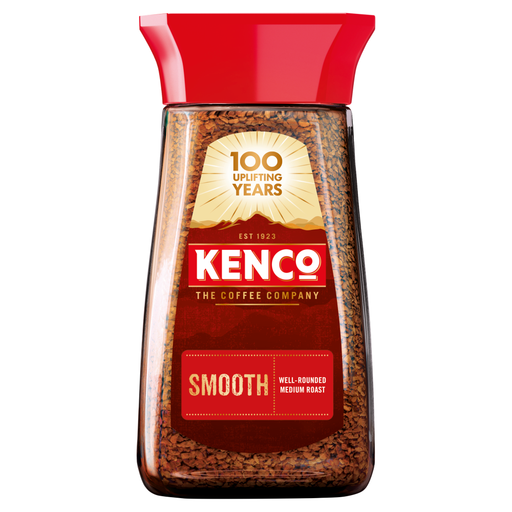 Image unavailable
A regular coffee to consider if Kenco’s full-flavoured, less-bitter description appeals to you with a snack. This 200g jar has directions to add 1–2 teaspoons to hot water and to store it in a cool, dry place. Check the label if caffeine per serving matters to you.
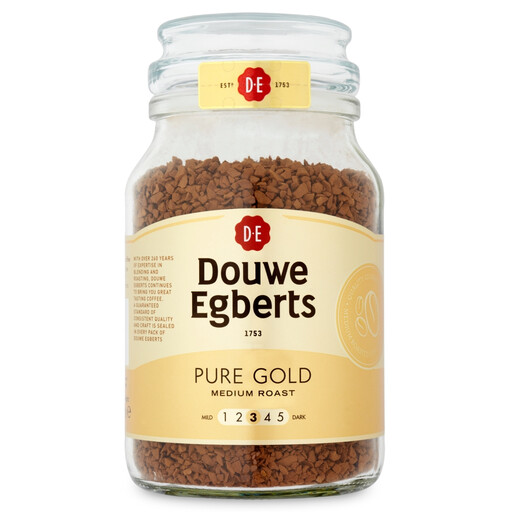 Image unavailable
Consider this regular, medium-roast coffee if you prefer that style to a darker roast with your snack. The jar contains 190g; follow its cool, dry storage guidance. Check the exact label if caffeine per serving is important to your choice.
 Image unavailable
Decaffeinated soluble coffee to consider when you want less caffeine from an afternoon cup. This is a 300g jar with cool, dry storage guidance, so consider whether that size suits your use. Do not assume decaf means no caffeine; check the exact label if small amounts matter.
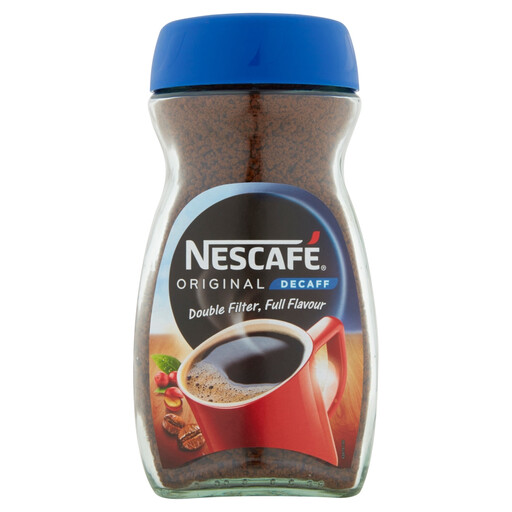 Image unavailable
Another decaffeinated soluble coffee for an afternoon cup, in a 200g jar rather than the 300g Original Decaff pack above. Store it in a cool, dry place. Check this jar’s label if its residual caffeine or preparation measure affects your choice.
Choose decaf if you want to reduce caffeine from that cup; choose regular coffee if you want a caffeinated cup and prefer its available flavour options. Check the exact serving information rather than assuming all regular coffees contain the same amount: Nescafé UK & IE states 50–90 mg per 2 g serving for its Gold and Original instant coffees.
Not necessarily. The Douwe Egberts Pure Decaffeinated listing on Joybuy states that naturally occurring caffeine is below 0.1%. If small amounts matter to you, check the label of the jar you are considering.
A smaller available jar may suit occasional use or trying a new flavour; consider a larger one if you expect to use it and can follow its storage directions. Check the weight and best-before information on the exact pack before deciding.
Do not treat them as a shared scale. Kenco describes Smooth as intensity 7, while the Sainsbury’s listings give Douwe Egberts Pure Gold strength 3 and Pure Indulgence strength 4. Use each product’s roast and flavour description to choose a style.