For a quick morning coffee, choose a regular jar whose flavour description appeals to you, or a decaf jar if you prefer to reduce caffeine. Compare pack sizes and serving directions, and treat each brand’s intensity wording as a guide to its own range rather than a shared measure of taste.
Who is each jar choice for?
Everyday morning coffee drinkers
If you make a cup with hot water during a short break, start with the flavour style you want to drink regularly. Kenco describes Smooth as a medium-roast coffee with a smooth, full-flavoured profile; check other jars’ own descriptions rather than assuming their intensity labels mean the same thing.
Shoppers choosing decaf
A jar labelled decaf gives you a different route from regular instant coffee when reducing caffeine matters to your choice. Check the designation and serving information on the exact jar, particularly if you also drink other caffeinated drinks.
Jar-size and refill shoppers
Pack weight matters if you are deciding between a smaller jar, a larger jar or several jars at once. If you already keep a suitable container, check whether a refill matches the coffee you want and can be stored as directed.
What should you check before choosing?
Decide on regular or decaf coffee first, then use the jar’s flavour description, serving directions and pack format to narrow the choice.
| Priority |
What to check |
Your needs |
| Flavour style |
Read the roast and flavour description; use intensity ratings within a brand’s range rather than as a cross-brand scale. Kenco GB describes Smooth as medium roast with an intensity rating of 7. |
I want a morning cup with a flavour I would choose again, whether that means a smooth-labelled blend or a more pronounced coffee description. |
| Caffeine |
Check whether the exact jar is regular or decaf; compare any caffeine figure on the same serving basis. Nescafé UK & IE states that Original and Gold contain 50–90mg per 2g serving; that figure does not describe its decaf products. |
If I am reducing caffeine, I want to identify a decaf jar rather than assume all instant coffees contain similar amounts. |
| Serving and size |
Check the jar weight and the preparation directions; note whether the listing is for one jar or a multipack. Nescafé UK & IE gives approximately 1.8g in 200ml hot water as its Original serving guide. |
A single jar may suit the space I have, while a multipack means keeping additional unopened jars. I also want directions for making my usual cup. |
| Storage and refills |
Follow the exact pack’s storage directions; check that a refill suits your container and preferred coffee. Sainsbury’s directs Gold Roast jar users to store it in a cool, dry place and replace the cap after use. |
I want to keep the jar between morning breaks. If I already have a suitable container, I may consider a refill for a repeat purchase. |
Common mistakes when choosing a jar
-
Treating intensity labels as one universal scale
An intensity number or flavour phrase describes a product within its maker’s range; it does not establish how every other brand’s coffee will taste.
Use the wording to shortlist jars, then check the specific blend and pack size if you want to try a different style.
-
Assuming regular instant coffee contains little caffeine
Nescafé UK & IE states that its Original and Gold coffees contain 50–90mg of caffeine per 2g serving. The amount in a cup depends on the coffee and serving used.
Check the exact product and serving information when caffeine matters to your choice; consider a decaf-labelled jar if you are reducing it.
-
Buying a refill without planning how to store it
A refill does not provide a reusable jar. Kenco GB’s stated packaging-material comparison concerns its paper refill and a referenced 190g glass jar and lid, not every refill format.
If you do not already have a suitable container, choose one first. For later purchases, check the refill’s coffee variety and storage directions.
Brand and product-line references
These examples describe particular jars and ranges, not a taste ranking or a list of brands necessarily represented in the Joybuy selection below.
Nescafé
Original is a regular instant-coffee reference with a stated preparation guide.
- Nescafé UK & IE suggests approximately 1.8g of Original in 200ml hot water.
- The brand states 50–90mg caffeine per 2g serving for Original and Gold; do not apply that range to a decaf jar.
Kenco
Smooth and Decaf give shoppers distinct choices within Kenco’s instant-coffee range.
- Kenco GB describes Smooth as a medium-roast blend with an intensity rating of 7.
- Kenco Decaf is a different product; check the exact variant and jar size rather than applying Smooth’s description to it.
Douwe Egberts
Pure Gold is a named-brand instant-coffee jar to consider alongside other pack formats.
- Sainsbury’s lists a 190g Pure Gold instant-coffee jar.
- Check the specific pack for the roast description, preparation directions and caffeine information relevant to your choice.
Carte Noire
Classique is an option if you are considering a smaller freeze-dried instant-coffee jar.
- Sainsbury’s describes Classique as a 100g freeze-dried instant coffee.
- Its listed preparation uses one or two teaspoons per cup; check which amount suits the cup you make.
Sainsbury’s
Gold Roast provides a supermarket-label jar with stated serving and storage directions.
- Sainsbury’s describes the 200g jar as freeze-dried coffee and lists 55 servings.
- The product directions say one teaspoon per cup and advise cool, dry storage with the cap replaced after use.
Instant coffee jars on Joybuy
These options include jars labelled Smooth, Medium Roast, Decaff and Gold Blend, plus a ten-jar Original bundle. Check the variant and pack format before choosing.
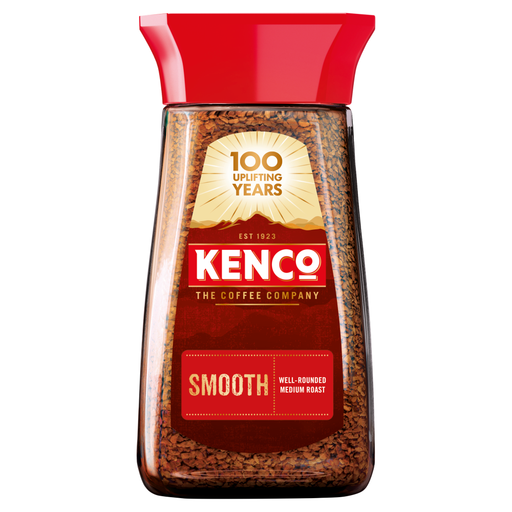 Image unavailable
Kenco Smooth Instant Coffee 200g
A 200g jar to consider if Kenco’s Smooth variety matches the style you want for a morning cup. Check the pack’s serving directions and caffeine information if either affects your choice.
View on Joybuy
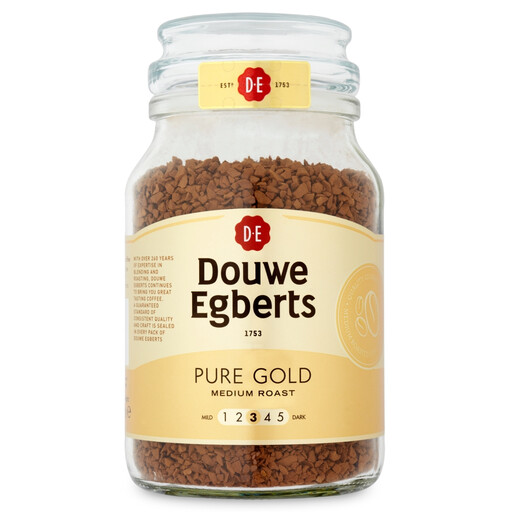 Image unavailable
Douwe Egberts Pure Gold Medium Roast 190g
This 190g jar is labelled Medium Roast, a useful distinction if you are comparing flavour descriptions for a morning cup. Confirm the preparation directions on the pack before use.
View on Joybuy
 Image unavailable
NESCAFÉ Original Decaff Coffee 300g
A 300g decaf-labelled jar for shoppers choosing a morning coffee while reducing caffeine. If you need a precise caffeine amount per serving, check the information on the pack.
View on Joybuy
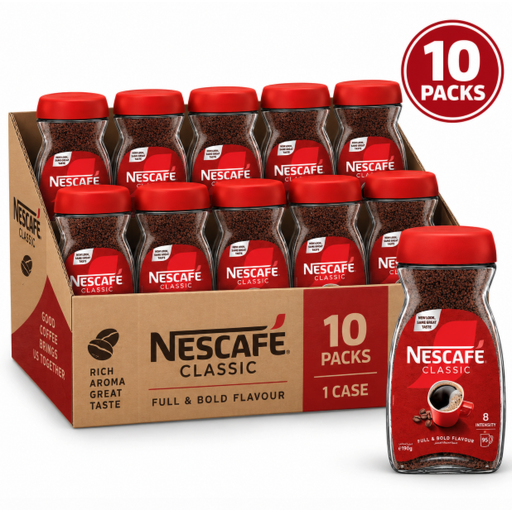 Image unavailable
NESCAFÉ Classic Original Instant Coffee, 10 × 190g jars
This is a ten-jar bundle rather than a single jar, so consider where you would keep the additional jars. Check the pack directions for preparing each morning cup.
View on Joybuy
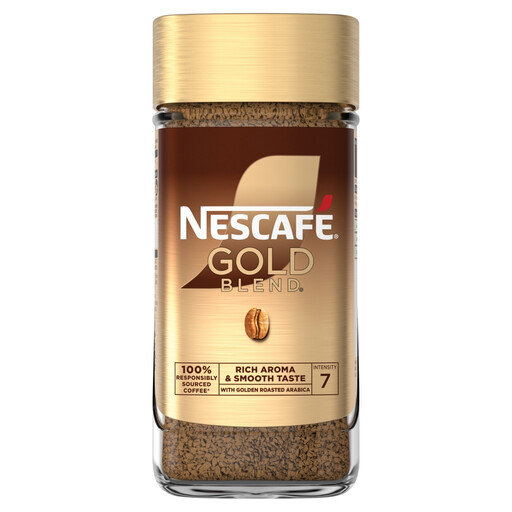 Image unavailable
NESCAFÉ Gold Blend Coffee 190g
A 190g Gold Blend jar to compare with the other pack sizes and varieties here. Check its serving directions and caffeine information on the pack if those details guide your choice.
View on Joybuy
Questions about instant coffee jars
How much instant coffee should I use for a morning cup?
Follow the directions for your particular jar. Nescafé UK & IE suggests approximately 1.8g of Original with 200ml hot water, while Sainsbury’s directs Gold Roast users to use one teaspoon per cup; those are instructions for different products.
Should I choose regular or decaf instant coffee?
Choose a decaf-labelled jar if reducing caffeine is part of your decision; otherwise, compare regular jars by the flavour style and pack format you prefer. Check the exact product information if the amount of caffeine per serving matters to you.
How should I store an instant coffee jar after opening?
Follow the instructions on the jar and close it after use. Sainsbury’s directs users of its Gold Roast jar to keep it in a cool, dry place and replace the cap; its Carte Noire Classique listing also specifies cool, dry storage.


