Who might prefer each blend?
For a short mid-morning break, flavour preference and the amount of coffee used are more useful starting points than a brand name alone.
Everyday mid-morning coffee drinkers
If you want a quick cup alongside a snack, start with the smooth or medium-roast descriptions used for products such as Kenco Smooth and Douwe Egberts Pure Gold. Choose a richer profile if pronounced roast flavour is what you prefer.
Drinkers who prefer a robust taste
Look at the maker’s roast and flavour description. Kenco describes Rich as medium-to-dark roast and rates it intensity 9 on its own scale; NESCAFÉ describes Gold Blend Intense as dark-roasted with strong toasted notes.
People keeping track of caffeine
Check the product and serving size rather than judging caffeine by roast colour. NESCAFÉ states a range of 50–90mg per 2g serving for its Original and Gold instant coffees. During pregnancy, the NHS advises no more than 200mg of caffeine a day from all sources.
What should you check?
Start with the flavour profile you enjoy, then check how you will prepare and store the coffee. Treat caffeine as a separate question from roast strength.
| Priority |
What to check |
Your needs |
| Flavour and roast |
Compare the stated roast and flavour description. Kenco rates Smooth at intensity 7 and Rich at 9 on its own scale; do not use those numbers to compare other brands directly. |
I’d choose a smooth profile for a more restrained cup, or a rich or dark-roast description when I want more pronounced roast character. |
| Preparation |
Read the pack’s suggested amount of coffee and water. Start within its guidance, then adjust later cups to taste. |
For a short snack break, I want a cup I can make without brewing equipment and adjust without guessing the starting dose. |
| Caffeine |
Check caffeine information for the product and the amount you use; roast wording does not give a caffeine figure. NESCAFÉ states 50–90mg per 2g serving for its Original and Gold instant coffees. |
If I’m tracking caffeine, I need to account for this cup alongside other sources during the day. The NHS advises a daily limit of 200mg from all sources during pregnancy. |
| Pack and storage |
Choose a jar or a refill you can store as directed on its pack. Have a clean, dry, resealable container ready before buying a refill. |
I’d consider a refill for repeat purchases if I already have a suitable container; otherwise, a jar is simpler to put away after opening. |
Brand product references
These descriptions refer to particular instant coffees, not to every product made by each brand.
NESCAFÉ
Gold Blend and Gold Blend Intense offer different roast descriptions for a mid-morning cup.
- NESCAFÉ describes Gold Blend as a smooth Arabica-and-Robusta blend and Gold Blend Intense as dark-roasted with strong toasted notes.
- Roast description is not a caffeine measure. NESCAFÉ states 50–90mg of caffeine per 2g serving for its Original and Gold instant coffees.
Kenco
Kenco’s own intensity ratings distinguish its Smooth and Rich products.
- Kenco describes Smooth as medium roast at intensity 7 and Rich as medium-to-dark roast at intensity 9.
- Those ratings are Kenco’s scale, not a numerical comparison with other brands’ strength labels.
Douwe Egberts
Pure Gold Medium Roast is a product to consider if a smooth medium-roast description appeals to you.
- Tesco lists Pure Gold Medium Roast as freeze-dried instant coffee at strength 3 and describes a smooth taste and pleasant aroma.
- Check the particular pack’s description when buying; Tesco’s strength label should not be treated as equivalent to Kenco’s intensity scale.
Carte Noire
Classique is a freeze-dried instant coffee with preparation guidance for adjusting the cup to taste.
- Sainsbury’s describes Classique as freeze-dried instant coffee and suggests one or two teaspoons per cup.
- That product description gives no intensity number comparable with Kenco’s ratings.
Instant coffee options on Joybuy
These products offer smooth and darker-roast directions to consider for a quick mid-morning cup. Check the individual pack for preparation and caffeine details that matter to you.
 No image available
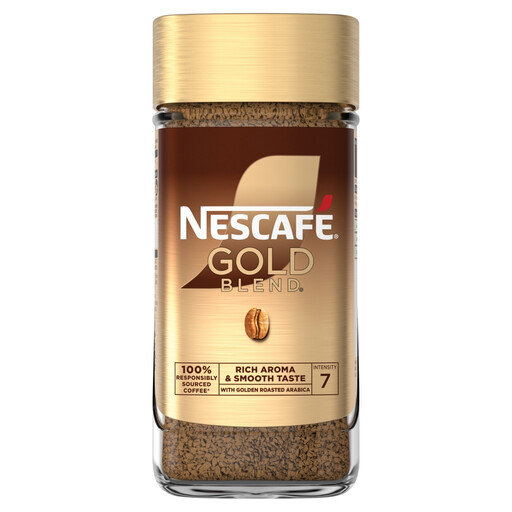
NESCAFÉ Gold Blend Coffee 190 g
For a mid-morning cup with a smooth flavour description, NESCAFÉ Gold Blend is a 190 g option. Check the pack’s preparation guidance and formulation for this variant before making it part of your regular routine.
View on Joybuy
 No image available
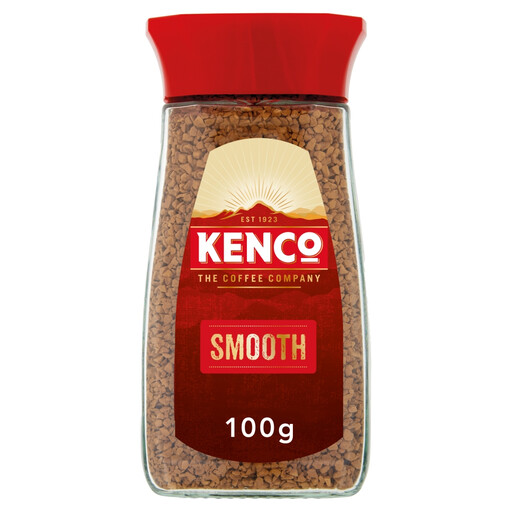
Kenco Smooth Coffee 100g
Consider this 100g option if you prefer the less forceful profile Kenco describes for Smooth. Kenco calls it a medium roast and rates it intensity 7 on its own scale; follow the pack’s serving guidance when making your first cup.
View on Joybuy
 No image available
Costa Instant Intense Dark Roast 100g
The stated dark-roast style makes this 100g instant coffee an option if you want a more pronounced roast direction with your snack. Check the pack for a starting dose and caffeine information rather than using “Intense” as a caffeine guide.
View on Joybuy
 No image available
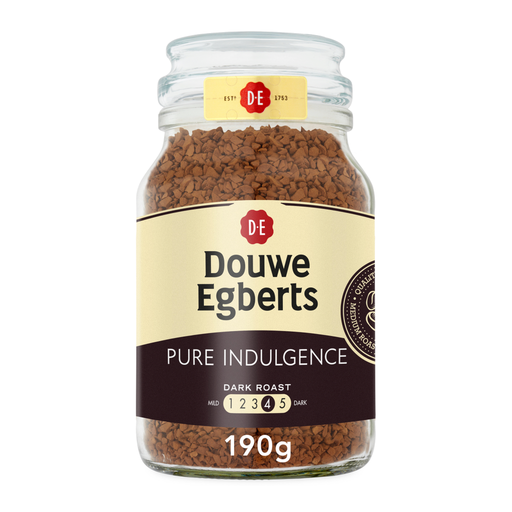
Douwe Egberts Pure Indulgence Coffee 190g
If you are considering this 190g product for a mid-morning cup, compare its pack’s roast and strength description with the flavour you want. Check the suggested serving and caffeine information separately.
View on Joybuy
 No image available
NESCAFÉ Gold Cap Colombia 95G
Consider this 95G Colombia variant if you are looking for the smoother flavour direction described in its product information. Use the pack to check its roast, starting dose and caffeine details rather than assuming they match another NESCAFÉ Gold product.
View on Joybuy
Common questions
Which instant coffee should I try if I dislike a very strong taste?
Start with a product described as smooth or medium roast. Kenco calls Smooth a medium roast with intensity 7 on its own scale; Tesco describes Douwe Egberts Pure Gold Medium Roast as smooth and aromatic. Use the pack’s suggested dose for your first cup.
What if I prefer a bolder mid-morning coffee?
Look for a rich or dark-roast flavour description. Kenco describes Rich as medium-to-dark roast and intensity 9 on its own scale, while NESCAFÉ describes Gold Blend Intense as dark-roasted with strong toasted notes. Their descriptions are not directly comparable strength measurements.
How much coffee should I use for the first cup?
Start with the instructions for the product you bought. The supplied preparation guidance gives one teaspoon (1.8g) with 200ml water for NESCAFÉ Gold Blend and one or two teaspoons per cup for Carte Noire Classique. You can adjust a later cup to taste.
How should I account for instant coffee during pregnancy?
Count caffeine from the coffee alongside your other sources: the NHS advises no more than 200mg a day during pregnancy and estimates 100mg for a cup of instant coffee. NESCAFÉ states 50–90mg per 2g serving for its Original and Gold instant coffees, so the product and amount used matter. Follow your maternity team’s advice if you have individual concerns.
How should I store a jar or refill after opening?
Follow the pack’s storage instructions and keep the coffee cool and dry. If you choose a refill, transfer it to a clean, dry container that can be resealed.


