Teams planning around 80 drinks
A jar may work if staff can measure coffee, store it after opening and estimate portions from the chosen product’s serving instructions. It is not the same purchase as 80 individual sachets.


If you need 80 individually portioned drinks for night-shift breaks, check that the pack explicitly states 80 sachets; a large jar does not establish that count. A jar suits a team that can measure each drink and store opened coffee, while smaller sachet packs suit breaks where portioned preparation matters. Consider a decaf option for breaks closer to planned sleep, as caffeine-containing drinks can disrupt sleep.
A jar may work if staff can measure coffee, store it after opening and estimate portions from the chosen product’s serving instructions. It is not the same purchase as 80 individual sachets.
Single-serve sachets avoid measuring granules at each break. Check the count across all packs and whether the drink is plain coffee or a prepared coffee beverage.
A decaf option may suit a later break when reducing caffeine is the aim. NHS Borders advises that caffeine-containing drinks can make people feel more awake and disrupt sleep.
Decide whether 80 means individually wrapped portions or an approximate number of self-measured drinks, then check the type of coffee and when it will be served.
| Priority | What to check | Your needs |
|---|---|---|
| Portion count | Look for an explicit sachet count if every drink must be wrapped separately. For a jar, use the exact product’s stated serving size and the amount used per mug; weight alone is not a drink count. | We need stock for roughly 80 breaks, but does each person need a separate sachet? Tesco and Sainsbury’s listings show jars by weight alongside smaller counted sachet packs. |
| Shared preparation | Check whether staff will measure granules from a stored jar or use one sachet per drink. A latte sachet may need different preparation from plain coffee granules. | I would rather use a portioned sachet than measure coffee during a short break; otherwise, a jar is practical if mugs, hot water and storage are available. |
| Drink contents | Read the ingredient and allergen lists, then compare nutrition per prepared mug where relevant. Tesco lists a seven-sachet Nescafé Latte containing milk, with 75 kcal and 7.0g sugars per mug. | If I want plain coffee, I should not assume a latte sachet is interchangeable with granules. Milk ingredients or the prepared drink’s nutrition may affect which pack I choose. |
| Caffeine timing | Check whether the product is regular or decaffeinated and consider caffeine from other drinks. NHS Borders advises that caffeine-containing drinks can disrupt sleep. | For a break near my planned sleep, I may prefer decaf rather than automatically making another regular coffee. |
Jars state a weight, while sachet packs state a count. The number of drinks from a jar depends on the serving instructions and how much coffee the team uses per mug.
If individual portions are essential, choose a pack explicitly labelled with the required sachet count. Otherwise, estimate drinks using the exact jar’s stated serving size.
Tesco’s Nescafé Latte listing contains milk ingredients and states 75 kcal and 7.0g sugars per prepared mug. Those details matter if the drink will be a regular part of shift breaks.
Check the ingredient, allergen and per-mug nutrition panels before buying several packs.
The European Food Safety Authority notes that caffeine can increase alertness and reduce sleepiness; NHS Borders advises that caffeine-containing drinks can disrupt sleep.
Plan regular and decaf choices around breaks and intended sleep, taking other sources of caffeine into account.
These ranges illustrate formats to compare; a brand’s presence here does not establish an 80-sachet pack.
A range spanning plain instant coffee and portioned coffee beverages.
Regular and decaf instant-coffee formats for different points in a shift.
Pure Gold is listed in jar formats by UK coffee retailers.
An own-label jar option for teams prepared to measure each drink.
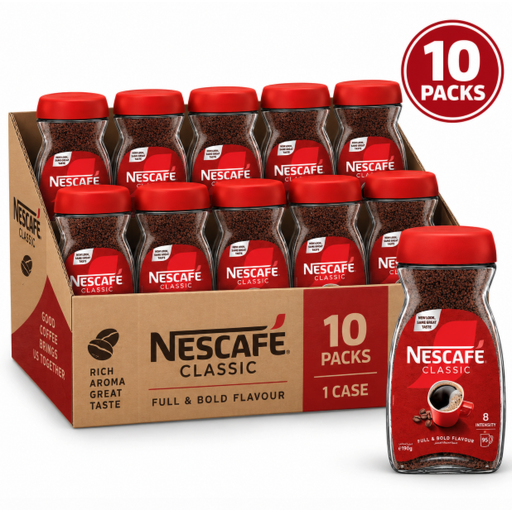
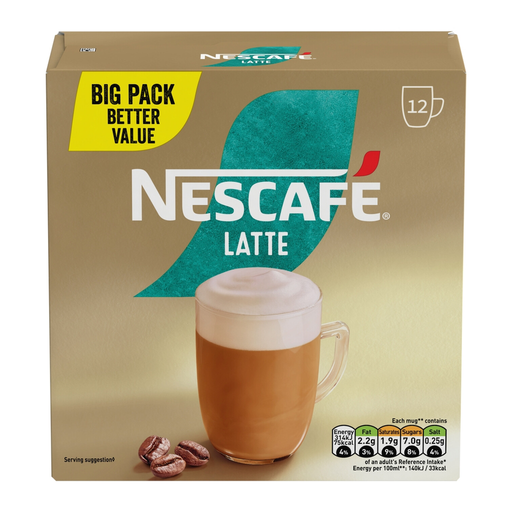
These options cover a multipack of regular-coffee jars, a decaf jar and a 12-sachet latte. None is an 80-sachet box, so choose according to whether measured drinks or individual portions matter more.
 No image available
This multipack suits shared breaks where staff can measure coffee from a jar. It contains ten 190g jars, not 80 individual sachets; consider how much opened and unopened stock the team can store.
 No image available
This decaf jar is an option for breaks when reducing caffeine is the aim. It requires measuring each drink and is not an 80-sachet pack; check the pack if a particular serving count or caffeine amount matters to you.
 No image available
The individual sachets suit breaks where staff prefer not to measure granules. This is a 12-sachet latte pack rather than plain coffee or an 80-sachet box; it contains milk, so check the ingredients and prepared-drink nutrition.
Its weight alone cannot tell you that. Use the exact product’s serving instructions and the amount your team puts in each mug to estimate drinks; choose a counted sachet pack if 80 separate portions are required.
They can suit staff who want an individual portion without measuring coffee. Check how many packs your drink plan requires and whether the sachets contain plain coffee or a milk-containing beverage; Tesco and Sainsbury’s list sachet packs with counts including seven, eight and 12.
Decaf is an option if you want a coffee-style drink while reducing caffeine before planned sleep. NHS Borders advises that caffeine-containing drinks can make people feel more awake and disrupt sleep; also consider caffeine from drinks outside the workplace.