Buyers stocking a shared office kitchen
If colleagues have different tastes, a smooth or balanced everyday jar gives you a starting point without making a bold flavour the only choice.


For an office with mixed tastes, a coffee described as smooth or balanced is a sensible starting point, while a fuller-flavoured jar makes more sense when colleagues ask for it. Choose the pack size around how quickly the office uses coffee and how it can be stored; keep a decaffeinated option separate if colleagues want one.
If colleagues have different tastes, a smooth or balanced everyday jar gives you a starting point without making a bold flavour the only choice.
When coffee is used quickly, preparation instructions, storage space and the quantity in each order matter alongside flavour. JDE Professional positions its Pure Gold 750g x6 case for high-consumption settings.
If colleagues already have an everyday coffee but ask for a fuller or more aromatic cup, consider a separate jar rather than changing the shared option for everyone.
Start with the flavour people want to share, then check preparation, caffeine labelling and pack size before ordering.
| Priority | What to check | Your needs |
|---|---|---|
| Shared flavour | Compare the exact variant: Kenco describes Smooth as rounded and Rich as full-bodied, while Nescafé describes Original as medium-intensity, full and bold. These are the brands’ flavour descriptions, not a taste test. | We have mixed preferences, so I would start with a smooth or balanced jar and add a bolder one if colleagues ask for it. |
| Preparation | Read the instructions on the chosen pack for the amount of coffee and water. Sainsbury’s specifies one teaspoon per cup for its Gold Roast 200g jar; instructions can differ between products. | Breaks are short, and I want colleagues to be able to make a consistent cup with the equipment in our kitchen. |
| Caffeine choice | Check caffeine information for the exact product and identify a decaffeinated option if needed. Nescafé explains that strength numbers generally describe flavour intensity rather than caffeine content. | Some colleagues want decaf, so a bold-tasting regular coffee should not be mistaken for a guide to its caffeine content. |
| Pack and storage | Match the quantity to expected use and available storage. JDE Professional describes its Pure Gold 750g x6 case as intended for high-consumption settings; check the current pack for storage and ingredient information. | A large order works for our kitchen only if we can store it properly and use it at a suitable pace. |
A stronger-tasting coffee does not, by that label alone, tell you how much caffeine it contains. Nescafé says strength-scale numbers generally reflect flavour intensity.
Choose the flavour for taste, check product caffeine information where available, and consider a separate decaf jar when it is wanted.
JDE Professional positions its Pure Gold 750g x6 case for high-consumption settings, but that does not establish the right quantity for every office.
Compare expected cups per week with the pack quantity, storage space and how often you can replenish the kitchen.
A larger pack also needs room to be kept cool, dry and securely closed where the pack instructions require it.
Tesco and Sainsbury’s caution that product information can change, which matters when someone needs to check ingredients or allergens.
Read the label on the pack being served, particularly for colleagues with an allergy, intolerance or other dietary requirement.
A product page alone does not establish that the required pack size can be delivered when the office needs it.
Confirm the exact variant, current stock and delivery details before placing an order.
These descriptions concern the named coffees and formats, not every product made by each brand.
Nescafé describes Original as a medium-intensity coffee with a full, bold flavour.
Kenco describes Smooth as rounded, Rich as full-bodied and Decaf as a separate caffeine-free choice.
JDE Professional describes Pure Gold as a medium-roast coffee and offers a 750g x6 professional case for high-consumption settings.
Tesco describes Carte Noire Classique as Arabica-rich with a rich, velvety body; Sainsbury’s describes its 100g jar as rich and smooth.
Tesco Gold Instant Coffee 500g is listed as freeze-dried coffee made with Arabica and Robusta beans.
Sainsbury’s Gold Roast 200g is labelled freeze-dried, Smooth & Rich and 3 Medium.
These options cover Kenco Smooth in two listed pack formats, a decaffeinated jar and two other regular coffees for office snack breaks. Check each variant against the flavour and quantity your kitchen needs.
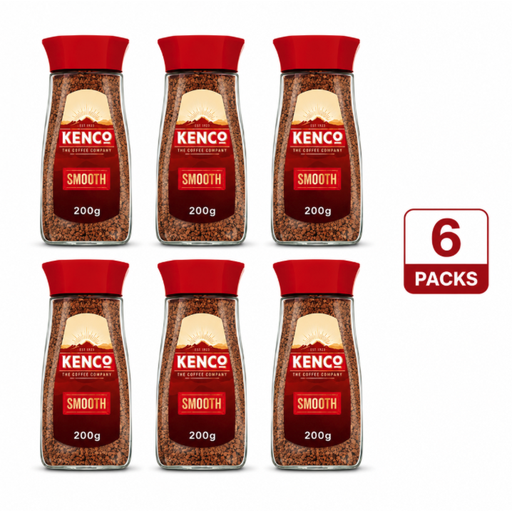 No image available
Consider this listing when the office wants Kenco Smooth in a larger order. The title states 200g x 6, but confirm the delivered pack quantity before ordering.
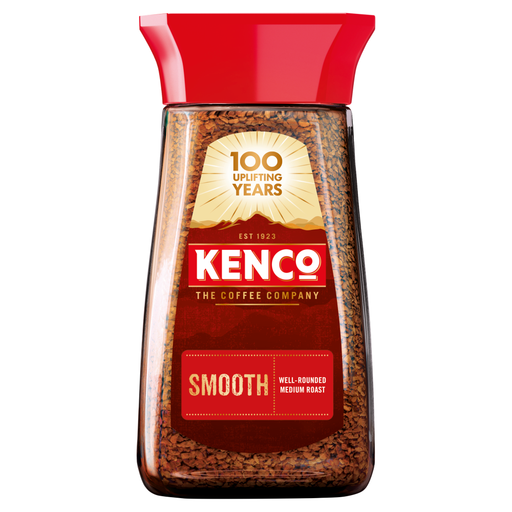 No image available
A single 200g jar for a shared kitchen where Kenco Smooth’s rounded flavour is wanted. The Joybuy product information gives a preparation guide of 1–2 teaspoons with hot water and calls for cool, dry storage.
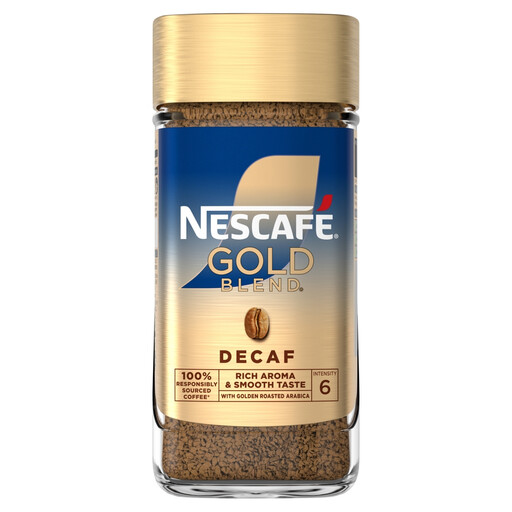 No image available
A 190g decaffeinated option to keep alongside the office’s regular coffee. If a specific caffeine amount matters, check the current pack for that information.
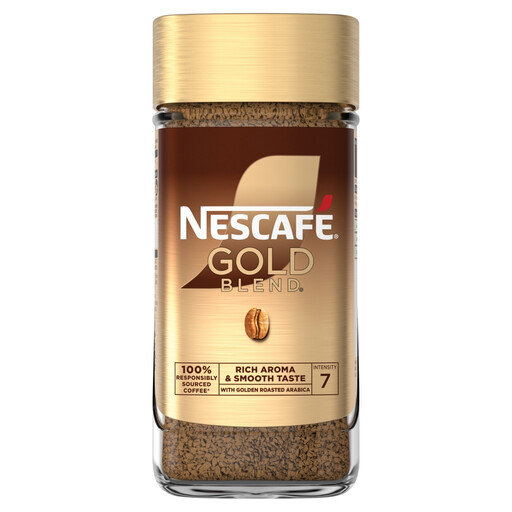 No image available
A 190g regular-coffee jar to consider for office breaks. This is Gold Blend, not the separately described Nescafé Original; check the current pack’s ingredient list if its coffee composition affects your choice.
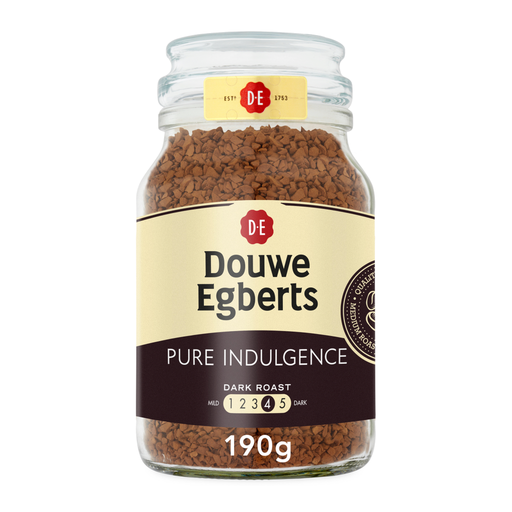 No image available
A 190g jar to consider when colleagues request a fuller-flavoured alternative. It is Pure Indulgence, not the Pure Gold professional case; do not use its strength label as a caffeine measure.
No: Nescafé says strength-scale numbers generally describe flavour intensity rather than caffeine content. Check caffeine information for the exact coffee if the amount matters, and choose a separate decaf option when wanted.
Follow the instructions on the pack being used. For example, Sainsbury’s specifies one teaspoon per cup for Gold Roast 200g, while the Joybuy information for Kenco Smooth 200g gives a 1–2 teaspoon guide with hot water.
Check the physical pack before serving the coffee to someone with an allergy or other dietary requirement. Tesco and Sainsbury’s caution that product information can change.
Consider it when expected use and storage space suit the quantity. JDE Professional positions its Pure Gold 750g x6 case for high-consumption settings, but a smaller jar may be easier to manage when office use is lower or uncertain.