Workplace and meeting-room buyers
For staff or visitors helping themselves alongside tea and biscuits, counted coffee portions can simplify restocking. Plan how to offer milk, sugar and a separately marked decaf choice.


For a self-service tea-and-biscuits table serving about 240, choose plain coffee sticks if counted portions and separate milk and sugar matter. Check the case count: Nestlé Professional UK lists 200-stick Nescafé packs, while Vending Superstore lists a 250-stick Lyons case. A shared jar suits a station where people can measure their own coffee; Kenco’s 3-in-1 sachets already contain whitener and sugar, so they offer less choice over the finished drink.
For staff or visitors helping themselves alongside tea and biscuits, counted coffee portions can simplify restocking. Plan how to offer milk, sugar and a separately marked decaf choice.
Individual sticks suit spaces where each guest needs a sealed serving rather than access to a shared jar. Check the pack count against the number of rooms or expected visitors.
Decide whether the count must be exact before choosing a case. Nestlé Professional UK lists 200-stick Nescafé packs, and Vending Superstore lists a 250-stick Lyons case; neither count is 240.
Start with the number of coffee servings needed, then choose between individually portioned sticks, a shared container and a pre-mixed drink.
| Priority | What to check | Your needs |
|---|---|---|
| Pack count | Check that the count refers to coffee portions, not tea bags or milk sticks. Compare the case count and portion weight with the number of drinks planned. | I am planning around 240 coffees, so a 200-stick case would need another supply; a 250-stick case would cover that count if each drink uses one stick. |
| Self-service format | Choose individual sticks for counted servings or a jar where people can measure their own coffee. Keep a clean, dry spoon available for a shared jar. | For guests helping themselves, I want to decide whether sealed portions or a shared container will be easier to manage. |
| Drink choice | Check whether the coffee is plain, decaf or pre-mixed. Kenco describes its 3-in-1 sachet as coffee with whitener and sugar. | Some guests may want black coffee, while others may add milk or sugar. I also want a clearly marked decaf option if it is needed. |
| Ingredients | Read the exact product’s ingredients and allergen information, especially for sachets containing whitener. Keep different drink types clearly identified. | I need to know what is in each sachet before putting it out with the biscuits. |
A 240 count can refer to another refreshment item, leaving the planned coffee servings uncovered.
Check the product category, coffee portion count and weight per portion on the exact pack before ordering.
Kenco’s 3-in-1 blend contains whitener and sugar, so it does not let guests add either ingredient independently.
If guests need that choice, offer plain coffee with additions separately and identify any pre-mixed sachets clearly.
Guests looking for decaf need to be able to tell it apart from regular coffee. Nescafé UK & IE states that Original and Gold contain 50–90mg caffeine per 2g serving.
If offering decaf, label it separately and keep its supply distinct from regular coffee.
A listing for a smaller refill does not establish the number of individual servings needed for a tea-and-biscuits station.
Check the current pack size, format and stock status before relying on a listing for the occasion.
Nescafé has individually portioned instant-coffee formats alongside its regular and decaf ranges.
Kenco’s range includes Smooth, Decaf and pre-mixed 3-in-1 instant coffee.
Douwe Egberts is a shared-container option for a station where people prepare their own cups.
Carte Noire has appeared in a 150g instant-coffee refill format at Tesco.
Tesco offers own-label instant coffee in a shared-jar format.
Sainsbury's lists own-label regular and decaf instant coffee for shared-container service.
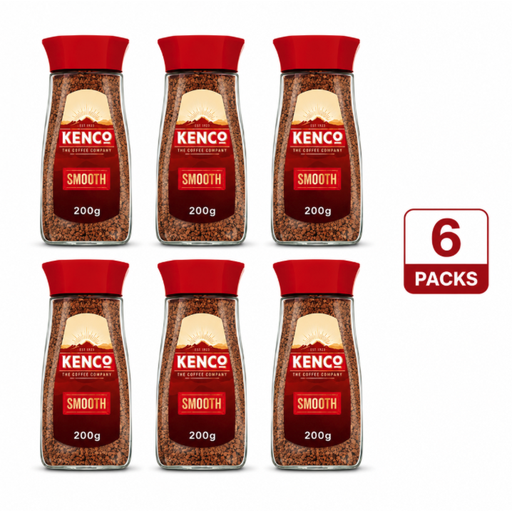
The Joybuy option below is a shared-jar alternative for a tea-and-biscuits station, rather than a case of individually portioned coffee sticks.
 No image available
Six 200g jars provide coffee for a shared tea-and-biscuits station, rather than individually sealed servings. Check the pack’s preparation instructions when planning around 240 drinks, and keep a clean, dry spoon available for the jar.
Check the exact coffee portion count on the product page or case label, not just a 240 count elsewhere in a catering range. Nestlé Professional UK lists 200-stick Nescafé packs, while Vending Superstore lists a 250-stick Lyons pack; confirm that the counted items are coffee rather than tea bags or milk portions.
Offer a clearly identified decaf option if the expected guests need one, and keep it distinct from regular coffee. Kenco sells a product labelled Decaf; Nescafé UK & IE states that its regular Original and Gold coffees contain 50–90mg caffeine per 2g serving.
Not when guests need to choose their own additions. Kenco describes its 3-in-1 sachet as coffee with whitener and sugar; check the exact pack’s ingredients and allergen information before serving it.
Keep the coffee in a cool, dry place and follow the pack’s best-before information, as Kenco advises for its instant coffee. Use a clean, dry spoon for a shared jar and close the container between uses.