Choose an everyday instant coffee around the flavours your household regularly enjoys: a smoother blend suits drinkers who dislike an overly strong cup, while a richer blend suits those who actively want a more robust one. Before committing to a larger jar or refill, check the exact variant, storage arrangement and decaf label where caffeine matters; roast or intensity alone does not establish caffeine content.
Who is choosing the coffee?
Households sharing an everyday jar
If several people will drink the same coffee regularly, start with a flavour profile they can agree on before choosing a larger jar or refill. Nescafé describes Gold Blend as medium roast, while Kenco positions Smooth as full-flavoured without an overly strong or bitter taste.
Drinkers who prefer a robust cup
If a stronger flavour is the point of the purchase, compare blends described as rich or full-bodied. Kenco positions Rich as a more robust choice than Smooth within its own range.
Households paying attention to caffeine
Choose by the exact product label rather than its roast or blend name when looking for decaf. During pregnancy, NHS guidance says to count caffeine from all sources and not exceed 200mg a day.
What should you check?
Settle on a flavour direction for regular drinkers, then check the pack format, caffeine label and storage needs.
| Priority |
What to check |
Your needs |
| Everyday flavour |
Compare the stated flavour profile and roast of the exact blend. Kenco labels Smooth intensity 7 and Rich intensity 9 within its range; those numbers are not a scale shared by all brands. Nescafé describes Gold Blend as a medium-roast Arabica and Robusta blend. |
I want a jar that regular drinkers will use. A smoother profile makes sense if they dislike a forceful cup; a richer one makes sense if they ask for a more robust flavour. |
| Pack format |
Check the net weight and whether the coffee comes in a jar or refill. For a refill, have a clean, dry container that closes securely. |
A refill works for me if I have somewhere suitable to keep it. Otherwise, a jar may be the simpler format for the weekly shop. |
| Caffeine |
Confirm that the exact variant says decaf; do not infer it from roast or intensity. During pregnancy, NHS guidance sets a limit of 200mg caffeine a day from all sources and estimates 100mg in a cup of instant coffee. |
If I am reducing caffeine, I need a clearly labelled decaf variant. During pregnancy, I also need to account for caffeine beyond this cup. |
| Storage |
Read the pack’s best-before information and storage directions. Nescafé and Kenco advise keeping their instant coffee in a cool, dry place. |
For a larger pack, I need a suitable place to keep the coffee until it is finished, especially if I transfer a refill into a jar. |
Common buying mistakes
-
Reading intensity numbers as a universal scale
Kenco calls Smooth intensity 7 and Rich intensity 9, but those are descriptors within its range. They do not establish how another brand’s blend will taste.
Choose a flavour direction first. If the household has not tried a blend, consider a smaller pack before committing to a larger one.
-
Choosing a refill without planning where it will go
A pouch needs suitable storage once opened or transferred. Kenco advises keeping instant coffee in a cool, dry place.
Check that you have a clean, dry container that closes securely, and read the pack’s storage and best-before information.
-
Assuming a roast name means decaf
Roast and flavour descriptions do not identify whether the exact coffee is decaffeinated. This distinction matters when caffeine reduction is the reason for choosing a variant.
Look for decaf on the exact jar or pouch and check its serving information if you are tracking caffeine.
-
Relying on a listing title alone
A Joybuy listing titled Kenco Rich carried product details describing Coffee Mate, while a Douwe Egberts Pure Gold listing showed the item out of stock when accessed. A familiar title alone is not enough to settle product identity or availability.
Before adding coffee to a weekly shop, check the live product page for the exact name, ingredients, pack size and availability.
Brand ranges to compare
Nescafé
Nescafé describes Gold Blend as a medium-roast Arabica and Robusta blend; its UK range also includes Original in jars and refill packs.
- Gold Blend is listed by Nescafé in 95g and 190g formats.
- Check the exact variant rather than assuming every coffee in the range has the same flavour or caffeine status.
Kenco
Kenco distinguishes Smooth and Rich by their stated flavour profiles and intensity labels.
- Kenco describes Smooth as intensity 7 and Rich as intensity 9; its range includes refill formats.
- Use those intensity numbers to compare Kenco variants, not as a direct measure against another brand.
Douwe Egberts
A Joybuy listing identifies Pure Gold Medium Roast as a 190g instant coffee option.
- The named medium-roast variant offers another stated flavour direction to compare.
- The Pure Gold listing showed the item out of stock when accessed; check live availability before planning a weekly shop around it.
Instant coffee options on Joybuy
These Joybuy options cover medium-roast, smooth, decaf and dark-roast choices for a weekly shop. Choose the exact blend and pack size around the drinkers who will use it.
 No image available
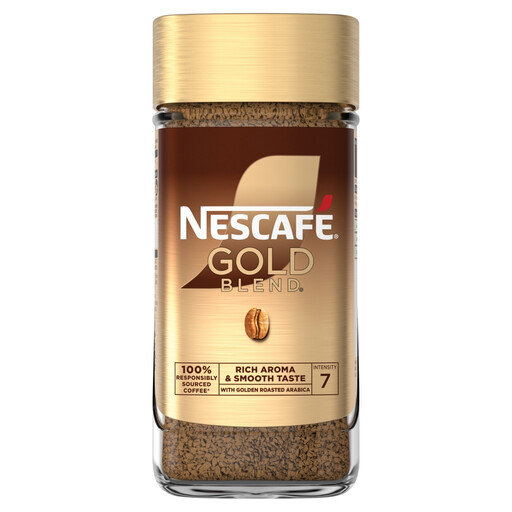
Nescafé Gold Blend Coffee 190g
For households considering a medium-roast everyday blend, Nescafé describes Gold Blend as an Arabica and Robusta coffee with a smooth profile. This is the 190g pack; check the exact variant if caffeine content matters to you.
View on Joybuy
 No image available
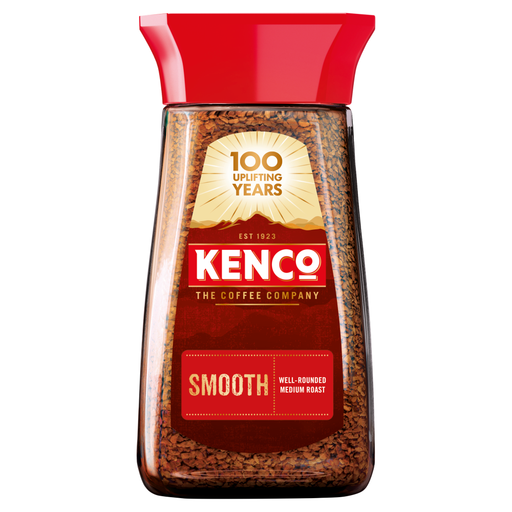
Kenco Smooth Instant Coffee 200g
For regular drinkers seeking a less forceful cup, Kenco describes Smooth as full-flavoured without an overly strong or bitter taste. This is the 200g pack; check its roast description on the exact pack if that affects your choice.
View on Joybuy
 No image available
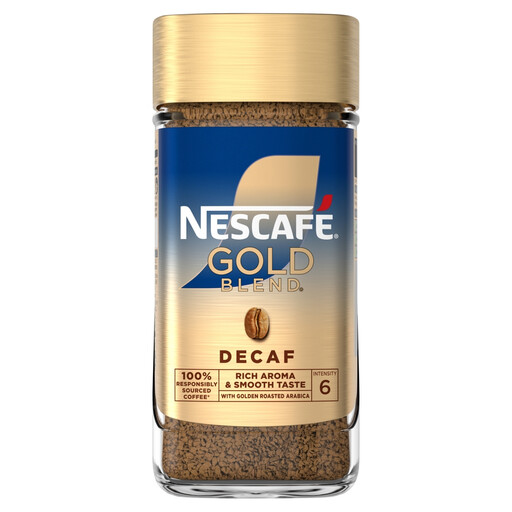
Nescafé Gold Blend Decaf Coffee 190g
This 190g Gold Blend variant is explicitly identified as decaf, making the label clearer than a roast name for shoppers choosing a decaffeinated coffee. Check the exact pack’s serving information if you are tracking caffeine.
View on Joybuy
 No image available
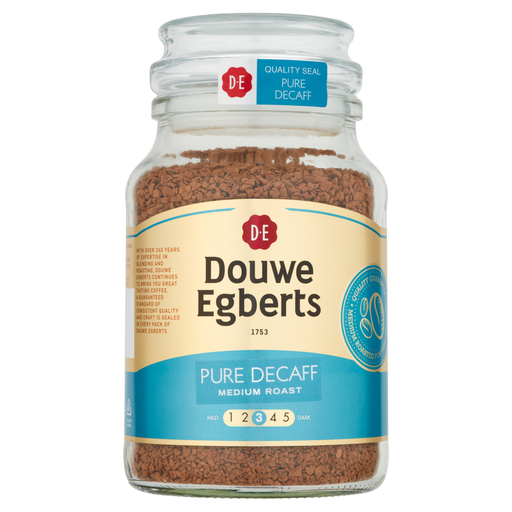
Douwe Egberts Pure Decaffeinated Instant Coffee 190g
This 190g jar is identified as decaffeinated instant coffee for a household choosing a decaf variant. If the precise remaining caffeine amount matters, check the statement on the exact pack.
View on Joybuy
 No image available
Costa Instant Intense Dark Roast 100g
The named dark-roast profile gives drinkers seeking a bolder flavour a different direction from the smooth blends above. This is a 100g pack; check that its stated flavour suits the people who will drink it.
View on Joybuy
Frequently asked questions
How should I store instant coffee after opening?
Keep it in a cool, dry place, as Nescafé and Kenco advise for their instant coffees, and check the pack’s best-before information. If you buy a refill, transfer it to a suitable clean, dry container that closes securely.
What should I check if I am choosing instant coffee during pregnancy?
The NHS advises no more than 200mg caffeine a day during pregnancy and estimates 100mg in a cup of instant coffee. Account for caffeine from other sources as well, and check that the exact product is labelled decaf if you want a decaffeinated variant.
Should I check the ingredients on coffee mixes and flavoured variants?
Yes. Check the exact product’s ingredients, particularly where a mix or flavoured variant may contain milk or whitener. For food prepacked for direct sale, the Food Standards Agency says allergenic ingredients must be emphasised in the full ingredients list.


