People taking a short afternoon break
An instant jar suits a cup made with hot water and a spoon. Check the stated roast and pack size when choosing between jars rather than assuming they are identical.


Choose an instant-coffee jar for a quick cup made with hot water; compare the stated roast, pack size and whether you want decaf. If by filter coffee you mean coffee brewed from ground beans, choose ground coffee or coffee bags instead: they need a brewing step and are not interchangeable with soluble instant coffee. For pregnancy, the NHS advises no more than 200mg of caffeine a day from all sources, so consider the afternoon cup within the daily total.
The useful starting point is whether you want coffee that dissolves in water or coffee brewed from grounds.
An instant jar suits a cup made with hot water and a spoon. Check the stated roast and pack size when choosing between jars rather than assuming they are identical.
Look for a clearly labelled decaf product and read its current ingredients and allergy information. During pregnancy, the NHS advises considering caffeine from all foods and drinks against its daily limit.
Choose ground coffee for a suitable brewing method, or coffee bags if you want ground coffee brewed in a cup without a cafetière. Neither is a soluble instant-coffee jar.
Choose the preparation format first; then compare the details that matter within that format.
Choose it when: You want soluble coffee prepared with hot water and no filter equipment.
Bear in mind: An instant jar will not give you coffee brewed from grounds.
Choose it when: You want the instant format but prefer a product labelled decaf.
Bear in mind: Check the exact product label, including ingredients and allergy information; decaf does not remove the need to consider total caffeine intake where that matters.
Choose them when: You specifically want coffee brewed from grounds; Taylors describes its coffee bags as an option without a cafetière.
Bear in mind: Coffee bags need brewing time, while loose ground coffee needs a suitable brewing method.
| Priority | What to check | Your needs |
|---|---|---|
| Preparation format | Check whether the product is soluble instant coffee, coffee bags or loose ground coffee. For ground coffee, check which brewing method you will use. | I want a cup with hot water and a spoon, or I would rather allow time to brew coffee from grounds. |
| Roast and strength | Read the product's stated roast, strength and bean information where shown. A brand's flavour description is not an independent taste test. | A stated medium roast helps me narrow down jars, but I do not want to assume that different products taste the same. |
| Decaf and labelling | Check that the exact product is labelled decaf, then read its current ingredients and allergy information. During pregnancy, the NHS advises no more than 200mg of caffeine a day from all sources. | I am looking for a decaf afternoon drink, or I need to account for this cup alongside other sources of caffeine during the day. |
| Pack and storage | Compare pack weights and stated serving counts where available. Check the pack's storage instructions and reseal an instant jar as directed. | A jar may last through several afternoon breaks, so I want a pack size I can use and store as instructed. |
Instant coffee dissolves in water; coffee bags contain ground coffee that must brew. The wrong format can leave you with a preparation method you did not want for a short break.
Decide whether speed with hot water or coffee brewed from grounds matters more before choosing a jar, bags or loose grounds.
Pack weight and declared servings describe different things: Sainsbury's lists 55 servings for its 200g Gold Roast instant jar, but another jar need not make the same number of cups.
Read the pack weight and preparation directions, and compare stated servings when they are available.
A standard instant jar is not a decaf product. During pregnancy, the NHS advises no more than 200mg of caffeine a day and notes that coffee and other foods and drinks can contribute.
Choose a product clearly labelled decaf if that is the format you want, and consider all sources of caffeine when the NHS pregnancy guidance applies.
Ingredients and product details can change; this matters particularly when checking decaf status or allergens. A poorly closed jar also fails to follow the storage directions given for instant coffee.
Read the current physical label and storage instructions, then replace the cap after use.
These examples illustrate different coffee formats and labelled features; a brand's inclusion does not mean every product in its range has the same characteristics.
Its Gold Roast range includes a 200g instant jar and a separately labelled decaffeinated instant option.
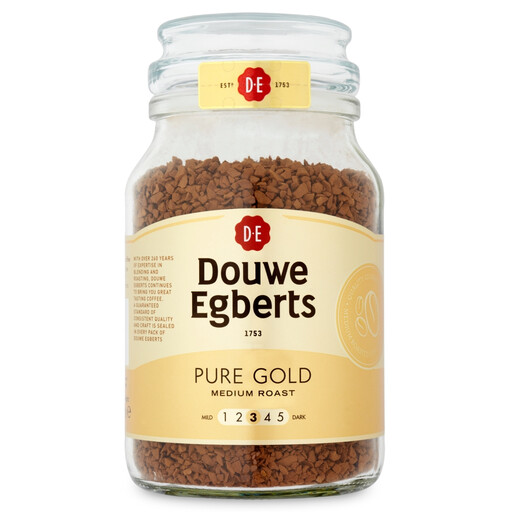
Pure Gold is represented here by a 190g freeze-dried instant-coffee jar.
Its instant range includes Gold Instant Coffee and a Decaf Americano Micro-Ground product.
Its instant-coffee category includes standard jars and decaffeinated products from different brands.
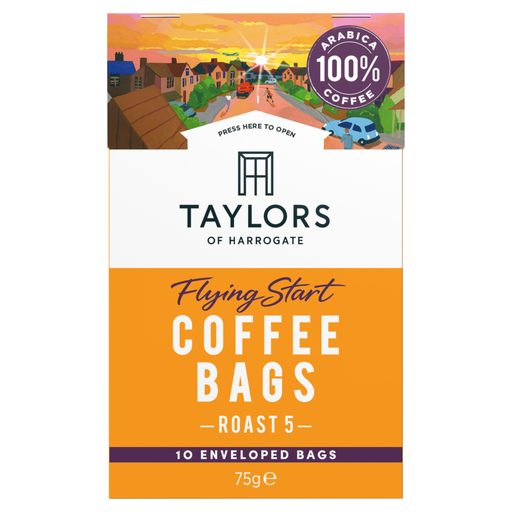
Its coffee bags are an option for ground coffee brewed in a cup, rather than soluble instant coffee.
Lavazza's explanation of instant coffee helps distinguish a quick soluble-coffee preparation from brewing ground coffee.
These options cover instant coffee, decaf products and coffee brewed from grounds. Choose the format you want before comparing individual packs.
 No image available
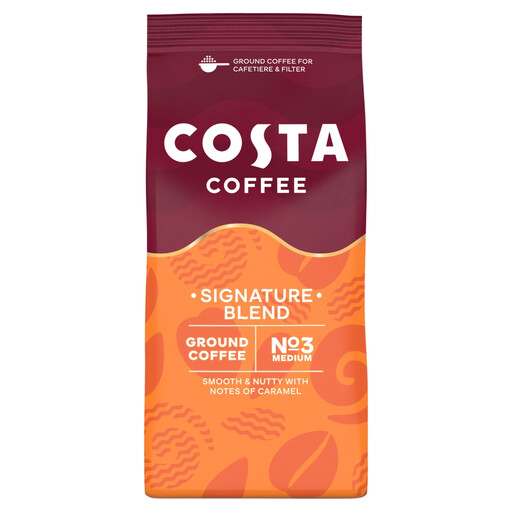
Choose this ground coffee if you want to brew an afternoon cup using a cafetière or filter method, rather than dissolve instant coffee in water. The pack is labelled No. 3 Medium and contains 200 g; check that you have a suitable brewing method.
 No image available
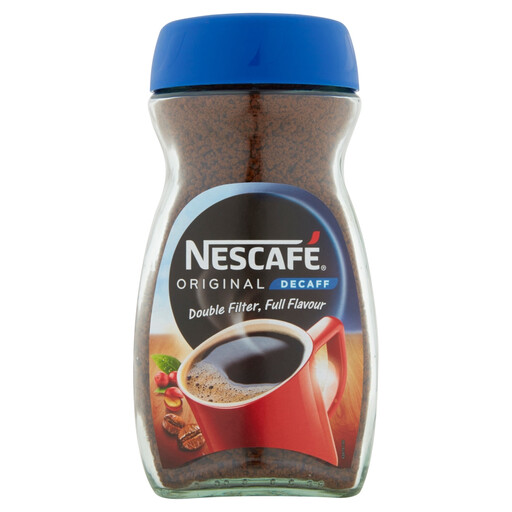
A 200g decaf option to consider when choosing coffee for an afternoon break. Check the current pack for its preparation directions and caffeine information if those details affect your choice.
 No image available
This 190g medium-roast instant coffee is an option for a cup made with hot water rather than filter equipment. Its stated roast can help narrow your choice, but it does not establish how the coffee will taste to you.
 No image available
These 75g coffee bags suit someone who wants coffee brewed from grounds without using a cafetière. They require brewing in the cup and will not dissolve like instant coffee.
 No image available
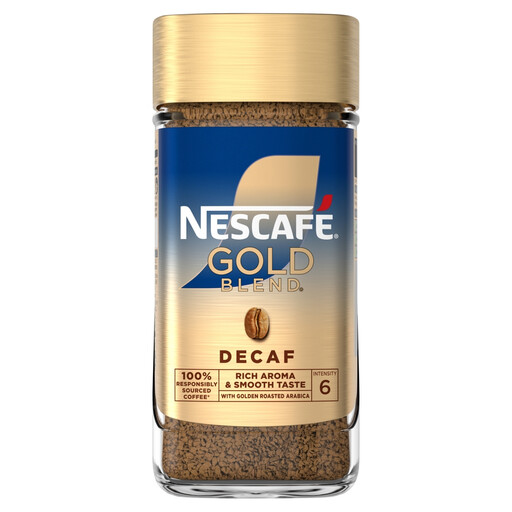
Consider this 190g decaf product if you prefer a labelled decaf option for an afternoon cup. Read the current pack for preparation directions and caffeine information relevant to your choice.
No. Instant coffee dissolves in water, while filter-style coffee is brewed from ground coffee. Coffee bags offer a way to brew ground coffee without a cafetière, but they are not instant jars.
Follow the directions on the jar you buy. For its Gold Roast instant coffee, Sainsbury's instructs you to use one teaspoon per cup with hot, rather than boiling, water and to replace the cap after use; check your own pack for its storage directions.
Choose a product specifically labelled decaf rather than assuming a standard instant jar is decaffeinated. Sainsbury's lists Gold Roast Decaffeinated Instant Coffee Granules, while Marks & Spencer lists a Decaf Americano Micro-Ground product; read the current label for ingredients and allergy information.
The NHS advises no more than 200mg of caffeine a day during pregnancy, counting coffee alongside other foods and drinks containing caffeine. Its guidance estimates 100mg in a cup of instant coffee and notes that filter coffee and coffee-shop coffee can contain more.
Check pack weight, the recommended amount per cup and any stated serving count. For example, Sainsbury's lists 55 servings for its 200g Gold Roast instant jar; do not assume another 200g jar has the same preparation directions or serving count.