Hosts without coffee equipment
If guests have a kettle and mugs but no coffee machine, soluble instant coffee avoids a brewing wait. Coffee bags offer a ground-coffee cup made in the mug, but guests need time to steep and remove them.


Choose soluble instant coffee for a continental-breakfast station where guests need a cup without waiting for it to brew or removing a used bag. Choose a pyramid-shaped coffee bag for ground coffee brewed in the mug, allowing the time stated on its pack; a one-cup filter is a separate option that sits over the cup rather than steeping in it.
If guests have a kettle and mugs but no coffee machine, soluble instant coffee avoids a brewing wait. Coffee bags offer a ground-coffee cup made in the mug, but guests need time to steep and remove them.
Look for a pack that explicitly describes the bag as pyramid-shaped and containing ground coffee. A soluble-coffee sachet and a one-cup filter are different formats, even though each can make an individual cup.
Check the exact pack for a decaffeinated variant rather than assuming all bags have the same caffeine content. Raw Bean Coffee lists a decaffeinated pyramid-bag product, while caffeine information for a soluble coffee does not establish the amount in a coffee bag.
Decide how guests will make each cup, then check the preparation time and pack details for the format you choose.
| Priority | What to check | Your needs |
|---|---|---|
| Coffee format | Check for soluble instant coffee, a ground-coffee bag explicitly described as pyramid-shaped, or a filter designed to sit over a cup. NESCAFÉ describes instant coffee as soluble; Raw Bean Coffee describes its pyramid bags as containing ground coffee. | I want guests to know whether to stir the coffee into water, steep a bag or pour water through a filter. |
| Preparation time | Read the instructions for the exact pack. Tesco Groceries lists a 3–4-minute brew for Percol Colombian bags; Taylors of Harrogate advises four minutes for Rich Italian coffee bags. | For a busy self-service station, I would rather avoid a brewing wait. At a seated breakfast, there may be time for each guest to steep a bag. |
| Portions and wrapping | Check the number of servings and whether bags are individually wrapped. A larger case is a different purchase from a small breakfast pack: Raw Bean Coffee lists its individually enveloped decaf bags as a case of 50. | If I serve coffee only occasionally, I want a pack size that fits how often guests will use it. |
| Flavour choice | Compare the named variety and any roast or tasting notes on the specific pack. Do not assume two coffee bags will make the same cup merely because they use the same brewing format. | I may want to offer a choice alongside breakfast, but I would choose by the actual product description rather than the bag shape alone. |
| Caffeine | Check the product and serving information rather than transferring a figure between formats. NESCAFÉ reports 50–90 mg per 2 g serving for its Original and Gold instant coffees; that range does not describe other products. | When a guest asks for decaf, I want the alternative clearly identified instead of assuming a smaller serving is decaffeinated. |
| Disposal | Read separate instructions for the used coffee bag, individual wrapper and outer pack. Check which materials your local authority accepts for food-waste collection. | I need a straightforward way for guests to clear used bags or filters without assuming every part goes in the same bin. |
Soluble coffee dissolves in water. Raw Bean Coffee describes its pyramid bags as holding ground coffee, which steeps in the mug and is then removed. A one-cup filter sits over the mug instead.
Check the product-form wording before choosing the coffee for your breakfast setup.
Tesco Groceries gives 3–4 minutes for Percol Colombian bags, while Taylors of Harrogate gives four minutes for Rich Italian bags. Taylors’ out-of-home coffee-bag guidance gives two minutes, so instructions can differ across ranges.
Plan the serving time around the exact retail pack you buy.
Disposal directions depend on the product and the materials used for its bag, filter and packaging. Local food-waste collections also have their own acceptance rules.
Read the pack’s directions for each component and check your local authority’s collection guidance.
NESCAFÉ gives a range of 50–90 mg per 2 g serving for its Original and Gold instant coffees; it is not a figure for every instant coffee or coffee bag. The NHS states a 200 mg daily caffeine limit during pregnancy, counting all sources.
Keep any decaf option clearly labelled and use the chosen product’s serving information when comparing caffeine amounts.
A reference for shoppers who specifically want a pyramid-shaped bag of ground coffee rather than soluble instant coffee.
A standard coffee-bag reference for making a cup in a mug; the format should not be assumed to be pyramid-shaped.
A coffee-bag reference for a kettle-and-mug setup, with preparation instructions that vary by range.
An alternative for shoppers who want ground coffee brewed through a filter suspended over one cup.
These options include portioned coffee, bags that brew in a mug and filters that sit over a cup. If pyramid shape is essential, confirm it on the exact pack before buying.
 No image available
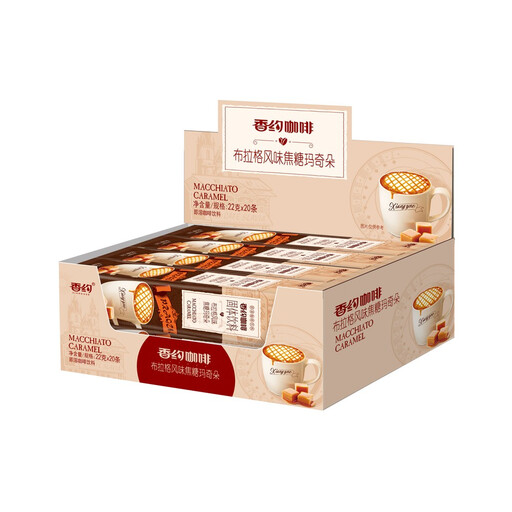
A portioned caramel-macchiato option for a self-service breakfast. Check the pack’s preparation and ingredient information for guests who need a particular coffee format or need to avoid an ingredient.
 No image available
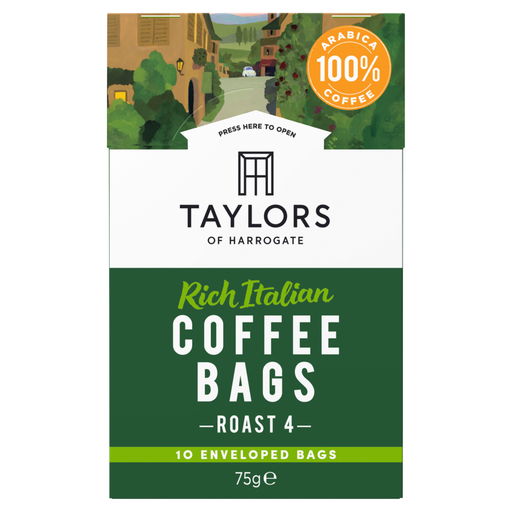
A coffee-bag option for making a cup in the mug rather than stirring in soluble coffee. Taylors of Harrogate advises a four-minute brew for Rich Italian bags; check the pack if a pyramid shape is essential.
 No image available
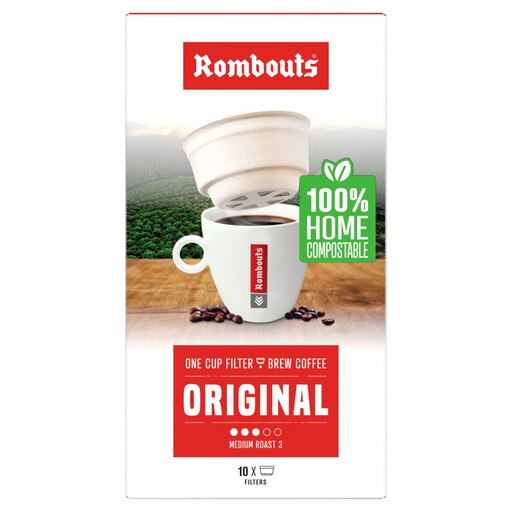
This ground-coffee filter sits over the cup rather than steeping inside it. Rombouts instructs users to place it stably and add hot, not boiling, water to the marked line; check local disposal arrangements for the used filter.
 No image available
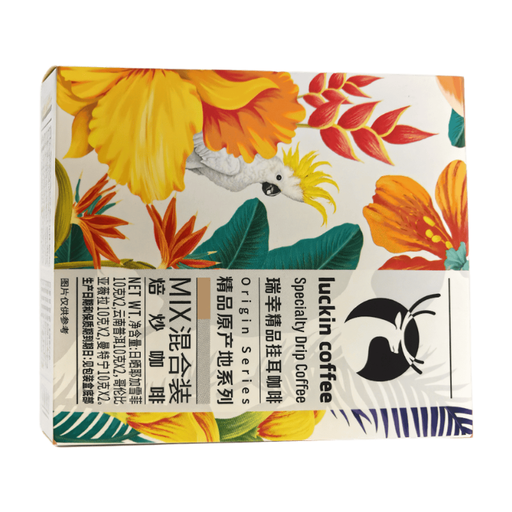
An eight-portion drip-bag format for guests who prefer pouring water through a filter. Use the pack’s pouring instructions; this is not a pyramid bag left to steep in the mug.
 No image available
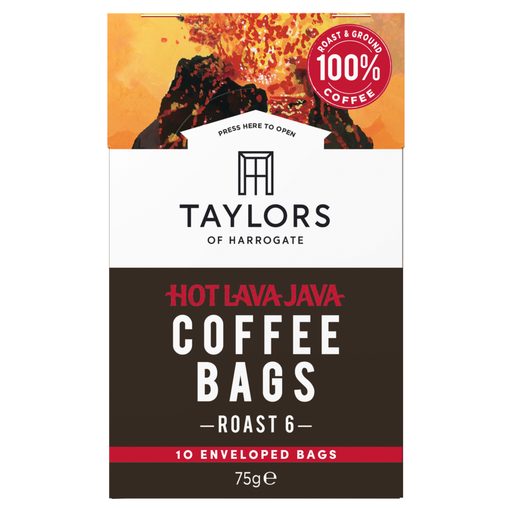
A coffee-bag choice for a mug-based breakfast setup. Check this variety’s pack for its brewing time and bag shape rather than applying instructions from another Taylors range.
No. NESCAFÉ describes instant coffee as soluble coffee added to water, while Raw Bean Coffee describes its pyramid bags as containing ground coffee that steeps in the mug. Buy by the preparation method you want, not by the fact that both make one cup.
Follow the instructions for the exact bag. Tesco Groceries gives 3–4 minutes for Percol Colombian bags before removal; Taylors of Harrogate advises four minutes for its Rich Italian bags.
Soluble instant coffee avoids the steeping or filter-pouring step: add water and stir. Coffee bags and one-cup filters suit a different preparation routine, so allow for their pack instructions when planning service.
Check both the exact product and your local authority’s collection rules. Rombouts says its specified One Cup Filters can be home composted or disposed of with food waste; that direction does not automatically apply to a different coffee bag or its wrapper.
No. NESCAFÉ reports 50–90 mg per 2 g serving for its Original and Gold instant coffees, not for coffee bags generally. The NHS states that total caffeine during pregnancy should not exceed 200 mg a day from all sources, so the chosen product’s serving information matters.