Commuters with hot-water access
If you have a cup and hot water at work but no grinder or brewer, jarred instant coffee lets you prepare a drink there. Check that you can store the opened container as its label directs.


Choose a jar of instant coffee if you will have a cup and hot water at work but no grinder or brewer. Whole beans make sense if you can grind and brew before leaving or at your destination; single-serve instant sticks are another option when carrying individual portions matters more than keeping a jar at one location.
The useful distinction is where you will make the coffee and what equipment will be there.
If you have a cup and hot water at work but no grinder or brewer, jarred instant coffee lets you prepare a drink there. Check that you can store the opened container as its label directs.
Whole beans are an option if you can use a grinder and a suitable brewer before leaving or at your destination. They add preparation and cleaning steps, so decide where those steps will fit into your routine.
A decaffeinated instant jar keeps the cup-and-water preparation route. M&S and illy list decaffeinated instant options; check the exact product label rather than relying on roast or flavour wording to identify a decaf product.
Start with the equipment available when you want to drink the coffee. Then choose between a container kept at one location, portions carried in a bag, or beans prepared with a grinder and brewer.
| Priority | What to check | Your needs |
|---|---|---|
| Preparation setup | For instant coffee, check the pack directions and whether a cup and suitable water will be available. For whole beans, identify where you will grind and brew. | I can get hot water at work, but I do not have space or time there for a grinder and brewer. A jar of instant coffee fits that setup. |
| Carrying format | Compare a multi-serve jar or can with single-serve sticks. Check portion instructions and whether you can leave a container at your destination. | If I cannot store a jar at work, I would rather carry individual portions; if I can leave coffee there, a multi-serve container avoids packing a portion each day. |
| Flavour and brewing | Read the stated flavour and roast description. If buying beans, match the grind to your brewing method; Taylors of Harrogate advises grinding less than 15 minutes before brewing. | I want to adjust how I grind and brew, and I have the equipment to do it. Roast darkness alone will not tell me the caffeine content: Taylors says roast type has little to do with that measure. |
| Decaffeinated choice | Look for an explicitly labelled decaffeinated product and confirm whether it is instant coffee or beans. | For weekday coffee, I may want a decaf option without changing my cup-and-water routine. |
| Storage and label | Read the current pack for ingredients, allergens and instructions after opening. Keep the product-specific storage guidance with its own format and container. | I use coffee across several weekdays, so the pack size needs to suit how quickly I use it and where I can store it. |
Whole beans need grinding and brewing before they become a drink. Instant coffee avoids those coffee-making devices, according to Lavazza's preparation guidance.
Confirm where you will prepare the coffee. If work offers only a kettle and mug, choose an instant format for coffee made there.
The bean route also means making time for grinding, brewing and cleaning, with filters needed for some methods.
Taylors of Harrogate says roast type affects flavour but has little to do with caffeine content. A dark-roast description therefore cannot stand in for a decaf label.
Choose roast by its stated flavour profile, and look for an explicitly decaffeinated product if that is the characteristic you want.
Instructions differ by product: M&S tells buyers to keep its Gold Instant Coffee cool and dry, while its Espresso Blend Coffee Beans have separate opened-pack storage guidance.
Choose a quantity you expect to use and follow the instructions on the particular pack, rather than applying a bean-bag rule to an instant jar.
These references cover different coffee formats; a brand's bean range does not mean it offers the instant jar you need for a cup-and-water setup.
Lavazza publishes guidance for making instant coffee without coffee-brewing equipment and lists Prontissimo Bilanciato as a soluble coffee.
illy lists instant coffee in a 95 g Classico can and in Classico sticks, alongside a decaffeinated instant line.
Taylors lists whole beans, ground coffee and coffee bags, and provides grind guidance for different brewing methods.
Union lists House Roast in wholebean and several ground-coffee styles, including cafetière, filter and espresso.
M&S lists instant coffee jars, including decaffeinated options, as well as whole beans.
Waitrose lists own-label regular and decaffeinated instant coffee, alongside other coffee formats and brands.
These are multi-serve instant coffee containers for a cup-and-water routine, including decaffeinated choices. If you want to grind and brew whole beans instead, use the equipment and storage checks above to choose that route.
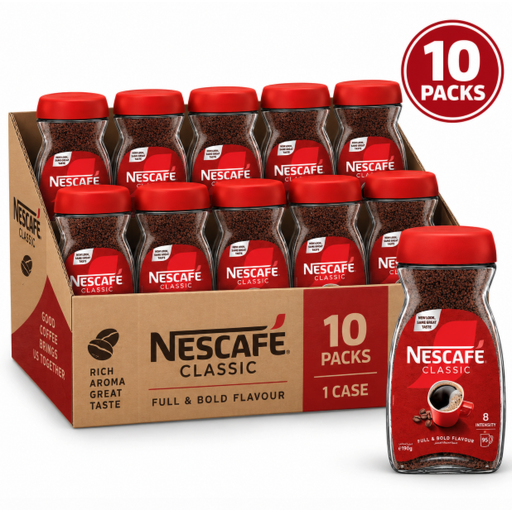 Image unavailable
For stocking a regular coffee location rather than carrying one portion each day, check whether ten 190 g jars suit your storage space and expected use. Follow the directions and storage instructions on the packs.
 Image unavailable
A 300 g decaf option to consider if you keep a multi-serve container at work. Check the current pack for preparation, ingredient and storage details.
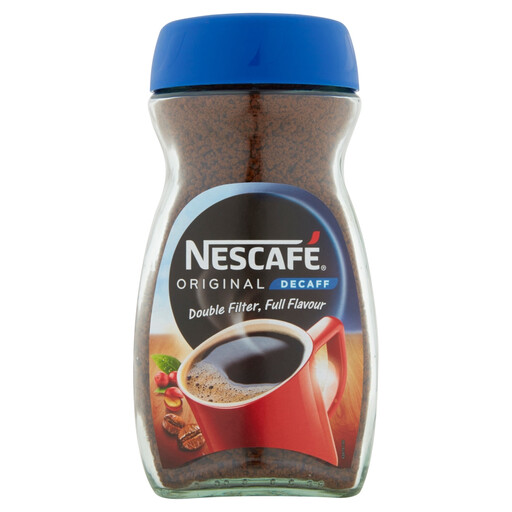 Image unavailable
Another decaf container for a regular cup-and-water routine, in a 200 g size. Read the pack for its preparation method and opened-pack storage instructions.
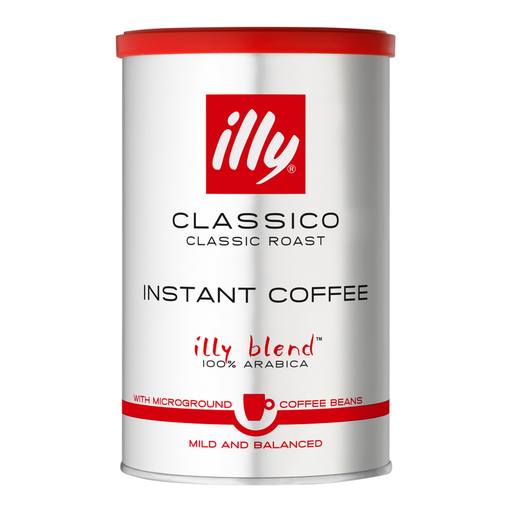 Image unavailable
The 95 g instant coffee can is a smaller multi-serve option for a desk or kitchen. Check its pack for the exact preparation directions and opened-pack storage instructions; do not assume this variant is decaffeinated.
Yes, if you have a cup and the water required by your chosen product. M&S says its instant granules dissolve when hot water is added, while illy's Classico can directs users to add hot water just off the boil. Follow the instructions on the pack you buy.
Choose whole beans if you can grind and brew before leaving or have the necessary equipment at your destination. Taylors of Harrogate advises grinding less than 15 minutes before brewing and gives different grind guidance for different methods, so plan for those preparation steps.
Follow that product's pack instructions. M&S advises storing its Gold Instant Coffee in a cool, dry place; do not assume another jar or can has identical opened-pack guidance.
No single instruction should be applied to both formats. M&S directs buyers of its Espresso Blend Coffee Beans to use an airtight container after opening and gives a two-week refrigerator storage period for that product. Check the instructions for the beans you choose.
Read the current physical label before use. M&S advises that ingredient, dietary, nutritional and allergen information can change, so the pack is important when those details affect your choice.