Quick lunch-break coffee drinkers
If you work from home and have a kettle and mug, instant decaf avoids the equipment needed for beans, ground coffee or pods.


Choose an instant decaf jar if you want to make a lunch-break mug with a kettle rather than prepare ground coffee or use a machine. Start with a pack size you expect to use, then compare the brands’ stated blends and flavour descriptions; a refill makes sense only if you already like the coffee and have a suitable container.
If you work from home and have a kettle and mug, instant decaf avoids the equipment needed for beans, ground coffee or pods.
If you finish jars regularly, consider whether a larger pack suits your routine. A smaller jar involves less commitment when you have not tried a blend.
Instant decaf products have different stated roasts, blends and formats. Those descriptions can help you choose what to try, but they are not independent taste-test results.
Confirm the preparation format first, then narrow the jars by pack size and the coffee description that appeals to you.
| Priority | What to check | Your needs |
|---|---|---|
| Preparation | Look for instant or soluble coffee on the pack. Check its directions if you want a hot mug made with a kettle. | I want to make coffee during lunch without getting out a cafetière, grinder or pod machine. |
| Coffee character | Compare the stated roast, blend and format. Nescafé describes Original Decaf as bold; Kenco describes its Decaf as a medium roast. These are brand descriptions, not a taste ranking. | A stated flavour direction would help me decide which jar to try, but I do not want to assume every decaf blend tastes alike. |
| Jar size | Check the weight and the pack’s serving directions. For its own coffee, Nescafé gives a starting serving of 1.8g with 200ml water. | If I drink decaf occasionally, a smaller jar lets me try the blend; if it is part of my routine, I can consider a larger one. |
| Refills and storage | Check that the refill is the blend you want and that you have a clean, dry, sealable container. Kenco offers a 150g Decaf refill for a jar or another container. | Reusing a jar appeals to me if I already enjoy that coffee and have somewhere suitable to keep the refill. |
Sainsbury’s decaf listings include ground coffee, bags, beans, pods and instant coffee. They call for different preparation methods.
If lunch means using only a kettle and mug, confirm that the pack says instant or soluble coffee. Choose another format only if you have the equipment it needs.
Ground coffee, beans or pods may require equipment you would not need for an instant jar.
Nescafé, Kenco and M&S describe different blends and roasts, but their descriptions do not establish which one you will prefer.
Use those details to make a shortlist. If a blend is unfamiliar, consider a smaller jar before committing to a larger pack.
Kenco’s Decaf refill is intended for a jar or another container, so it does not replace the need for suitable storage.
Choose a refill when you want that blend again and have a clean, dry, sealable container ready.
These brand examples show different instant-decaf choices and one alternative format; they do not establish a taste ranking or indicate which products are in the Joybuy selection below.
Original Decaf comes in 100g, 190g and 300g jars; Gold Blend Decaf comes in 95g and 190g jars, according to Nescafé.
Kenco lists a standard Decaf instant coffee, a 150g Decaf refill and Millicano Decaff, which combines instant coffee with finely milled beans.
Sainsbury’s decaf listings include Taylors coffee bags and ground coffee.
Tesco’s decaf-instant listing includes 200g Decaffeinated Classic and 200g Decaff Gold jars.
Sainsbury’s lists 200g Rich Roast and Gold Roast decaf instant coffees alongside other decaf formats.
M&S describes its 200g Gold Decaf Instant Coffee as made with medium-roasted Arabica beans and freeze-dried.
These decaf instant or soluble coffees offer different jar sizes for a home coffee break. Check the preparation directions on the particular pack, especially if you want a hot lunch-time mug.
 No image available
This 190g soluble coffee is described with hot-water preparation for a straightforward lunch-break mug. Nescafé describes Gold Blend Decaf as a freeze-dried Arabica and Robusta blend; its flavour description is not an independent taste assessment.
 No image available
This 300g soluble decaf coffee suits someone who already wants a larger jar for regular home use. Nescafé describes the matching Original Decaf blend as bold and intense; that is the brand’s flavour description.
 No image available
This 100g instant-decaf pack is a smaller option if you are trying a blend. Its product directions specify adding hot water and stirring, while the smooth flavour wording is a product description rather than an independent assessment.
 No image available
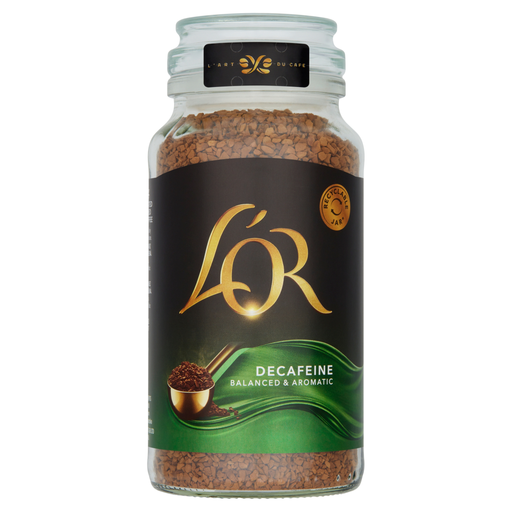
This 150g jar is described as freeze-dried instant decaf coffee. Its description emphasises chilled serving, so check the pack’s directions before choosing it for a hot lunch-time cup.
 No image available
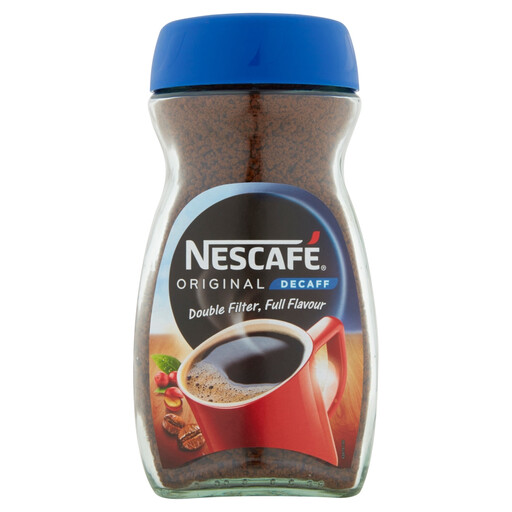
This 200g jar contains soluble decaf coffee for home use. Check its pack for the preparation directions and flavour description if those details will determine your choice.
Follow the directions on your jar. As a starting point for its own coffee, Nescafé gives approximately one teaspoon, or 1.8g, with 200ml water.
A 100g jar limits your commitment when trying a blend; a larger jar may suit you if you already enjoy it and drink it regularly. Using its 1.8g serving guidance, Nescafé estimates about 55 mugs from 100g and 111 from 200g; follow the serving directions for the coffee you choose.
Yes, if the container is clean, dry and sealable. Kenco says its Decaf refill can go into a Kenco jar or another suitable container.