
24/7 Customer Support

Free returns

Same-day & Next-day Delivery

Quality Guaranteed

Unlock Your Welcome Offers: FREE Delivery | Up to 80% OFF | Free 30-day JoyPlus trial
Download the APP
A warm, savoury bowl of miso soup is a comforting classic, whether as a light lunch at the office or a soothing start to a meal at home. The promise of instant miso soup is simple: authentic Japanese flavour in minutes. However, the reality on the shelf can be confusing. Many shoppers find themselves disappointed with products that miss the mark, leading to wasted money and a less-than-satisfying experience.
As the Joybuy Product Recommendation Officer, my role is to help you navigate the options. Before you add any Japanese soup packets to your basket, be aware of these common pitfalls:
Miso soup sachets come in two main forms: a paste or a dry powder. While convenient, some lower-quality powders fail to dissolve completely, leaving a gritty texture and a flavour that can taste dusty or flat. Miso paste generally provides a smoother consistency and a richer, more robust flavour profile.To ensure you get a quick miso soup that is both delicious and suits your needs, focus on these three core factors.
The type of miso used determines the soup's fundamental character. The most common types are:
The format is also key. A miso paste will almost always deliver a more authentic miso soup flavour and a smoother texture than a powder.
Dashi is the broth that makes miso soup so savoury. Always check the ingredients list to identify the dashi source:
vegetarian miso soup.The included garnishes, like tofu and seaweed, are what turn a simple broth into a more satisfying soup. Look for products that specify the type of garnish. A good quality miso soup with tofu will use freeze-dried tofu that rehydrates to a soft, pleasant texture, not a hard, chewy cube. Similarly, wakame seaweed should be tender once rehydrated.
Based on these practical criteria, here are a few recommendations matched to different needs and preferences.
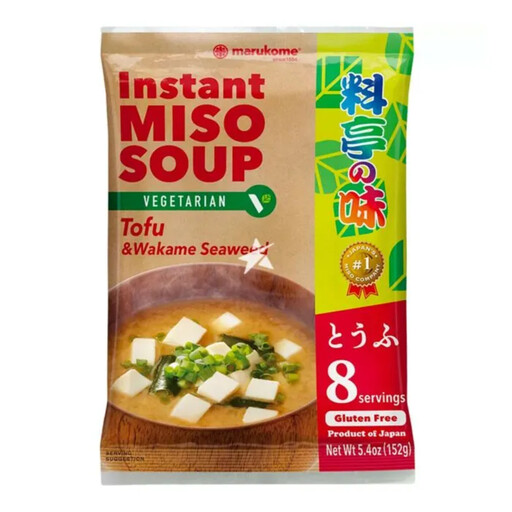
Why This Fits Their Persona: Ideal for health-conscious office workers or students needing a reliable plant-based meal. It's quick to prepare and the vegetarian credentials are clear, removing any guesswork for those with dietary restrictions.
Directly counters the "hidden non-vegetarian dashi" pitfall. The ingredients clearly list a dashi made from kelp and shiitake mushroom extract, ensuring it is suitable for vegetarians.
Uses a smooth rice miso paste for a rich flavour and includes a garnish of soft fried tofu, wakame and spring onions for a more complete texture.
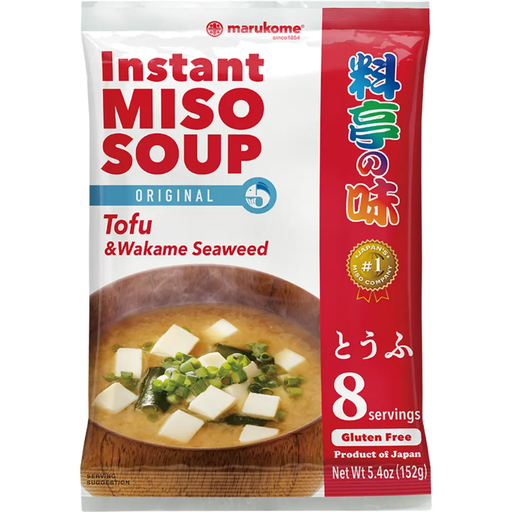
Why This Fits Their Persona: For the person who loves the deep, savoury flavour of miso soup from a Japanese restaurant and wants to replicate it at home. This is for someone who prioritises depth of flavour over dietary restrictions.
This soup avoids the "artificial flavour" trap by using real bonito powder and kelp extract. It is part of the Marukome miso soup "Ryotei No Aji" range, which translates to "restaurant-quality taste".
Delivers a rich, well-balanced umami flavour from its traditional dashi base. The fermented rice miso paste provides a smooth, satisfying foundation.
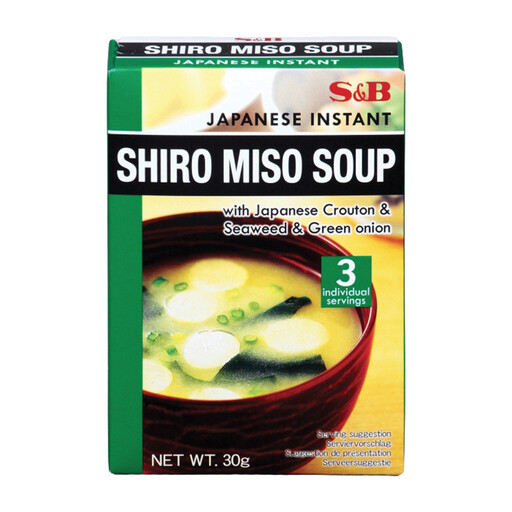
Why This Fits Their Persona: Perfect for students or anyone needing an ultra-convenient, single-serving snack. The powder format is no-fuss, and the mild white miso flavour is very approachable and comforting.
While it is a powder, it comes from a well-regarded Japanese brand (S&B). It is formulated to dissolve well, avoiding the "gritty texture" pitfall common in lesser-known powdered soups.
Single-serving sachet offers maximum convenience and portion control. The mild, slightly sweet flavour of the shiro (white) miso is pleasant and not overpowering.
We have compiled a complete, real-time list of products that fully satisfy these strict selection criteria and UK safety regulations.
Instant miso soup is typically low in calories and can be a source of beneficial compounds from fermented soybeans. However, it is important to be mindful of the sodium content, which can be quite high in many instant varieties. It is best enjoyed in moderation as part of a balanced diet. Always check the nutritional information on the packaging.
To elevate your instant soup, consider adding fresh ingredients. A few cubes of silken tofu, some freshly chopped spring onions, a sprinkle of sesame seeds, or a few drops of sesame oil can add texture, freshness and aroma, making your quick meal feel more substantial.
The difference comes from the type of miso used. White miso soup (shiro) is made from miso fermented for a short time, giving it a light, mellow and slightly sweet taste. Red miso soup (aka) uses miso that has been fermented for much longer, resulting in a darker, saltier and more intense flavour. If you prefer a bolder taste, look for products with aka or awase (mixed) miso.