Care-home catering teams buying repeatable breakfast portions
For teams choosing sachet packs that can make routine breakfast preparation and portion control easier across multiple residents, while keeping every resident’s care plan central.


Choose a larger sachet pack when several residents are approved for the same recipe and staff need repeatable portions. Pack size should come after each resident’s assessed dietary, allergen and texture requirements: the Care Quality Commission states that food must meet assessed nutritional needs.
For teams choosing sachet packs that can make routine breakfast preparation and portion control easier across multiple residents, while keeping every resident’s care plan central.
For homes that need to separate plain, free-from, allergy-aware or clinically adapted breakfast choices rather than buy one bulk oat product for everyone.
For buyers comparing 20- to 22-sachet packs with smaller plain or free-from packs, where stock status, flavour and ingredients can affect operational suitability.
Start with the approved recipe and preparation requirements for each resident group, then compare portions, labels and service workflow.
| Priority | What to check | Your needs |
|---|---|---|
| Individual care requirements | Check the exact recipe against documented dietary, allergy, coeliac and clinical requirements. Confirm the preparation method and final texture are appropriate for the resident’s plan. | A bulk breakfast should only be used for residents whose assessed needs permit that exact product and preparation. |
| Portion consistency | Compare sachet count and gram weight with the number of approved servings needed. Check whether staff can follow the labelled microwave, hob or boiling-water method safely. | I need portions that fit the breakfast service without leaving a large amount of an approved product unused if menus or resident needs change. |
| Ingredients and allergens | Read the current ingredient list, allergen declaration and any may-contain statement for the exact SKU. Do not use a brand name or plain-oat wording as a substitute for the label. | The product needs to be checked against resident records, especially where allergy, coeliac or related dietary requirements are documented. |
| Plain and flavoured recipes | Compare ingredients and sugars on the stated serving basis. Identify added sugar and milk-derived ingredients before using a flavoured product as a standard option. | A plain oat base may offer more menu flexibility where appropriate, while flavoured recipes should be used only for residents whose plans permit them. |
A bulk pack can create waste or lead to unsuitable substitutions when some residents need gluten-free, milk-free, lower-sugar, texture-modified or otherwise clinically adapted food.
Create an approved-product list by resident requirement first, then calculate pack demand only for residents permitted to have that exact recipe.
Suitability statements differ materially between products. M&S Traditional Porridge is stated as unsuitable for coeliacs and for people with milk, nut, peanut or wheat allergy, while Flahavan’s Natural Quick Oats may contain traces of milk.
Check the live label, including allergen and may-contain wording, for every exact SKU and recipe before it enters the home.
Tesco Golden Syrup Instant Oats lists 13.1g sugars per prepared serving and includes sugar, dried skimmed milk and whey powder, so it is not nutritionally interchangeable with plain oats.
Keep a plain option where appropriate and use flavoured sachets only where they suit the resident’s plan, preferences and menu design.
Tesco listed its Natural Oats and Free From Instant Porridge Sachets as out of stock, so an approved breakfast routine can be disrupted when a product cannot be supplied.
Approve a clinically suitable alternative in advance for each resident group, but recheck its current label and compatibility with the resident’s plan before use.
This can mean menu changes or a switch to smaller packs when an approved product is unavailable.
Tesco’s porridge-sachet listing includes Quaker Oat So Simple Original Big Pack at 22 x 27g and Golden Syrup sachets at 20 x 36g.
Tesco has listed 10 x 35g Natural Oats sachets, a 6 x 27g wheat-, milk- and gluten-free variety pack, and 55g ready-to-prepare Instant Oats pots.
M&S Traditional Porridge is a 360g box containing 10 individually portioned packs, described as a three-minute microwave product.
Flahavan’s offers Natural Quick Oats and Organic Porridge Oat Sachets made from wholegrain oats, including an 8 x 35g organic pack.
Joybuy product options for care-home breakfast service, including larger sachet packs, plain-oat portions and flavoured recipes that require resident-specific checks.
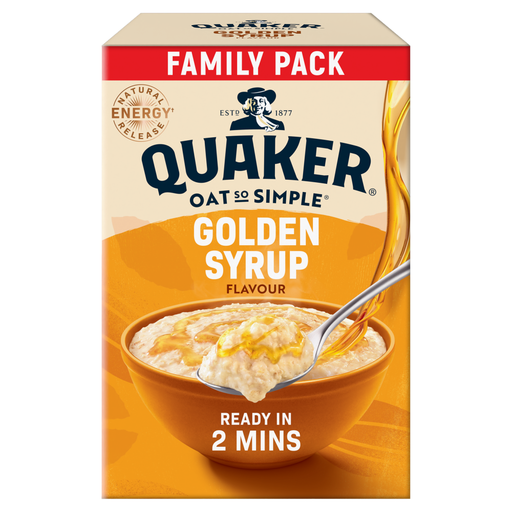 Image unavailable
A 20-sachet format for repeatable servings where residents are approved for this golden syrup recipe.
20 individually specified 36g sachets; the listing gives a 900W microwave method of two minutes followed by one minute standing time.
Contains sugar and is not interchangeable with a plain or lower-sugar breakfast option. The listing states that it contains gluten from oats and may contain barley, wheat and soya.
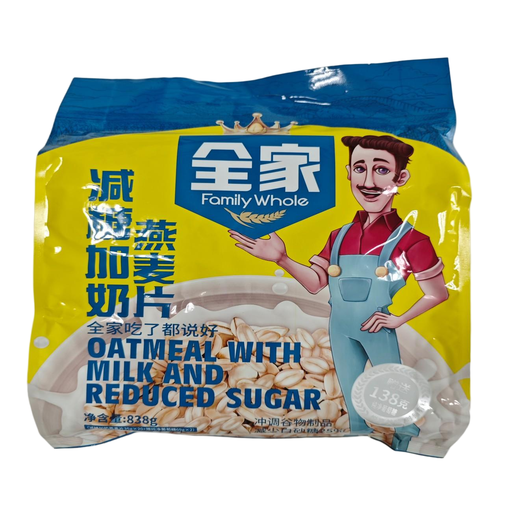 Image unavailable
A 20-small-bag oatmeal format for controlled preparation where the separate glucose sachets can be managed appropriately.
The listing states 700g of oat product in 20 small bags; one bag is prepared with about 175ml boiling water.
The oatmeal contains oats, wheat, soya, milk and black sesame. Two separately packed pure-glucose sachets are included and should not be treated as part of every resident’s standard serving.
 Image unavailable
A smaller plain-oat sachet option for residents whose plans permit this exact product and serving size.
Six 38.5g sachets with wholegrain rolled oats listed as the sole ingredient; the listing gives a 2.5-minute microwave direction.
The six-sachet pack is less suited to high-volume standardisation than a 20-sachet family pack. Check the current allergen statement and final prepared texture against the resident’s plan.
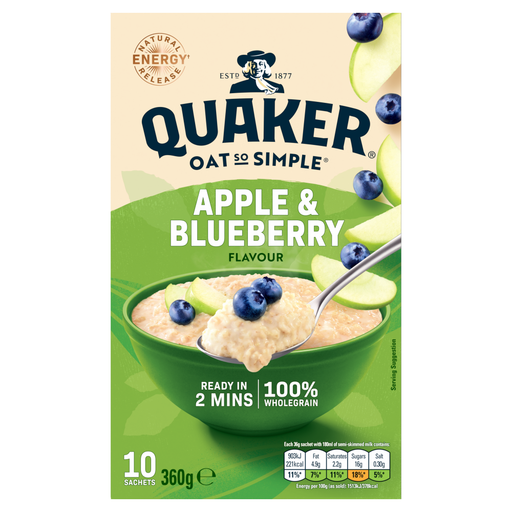 Image unavailable
A 10-portion fruity recipe for controlled service only where residents are approved for this flavour.
The listing states 10 portions of 36g and describes preparation in two minutes.
Contains sugar, dried apple and dried blueberry, so it is not equivalent to a plain-oat option. It may contain wheat, barley and soya.
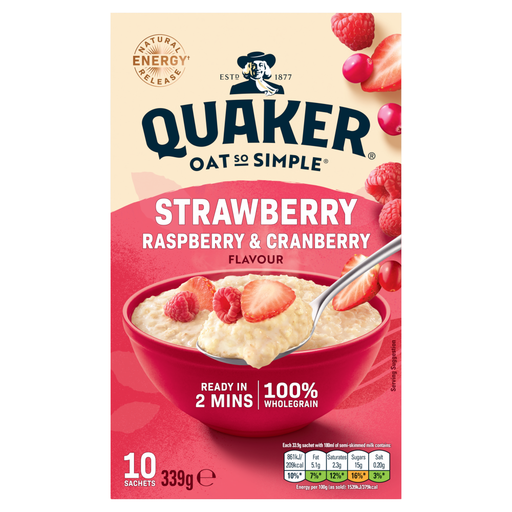 Image unavailable
A defined fruity porridge option for residents whose plans permit this recipe and a 10-sachet pack.
The box states 10 individually specified 33.9g sachets and a two-minute 900W microwave instruction using the stated milk-fill guide.
Contains sugar and mixed-berry flavouring, so it should not replace a plain option where one is required. It contains cereals containing gluten and oats and may contain barley, soya and wheat.
No. The Care Quality Commission states that providers must assess nutritional needs and provide food that meets those needs. Use a bulk pack only for residents whose plans permit that exact product and preparation.
No. Plain ingredients do not prove suitability for an individual requirement. M&S Traditional Porridge is stated as unsuitable for coeliacs and for people with milk, nut, peanut or wheat allergy, while Flahavan’s Natural Quick Oats may contain traces of milk.
Tesco Free From 6 Instant Porridge Sachets is described on its product page as wheat, milk and gluten free. Confirm current availability and the current label before relying on it for a documented requirement.
Only where the product and final prepared texture meet the resident’s assessed care plan. Do not assume that a standard sachet or pot has the required texture merely because it becomes soft when prepared.
Follow the exact current pack instructions. For Tesco Golden Syrup 55g Instant Oats, the label states to add approximately 170ml boiling water, stir, stand for two to three minutes, stir again, and not reheat; this is product-specific guidance rather than an instruction for all oats.