
24/7 Customer Support

Free returns

Same-day & Next-day Delivery

Quality Guaranteed

Unlock Your Welcome Offers: FREE Delivery | Up to 80% OFF | Free 30-day JoyPlus trial
Download the APP
Busy mornings, packed lunches and long commutes have made instant oat flakes and freeze-dried fruit snacks practical staples for many UK households. They can reduce preparation time, but attractive packaging does not always tell you what you are actually buying.
Before adding a product to your basket, check the ingredient percentages, serving format and storage instructions. These details help you avoid paying for unnecessary extras or choosing a product that does not suit your routine.
A product may feature large images of berries, vegetables or sweet potatoes while containing only a small proportion of those ingredients. Check the quantitative ingredient declaration, usually shown as a percentage. For example, one fruit and vegetable oat product lists fruit and vegetables at 8% and oat flakes at 10%.
This does not make the product unsuitable, but it gives you a more realistic view of what is in the mixture.
Instant cereal mixes can contain creamer, starch, sugar, salt or flavouring ingredients alongside oats. Review the full ingredients list and nutrition table rather than relying on terms such as “wholesome” or “natural”.
The same applies to freeze-dried fruit. Removing water makes fruit light and crisp, but the naturally occurring sugars become more concentrated by weight. A small sachet can still be convenient, but it should be treated as a portion rather than an unlimited snack.
A large total weight may include separate glucose sachets, an outer box or multiple small packs. Compare the number of servings and the preparation method. Individual oat sachets are useful for desks, student accommodation and family cupboards, while a larger loose bag may create more measuring and storage work.
For fruit and vegetable oat flakes, check how much oat, fruit and vegetable content is declared. The Family Whole Fruit and Vegetable Dietary Oat Flakes product lists red date, spinach, carrot, pumpkin and okra powders, with 8% fruit and vegetable content and 10% oat flakes.
The ingredients also include wheat, oats, soya beans, rye, barley from malt extract and sesame. These are important details for households managing allergies or avoiding particular cereals. Always read the current packaging, as the label supplied with your order is the relevant source of information.
The purple sweet potato version lists 25% oat flakes, 8% purple sweet potato and 2% yam, as well as wheat, soya beans, oats and sesame. Its flavour profile may suit shoppers looking for purple sweet potato yam oat flakes, but it is not suitable for everyone with cereal or soya restrictions.
A practical quick breakfast cereal should have clear instructions. Both Family oat products provide 35g sachets and recommend adding approximately 175ml of boiling water, equivalent to a 1:5 ratio, before stirring.
This format is convenient for a kettle-based breakfast at work or home. It also makes portions easier to track than scooping from a large container. Allow the mixture to cool before eating, particularly when serving children.
Freeze-dried fruit usually needs no preparation. The apple snack described below is supplied in 9 individual 10g packs, making it suitable for lunch boxes, travel and ready-to-eat apple snacks.
Check the nutrition table per 100g and consider the actual serving size. The fruit and vegetable oat flakes list 442 kcal per 100g, while the purple sweet potato version lists 426 kcal per 100g. The included pure glucose sachets are separate components, so do not assume they are part of the oat serving’s nutritional figures.
The freeze-dried apple product lists apples at at least 99%, with vitamin C, and provides 388 kcal and 86.4g sugars per 100g. A 10g sachet is considerably smaller than 100g, but the per-100g panel remains useful for comparison.
Store all products in a cool, dry place and reseal opened packs. Freeze-dried fruit can lose its crisp texture if exposed to moisture. Oat sachets are generally easier to protect from humidity because each portion is sealed separately.
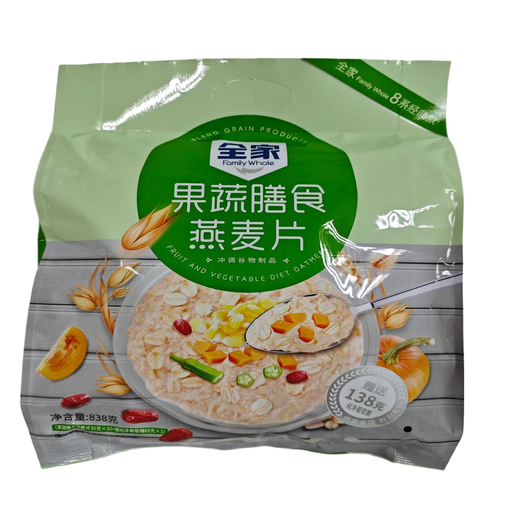
Why This Fits Their Persona: Twenty 35g sachets give households a straightforward way to organise weekday breakfasts without measuring a larger bag each morning.
The pack states its oat and fruit-and-vegetable percentages, so shoppers can assess the blend rather than relying on front-of-pack imagery.
20 individual oat sachets; preparation requires approximately 175ml of boiling water per 35g serving.
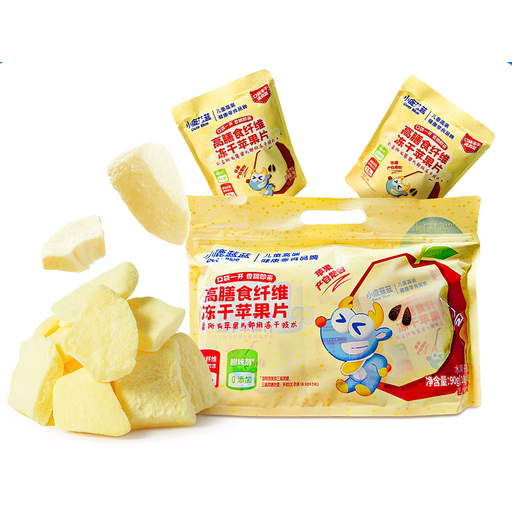
Why This Fits Their Persona: Shoppers who prefer a simple fruit ingredient and a crisp texture can keep these small packs in a work drawer, bag or lunch box.
The listed composition is at least 99% apples with added vitamin C, making the ingredient profile easy to inspect.
Nine 10g portion-controlled snack packs; ready to eat directly from the package.
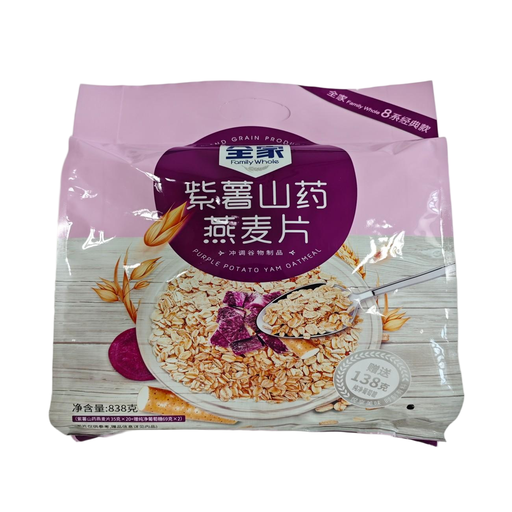
Why This Fits Their Persona: Regular breakfast users who want a distinctive oat blend and a substantial supply can use the sachets at home, in shared accommodation or at work.
The declared proportions show 25% oat flakes, 8% purple sweet potato and 2% yam, allowing a direct comparison with other mixes.
20 x 35g sachets; approximately 175ml of boiling water is specified for each serving.
We have compiled a complete, real-time list of products that fully satisfy these strict selection criteria and UK safety regulations.
Before ordering, compare:
Yes, products with individual sachets can be prepared using a kettle and a mug or bowl. Follow the pack instructions, such as adding approximately 175ml of boiling water to a 35g sachet, then stir thoroughly and allow it to cool.
They remain crisp while their individual sachets are sealed and stored away from moisture and direct sunlight. Once opened, consume promptly because humidity can soften the texture. Check the best-before information on the packaging for the applicable date.
The answer depends on the pack size and how much packaging you value. Portion-controlled snack packs can reduce waste and make serving sizes clearer, but a larger loose pack may have a lower price per 100g. Compare both the total price and the number of usable portions before purchasing.