
24/7 Customer Support

Free returns

Same-day & Next-day Delivery

Quality Guaranteed

Unlock Your Welcome Offers: FREE Delivery | Up to 80% OFF | Free 30-day JoyPlus trial
Download the APP
Busy mornings often make instant oatmeal sachets an appealing alternative to toast, cereal or a takeaway breakfast. They are easy to store, simple to prepare and usually portioned for one serving. However, attractive packaging can make products appear more nutritious or convenient than they are.
The Joybuy Product Recommendation Officer’s approach is straightforward: compare the actual ingredients, serving format, preparation method and allergen information before buying. This helps families, students, office workers and shoppers seeking quick breakfast oats avoid paying for features they may not use.
A large outer box does not always mean a large number of servings. Some products include separate flavouring or glucose sachets in the stated net weight. For example, selected 838g Family Whole packs contain 700g of oat-based mix in 20 x 35g sachets, plus 138g of pure glucose in two sachets.
Check:
Flavoured oatmeal can contain sugar, dried fruit or sweetened powders. “Reduced sugar” is a product description, not a guarantee that the food is low in sugar. Likewise, a red date and raisin blend may contain 28g of sugars per 100g, according to its listed nutrition information.
Read the ingredients and nutrition panel together. Ingredients are listed by weight, so the position of sugar, syrup, creamer and dried fruit provides useful context. Remember that glucose sachets supplied separately are also a concentrated source of carbohydrate and sugar.
Many instant porridge products contain or may contain oats, wheat, barley, soya, milk, sesame, peanuts or tree nuts. This is particularly important when choosing multigrain oatmeal packets or products with non-dairy creamer.
Preparation also varies. Some single-serve porridge sachets need boiling water, while others require microwave cooking. A product designed for a microwave may not be suitable for a kettle-only office kitchen unless the instructions provide an alternative method.
For shoppers looking for wholegrain oats, check whether the ingredients specify 100% wholegrain oat flakes or a blend containing oat flakes alongside wheat, corn, malt extract and other powders.
Rolled or jumbo oat flakes usually provide a more noticeable texture and need longer cooking. Instant oat flakes and powdered instant porridge dissolve more quickly, creating a smoother drinkable consistency. Neither format is automatically suitable for every preference; the right choice depends on whether you want speed or a more traditional bowl of breakfast porridge.
Nutrition panels are commonly shown per 100g and per serving. Compare both, because a 35g sachet, 40g serving and 57g pot are not equivalent portions.
For reference:
These figures are useful for comparing portion-controlled porridge sachets, but the final nutrition of a bowl changes when you add milk, sugar, fruit, nuts or glucose.
Follow the pack instructions rather than estimating. Several 35g sachets recommend approximately 175ml of boiling water, while some microwave porridge products use around 180ml of water or milk.
Also check:
For workplace use, a kettle-ready product may be more practical than microwaveable oatmeal. For home use, microwave options can offer a thicker consistency with minimal washing-up.
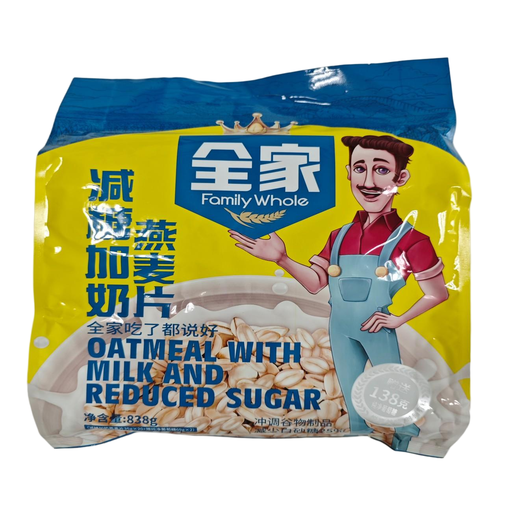
Why This Fits Their Persona: Twenty individual 35g sachets provide a clearly defined serving format for households, students and shoppers planning weekday breakfasts.
The listing separates the 700g oatmeal mix from the 138g glucose supplied in two additional bags, making the serving count easier to assess.
Contains 30% oat flakes and 5% whole milk powder; prepared with approximately 175ml of boiling water.

Why This Fits Their Persona: A suitable cupboard staple for shoppers who prefer to control sweetness, portion size and toppings themselves.
The ingredient list states 100% organic wholegrain oat flakes, without a pre-sweetened flavour mix.
Provides a 40g serving reference with 148 kcal, 3.3g fibre and 4.5g protein, according to the listing.

Why This Fits Their Persona: Useful for shoppers wanting flavoured oatmeal with a stated protein figure and a microwave preparation method.
The product specifies 8 x 43g sachets, 180ml liquid and a 2½-minute microwave method, rather than leaving portion and timing unclear.
Lists 22g protein per 100g and gives microwave and hob instructions; contains oats and soya.
Not every quick breakfast needs to be an oatmeal packet. Ready Brek Original 750g uses wholegrain oatmeal and oat flour for a smooth texture, while Quaker Jumbo Rolled Oats 1kg and Scotts Porage Oats Old Fashioned Porridge Oats 1kg suit shoppers who prefer traditional hob or microwave preparation.
For no-cook convenience, canned options such as Eight-Treasure Porridge Yin Lu Haozhoudao Coconut Milk Oatmeal Porridge, 280g x 12 Cans can be eaten at room temperature or gently heated. Check the storage space, serving size and allergens, including peanuts and milk, before ordering.
We have compiled a complete, real-time list of products that fully satisfy these strict selection criteria and UK safety regulations.
Many 35g sachets recommend approximately 175ml of boiling water, while microwave oatmeal packets often use about 180ml of water or milk. Always follow the specific pack instructions, as too much liquid can produce a thin texture.
Yes, if the product instructions allow boiling-water preparation. Kettle-ready sachets are practical for offices, university accommodation and travel. Microwave-only products should not be prepared by guessing; check the label for an alternative hob or hot-water method.
Keep unopened packets in a cool, dry place and follow the best-before date on the packaging. Once an outer bag or box is opened, keep the remaining sachets sealed and away from moisture and strong odours. Prepared porridge should generally be consumed immediately.