Buying priorities
Start with the preparation method, then compare salt on the same basis and check the current ingredient and allergen label before packing a multi-day supply.
| Priority |
What to check |
Your needs |
| Salt declaration |
Compare values on the same basis, such as per 100g dry product and per dry serving. Keep prepared-with-milk figures separate from the oat mix. Check the exact current label. |
I want to keep track of salt across all my camping food, rather than assume a plain or convenient format has the same amount as another product. |
| Preparation method |
Check the stated liquid, heating method and water volume. Confirm whether the product needs a bowl, pan, spoon, milk, microwave or hob. |
I only have boiling water and a small cooking kit, so I need an option whose instructions fit the equipment I am carrying. |
| Allergen compatibility |
Read ingredients, “may contain” statements and any gluten, wheat or milk suitability wording on the exact pack. Do not treat a gluten-free claim as proof of wheat-allergy suitability. |
I need to know whether the specific breakfast I pack fits my dietary requirements before I leave home. |
| Camp storage and stove use |
Choose dry food that can be protected in sealed packaging or a container. Heat water outdoors on a safe surface, away from the tent, long grass and other flammable materials. |
I need breakfast supplies that work without chilling and can be prepared without bringing a stove into or beside the tent. |
Joybuy product options
Joybuy product options for camping breakfasts where dry storage, salt declarations, preparation method and dietary requirements may affect the choice.
 No image available
Scotts Porage Oats Original Porridge Oats 1kg
A large dry oat pack for campers carrying a pan, mug or bowl and able to portion their own breakfast.
The supplied product information states a single oatmeal ingredient, 25 portions, 0g salt and preparation with water or milk. It may contain wheat and barley; check the pack directions for cooking time and texture when fuel use matters.
Joybuy
 No image available
Quaker Oat So Simple Peanut Butter Protein Sachets, 8 x 43g
Portioned dry sachets for campers with a saucepan, water and fuel who intend to follow a hob method.
The dry mix declares 0.58g salt per 100g and the product information allows cooking with water on a hob. It contains oats and soya and may contain milk, peanuts and nuts; it is not stated as a hot-water standing preparation.
Joybuy
 No image available
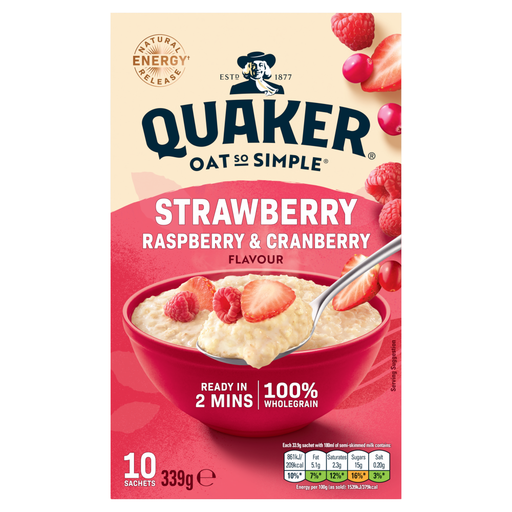
Quaker Oat So Simple Strawberry, Raspberry & Cranberry, 10 Sachets
A portioned option for a campsite with microwave access and milk available.
The dry nutrition table declares 0.0g salt per 100g, and the pack contains ten 33.9g sachets. The stated method needs milk, a bowl and a microwave; it may contain barley, soya and wheat.
Joybuy
 No image available
Morrisons Free From Gluten Free Oats 1kg
A larger oat-flake pack for campers who can measure portions and carry a secure container.
The supplied information describes 100% gluten-free oat flakes and a trace salt declaration, with cool, dry storage and resealing guidance. Check the current pack’s cooking directions before relying on boiling water alone.
Joybuy
 No image available
Flahavan's Organic Porridge Oats 1kg
A large plain-oat pack for campers already carrying their own vessel and able to portion breakfast.
The supplied product information lists organic wholegrain oat flakes as the single ingredient and declares less than 0.01g salt per 100g. It is a 1kg pack rather than sachets, and the stated information does not specify boiling-water preparation, cooking time or water quantity.
Joybuy
Frequently asked questions
Do I need to buy “reduced-salt” instant oats for camping?
Not necessarily. Compare the salt declaration on the exact dry product rather than relying on a tin or “reduced-salt” description. Quaker Oat So Simple Original lists 0g salt for its dry 27g sachet; keep this separate from values for a serving prepared with semi-skimmed milk. The NHS says adults should have no more than 6g of salt a day overall.
Can I make instant oats with only boiling water at camp?
Only if the product’s directions allow it. Quaker Original Pot directs users to add 170ml of boiling water and stand it for a minute, while Flahavan’s Organic Porridge Oat Sachets are stated to be suitable with water. Quaker Original Sachets and its gluten-free sachets publish cooking instructions using milk with a hob or microwave.
Is it safe to cook porridge inside a tent?
No. Mid and West Wales Fire and Rescue Service advises never using fuel-burning devices such as camping stoves or barbecues inside a tent. Cook outside, away from the tent, flammable materials and long grass.
Should I take porridge pots or sachets on a multi-day trip?
Choose sachets when lower bulk and individual portions matter and you will carry a bowl, mug or pan. Choose a pot when you want a built-in container and only need boiling water. For longer trips without reliable chilling, the Food Standards Agency advises considering predominantly dry foods and storing food in sealed containers to reduce food-safety and pest risks.
Does a gluten-free oat sachet automatically suit someone with a wheat allergy?
No. Quaker’s gluten-free sachet is marketed as gluten free, but its manufacturer page also says it may contain wheat. Use the exact pack’s allergen statement for a wheat-allergy requirement and follow clinical advice where applicable.


