Who this suits

Care-home breakfast coordinators

For staff planning shared breakfasts who need predictable portions, practical preparation and enough stock for repeated service while meeting each resident’s assessed nutrition and hydration needs. Care Quality Commission guidance requires food provision to meet assessed needs.

Kitchen teams using measured bulk ingredients

For catering teams able to use a scoop or scales and looking for quick oats in a larger loose format rather than individually wrapped portions.

Teams supporting documented dietary or swallowing needs

For staff selecting and preparing breakfast around individual allergy, coeliac, diabetes, nutrition and texture requirements. Instant oats are not automatically suitable for every resident.

Buying priorities

Large original sachet multipacks

Choose when: Staff need fixed dry portions for several residents and have enough microwave or hob capacity.

Consider: Check the current allergen statement and care-plan requirements before using one product as a standard option.

Loose quick oats

Choose when: The kitchen can measure portions consistently and prefers a larger single pack with a simple ingredient list.

Consider: Liquid quantity, cooking and holding time can alter the finished texture.

Flavoured sachets

Choose when: A flavour option fits documented resident preferences and dietary requirements.

Consider: Ingredients can differ from plain oats, so flavours should not be substituted automatically.

Priority What to check Your needs
Consistent portions Check the stated dry serving size, portion count and liquid guidance. For loose oats, set a consistent scoop or weighing process. A repeatable bowl-by-bowl method can reduce guesswork when several breakfasts are prepared.
Operational practicality Check the stated preparation method and time, plus available microwave or hob capacity and local food-service procedures. The breakfast routine needs to be manageable without bypassing individual safe-serving checks.
Dietary suitability Read the current ingredients, allergen declaration and nutrition panel for the exact flavour and pack. Confirm resident care-plan requirements before substitution. I need an option that matches individual preferences and documented dietary requirements, not simply one that is convenient to order.
Texture requirements Check the prepared serving, not just the dry product name. Follow the clinician-directed IDDSI level and test food under intended serving conditions, including temperature. For a resident on a texture-modified diet, the served porridge must match the individual recommendation. IDDSI advises testing food and drink under intended serving conditions.

Common buying pitfalls

  • Treating a family-size pack as a care-plan solution

    A larger pack can simplify ordering but does not establish that it meets a resident’s nutritional, hydration, cultural, religious, allergy or clinical needs.

    Use pack size as a procurement measure only. Confirm resident-level menu and care-plan requirements before standardising an oat product.

  • Assuming all instant oats have the same ingredients

    Original and flavoured sachets can have different ingredient lists and nutrition profiles, so a flavour swap can change suitability for residents with particular dietary requirements.

    Compare the current ingredients, allergens and nutrition panel for the exact flavour and pack before offering alternatives.

  • Using standard preparation for a texture-modified diet without testing

    The finished texture changes with liquid quantity, cooking and serving temperature. IDDSI states that testing should take place under intended serving conditions.

    Do not infer IDDSI suitability from terms such as instant, quick, smooth or creamy. Follow the clinician-directed level and complete the appropriate IDDSI tests on the prepared serving.

  • Comparing only box price instead of usable servings

    A smaller box can provide fewer breakfasts, while individually portioned sachets and loose oats involve different portion-control and staff-time considerations.

    Calculate expected breakfasts from the stated serving size, then compare the current price per kg alongside portion-control needs and waste risk.

Relevant brand references

Quaker

A UK porridge brand whose Oat So Simple Original range includes several sachet-count formats.

  • Original sachets provide a defined 27g dry portion and manufacturer guidance for preparation.
  • Check the exact pack’s current allergen statement and ingredients before serving residents with dietary requirements.

Flahavan’s

A quick-oats option for kitchens that prefer a larger loose pack and can measure servings.

  • Irish Quick Oats are described as 100% wholegrain rolled oats with a 30g serving basis.
  • Loose oats do not provide individually sealed portions, so a consistent measuring method is needed.

Tesco

A supermarket own-brand reference for smaller original-oat sachet boxes.

  • Tesco Easy Oats Original is described as oat flakes only and supplied as 10 x 27g sachets.
  • A smaller sachet box may require more frequent replenishment for a shared breakfast service.

M&S

A retailer range with traditional oats, sachets and tubs, including some dietary-labelled variants.

  • Its range provides formats for comparing portioned and larger oat options.
  • A range listing does not confirm that a particular product meets an individual resident’s dietary or texture requirements.

Joybuy product options

Joybuy product options for shared care-home breakfasts, including a flavoured sachet pack and a loose instant-oat format for kitchens able to measure portions.
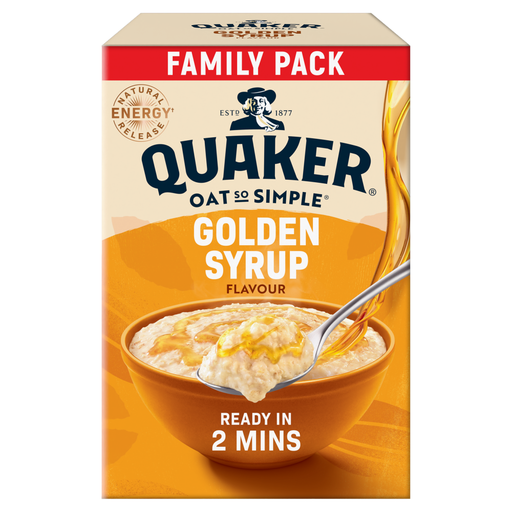
Quaker Oat So Simple Golden Syrup 20 x 36g sachets

Quaker Oat So Simple Golden Syrup 20 x 36g sachets

A separately managed flavoured option for shared breakfast service where it matches documented resident needs.

20 individually packed 36g sachets; stated two-minute microwave method with a 180ml milk guide. Contains sugar, salt and natural flavourings; check the current label for allergens and dietary suitability.

Joybuy
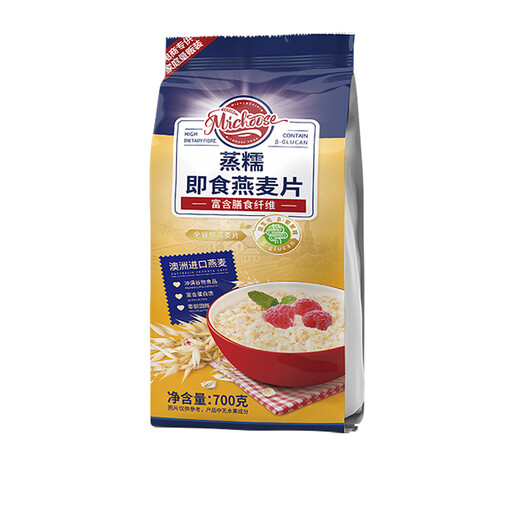
Steamed Instant Oatmeal 700g bag

Steamed Instant Oatmeal 700g bag

A loose-oat format for kitchens that can measure portions consistently for shared breakfast service.

700g bag; the listing states 100% oatmeal and one-minute hot-water preparation. Confirm the serving method, liquid quantity and current allergen declaration before standardising use.

Joybuy

Frequently asked questions

Are large instant-oat packs automatically suitable for every care-home resident?

No. Care Quality Commission guidance says nutritional and hydration needs must be assessed and food provided to meet them. A large pack can help with purchasing and preparation logistics, but it does not replace an individual care plan.

Should a care home choose sachets or a loose quick-oats pack?

Choose sachets when a fixed dry portion per bowl and simple stock counting matter most. Choose loose quick oats when staff can measure portions consistently and want a larger bulk format; both routes still need current label checks and resident-specific preparation.

Can instant porridge be served to a resident with dysphagia?

Only if the resident’s clinician-directed recommendation permits it and the prepared food meets the required IDDSI level. IDDSI says testing must be done under intended serving conditions, especially temperature.

Does original instant porridge have the same ingredients as golden-syrup sachets?

No. The cited Quaker Original product lists wholegrain rolled oats, while the cited Golden Syrup version lists wholegrain rolled oats, sugar, natural flavourings and salt. Check the current pack label rather than substituting products by name or pack size alone.

What should staff check before ordering a multipack for a care home?

Check the current pack label for ingredients and allergens, portion count, preparation method, shelf-storage instructions, local availability and price. Also confirm that the product can be prepared in a way that meets each resident’s documented nutrition, allergy and texture requirements.