Who this is for

Care-home catering teams serving varied diets

For menu planners who need a quick breakfast base while providing food that meets assessed nutritional and hydration needs and respects resident preferences. The Care Quality Commission sets this expectation for care providers.

Homes supporting residents at risk of malnutrition

For teams considering whether a lower-sugar breakfast choice fits a resident’s wider nutrition plan. NHS Somerset guidance notes that food provision for people who are malnourished or at risk may require a fortified approach.

Homes managing swallowing or allergen requirements

For teams serving residents with dysphagia, coeliac disease or relevant food allergies, where the finished porridge texture and the current pack label need checking for the individual resident.

Buying priorities

Plain oats for flexible servings

Choose this when: You need a quick oat base that can be prepared with suitable milk, fruit or prescribed additions for individual residents.

Key trade-off: Plain oats are not a universal solution where a resident needs nutritional support, texture modification or specific allergen controls.

A verified sugar-free product

Choose this when: A documented care plan or catering specification specifically requires a sugar-free product and the current pack supports that claim.

Key trade-off: Sugar-free is not interchangeable with no-added-sugar, and a lower-sugar choice may not suit every resident’s nutritional plan.

Individually fortified or texture-modified porridge

Choose this when: A resident has been assessed as at risk of malnutrition or has swallowing difficulties requiring a specified texture.

Key trade-off: Changes to milk, additions, thickener and preparation alter the finished serving and must follow the resident’s professional assessment.

Priority What to check Your needs
Sugar-free claim Check the current pack’s sugars per 100g, ingredient list and exact claim wording. Plain-oat examples from Quaker and M&S state 1.0g sugars per 100g, so they should not be assumed to meet a sugar-free specification. I need the product claim to match a mandatory purchasing specification, rather than relying on a plain-oat or no-added-sugar description.
Individual nutrition Assess the prepared serving, including milk and additions, rather than the dry oats alone. Check whether fortification is part of the resident’s nutrition plan. I need a breakfast base that can be adapted for residents with different energy, protein, fluid and overall nutritional needs.
Texture and allergens Test the finished porridge at its intended serving temperature and consistency. Read the exact current allergen declaration and maintain controls against cross-contamination. I need the served porridge to fit a resident’s prescribed texture and allergy requirements, not just the product name on the order sheet.

Avoid these buying mistakes

  • Treating plain oats, no-added-sugar oats and sugar-free oats as the same

    Quaker and M&S plain-oat examples each state 1.0g sugars per 100g. Naturally occurring sugars can still mean that a product does not meet a sugar-free procurement requirement.

    Where sugar-free is mandatory, approve the exact SKU only after checking the current pack label, nutrition panel, ingredient list and claim wording.

  • Making lower sugar the default for every resident

    The Care Quality Commission requires food to meet assessed nutritional and hydration needs. A resident who is malnourished or at risk may need a nutrient-dense fortified approach instead of a blanket restriction.

    Use a plain oat base only where it fits the individual care plan, and involve the relevant dietetic or clinical team for residents with nutritional risk.

  • Assuming instant porridge has a safe swallowing texture

    Texture and flow change with preparation method, temperature, standing time, liquid quantity and additions. IDDSI states that food and drink should be tested under intended serving conditions.

    Prepare and test the finished porridge as served, following the clinician’s resident-specific texture recommendation.

  • Ordering by product name without checking the allergen statement

    Oat products can have different suitability statements. For example, Quaker declares oats and possible wheat, while M&S states that its Traditional Porridge is not suitable for coeliacs or people with milk, nut, peanut or wheat allergies.

    Keep an approved-product file with current label images or supplier specifications, and review it when the supplier, formulation, pack size or product code changes.

Relevant brand references

Quaker / Oat So Simple

UK instant-oat sachets, including Original Gluten Free and standard Original products, for microwave or hob porridge preparation.

  • Quaker lists wholegrain rolled oats as the ingredient for Oat So Simple Gluten Free and provides microwave and hob instructions.
  • Its panel reports 1.0g sugars per 100g as naturally occurring sugars, so it should not be treated as a verified sugar-free option.
  • Oats are declared, and the product may contain wheat; check the current pack against the resident’s care plan.

Flahavan’s

Porridge-oat and quick-oat products, including Irish Quick Oats and Natural Organic Porridge Oat Sachets.

  • The manufacturer says its Quick Oats are milled lighter for faster microwave preparation.
  • Flahavan’s places Irish Quick Oats and Natural Organic sachets in its Sugar Free category.
  • For care-home procurement, check the exact current UK pack’s nutrition panel, ingredient list and allergen declaration before relying on that category label.

M&S

Traditional portioned porridge sachets for microwave preparation.

  • M&S Traditional Porridge has 10 portioned packs and is prepared with water or milk in a microwave for three minutes.
  • The product page reports 1.0g sugars per 100g, so it is not evidenced here as sugar-free.
  • M&S says the product is not suitable for coeliacs or people with milk, nut, peanut or wheat allergies.

Tesco

A UK supermarket range with own-label Easy Oats and Free From porridge products alongside branded instant-oat options.

  • Category listings include Tesco Original Easy Oats and Free From Original Porridge Pot options.
  • Check the individual product label before deciding whether a specific item meets a sugar-free, allergen or resident nutrition requirement.

Joybuy product options

Joybuy product options for a plain oat base that can be tailored to individual care-home breakfast plans. None should be assumed to meet a mandatory sugar-free or texture-modified requirement without current-pack and prepared-serving checks.

Quaker Oat So Simple Big Bowl Original 6 Pack 231g

Quaker Oat So Simple Big Bowl Original, 6 Pack 231g

A portioned plain breakfast base for servings that need suitable resident-specific additions.

Listed as microwaveable wholegrain oat sachets, with 38.5g sachets, 1.0g sugars per 100g, 9.0g fibre and 11g protein per 100g.

Check the current allergen statement and care plan; test the prepared porridge where texture modification is required.

Joybuy

Morrisons Free From Gluten Free Oats 1kg

Morrisons Free From Gluten Free Oats, 1kg

A plain oat option for kitchen-led portions where a gluten-free and wheat-free listing is relevant to an assessed menu.

Listed as 100% oat flakes, gluten free and wheat free, with 25 portions, 1.1g sugars, 8.6g fibre and 11.3g protein per 100g.

Confirm cooking instructions, the current pack declaration and the finished texture before service.

Joybuy
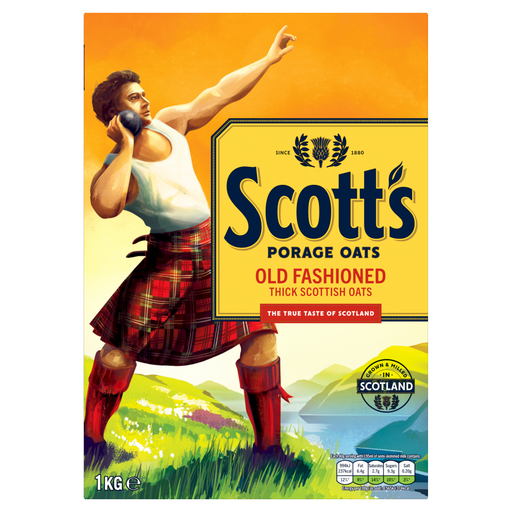
Scotts Porage Oats Old Fashioned Porridge Oats 1kg

Scotts Porage Oats Old Fashioned Porridge Oats, 1kg

A plain rolled-oat base for care-home kitchens using microwave or stovetop preparation.

Listed as 100% rolled oats, with 1.1g sugars and 11g protein per 100g; microwave and stovetop directions are stated.

The listing says it may contain wheat and barley, so check suitability for residents avoiding gluten or wheat.

Joybuy

Flahavan's Organic Porridge Oats 2kg, 2 x 1kg

Flahavan’s Organic Porridge Oats, 2kg (2 x 1kg)

A bulk plain-oat format for kitchens preparing individually tailored porridge servings.

Listed as two 1kg packs of organic wholegrain oat flakes, with 0.9g sugars, 8.3g fibre and 11g protein per 100g.

Check cooking instructions, the current oat and gluten declaration, and prepared texture before serving.

Joybuy

Flahavan's Organic Porridge Oats 1kg

Flahavan’s Organic Porridge Oats, 1kg

A 1kg plain-oat format for kitchen-led portions and resident-specific additions.

Listed as 100% organic wholegrain oat flakes, with 0.9g sugars, 8.3g fibre and 11g protein per 100g.

Check cooking instructions, the current pack declaration and suitability for any prescribed texture before service.

Joybuy

Frequently asked questions

Does no added sugar mean that instant oats are sugar-free?

No. Treat these as different claims. Quaker Oat So Simple Gluten Free lists 1.0g sugars per 100g and identifies them as naturally occurring sugars, so use the exact current pack’s nutrition panel and claim wording where a sugar-free requirement is specified.

Can a care home provide one lower-sugar instant-oat option to every resident?

Not as a substitute for individual assessment. The Care Quality Commission states that providers must assess nutritional needs and provide food that meets them; a resident at risk of malnutrition may instead need a nutrient-dense or fortified breakfast plan.

Are standard instant oats suitable for residents on texture-modified diets?

Only after the prepared porridge has been assessed for the resident. IDDSI says foods and drinks should be tested under intended serving conditions, so do not infer an IDDSI level simply because oats are instant or microwaveable.

What allergy checks should staff make before serving instant oats?

Read the current product label and follow the resident’s allergy plan. Quaker’s verified product declares oats and may contain wheat, while M&S states that its Traditional Porridge is unsuitable for coeliacs and people with milk, nut, peanut or wheat allergies; kitchen controls should also prevent allergen cross-contamination.

What food-safety process applies when a care home prepares porridge?

Follow the home’s food-safety system for storage, preparation, allergen handling and serving. The Food Standards Agency’s Safer Food, Better Business supplement is a food-safety-management resource for small residential care homes preparing residents’ food.