Students with limited cooking access
A warm, quick dinner base can work well when you have a microwave or only boiling water. Check the preparation method and whether the chosen pot is suitable for microwave use.


Start with the nutrition panel: under UK nutrition-claim rules, a food labelled high fibre must contain at least 6 g of fibre per 100 g or 3 g per 100 kcal. Among the reviewed options with declared figures, sachets suit students with a bowl and microwave or hob, while just-add-water pots suit limited kitchen access; compare the portion size and pack format before making one your regular dinner base.
A warm, quick dinner base can work well when you have a microwave or only boiling water. Check the preparation method and whether the chosen pot is suitable for microwave use.
Choose an option with a declared fibre figure and check whether it meets the UK definition of high fibre. NHS guidance says adults should aim for 30 g of dietary fibre a day as part of a healthy balanced diet.
Compare pack size, serving size and the number of portions you are likely to prepare rather than judging a format by the size of one pack alone.
| Priority | What to check | Your needs |
|---|---|---|
| Declared fibre | Check fibre per 100 g and the fibre amount per portion. For a high-fibre claim, check that the product reaches at least 6 g per 100 g or 3 g per 100 kcal under UK rules. | I want a stated fibre figure rather than relying on “wholegrain” wording alone. |
| Preparation method | Check whether the format needs a bowl, liquid, microwave or hob. For pots, confirm whether boiling water is sufficient and whether microwave use is permitted. | A kettle-only option matters when I am away from a shared kitchen; sachets can suit me when I have a bowl and microwave. |
| Pack and portion format | Compare pack weight, serving count and dry serving size. Check how much product you will use for the meal you intend to make. | I need a format that fits regular dinners, not simply the most convenient single serving. |
| Allergen suitability | Read the exact current allergen statement and any gluten-free or coeliac suitability wording. Do not infer suitability from an oat-based name. | If I have coeliac disease or a food allergy, I need the current pack information to match my requirements. |
A wholegrain description does not replace a declared fibre value or a valid high-fibre claim. UK nutrition-claim rules set a specific threshold for the claim.
Compare fibre per 100 g first, then check the amount supplied by the portion you will prepare.
A self-contained pot reduces preparation steps, but its portion and pack format may not suit a regular dinner routine as well as sachets or a larger pack.
Check pack weight, serving count and portion size before choosing a format for repeated meals.
A sachet that needs a bowl and microwave may not work in every student setting, and Quaker says its Original Pot is not suitable for microwaving.
Choose sachets when you have microwave or hob access, and select a water-only pot when a kettle or hot-water point is all that is available.
Oat products can have allergen ingredients, cross-contact warnings or product-specific coeliac suitability statements. The Food Standards Agency notes that oats remain an allergen in their own right.
For coeliac disease or an allergy, use the exact current product label and its required gluten-free and allergen information.
A UK instant-oats range covering microwaveable sachets and just-add-water pots, useful when choosing between a bowl-based format and a portable pot.
M&S Food offers Traditional Porridge in portioned packs and a Traditional Porridge Pot for students prioritising a straightforward hot-water format.
An oat-focused brand with quick oats, pots and a named High Fibre Pot for shoppers with access to its stated distribution area.
A supermarket own-label route to consider alongside branded instant oats when comparing available pack formats.
These Joybuy options cover microwaveable oat sachets and one hot-water instant oatmeal bag for students choosing a quick dinner base with a declared fibre figure.
 Image unavailable
A portioned microwave option for students with a bowl and water or milk available.
Declared fibre: 9.0 g per 100 g and 3.5 g per 38.5 g sachet. Six sachets are stated, with microwave preparation in 2½ minutes.
Requires a microwaveable bowl and microwave for the stated quick method. Check the current pack if gluten-free or other allergy suitability is relevant.
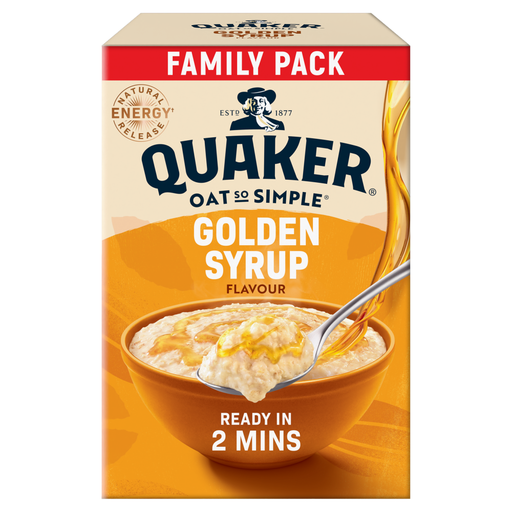 Image unavailable
A larger sachet pack for regular microwave meals where a bowl and milk are available.
Declared fibre: 7.3 g per 100 g and 2.6 g per sachet. The pack contains 20 sachets and has a stated 2-minute microwave method.
The stated method uses a microwaveable bowl and approximately 180 ml milk per sachet. It contains oats and may contain barley, wheat and soya.
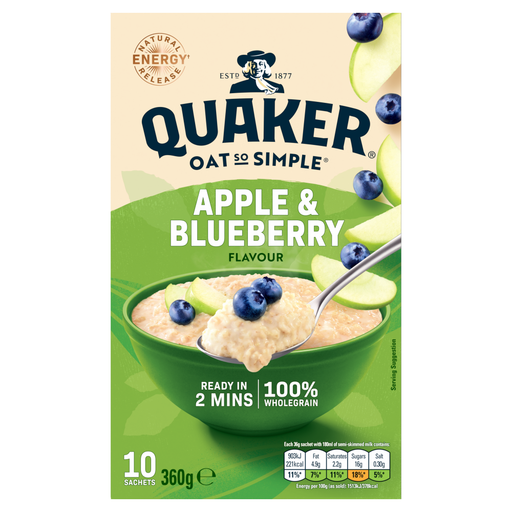 Image unavailable
A 10-portion flavoured option with a stated quick preparation time.
Declared fibre: 7.2 g per 100 g and 2.6 g per 36 g portion. The pack identifies 10 portions and states that the porridge is ready in 2 minutes.
Check the current pack instructions and required liquid before buying. It contains oats and may contain wheat, barley and soya.
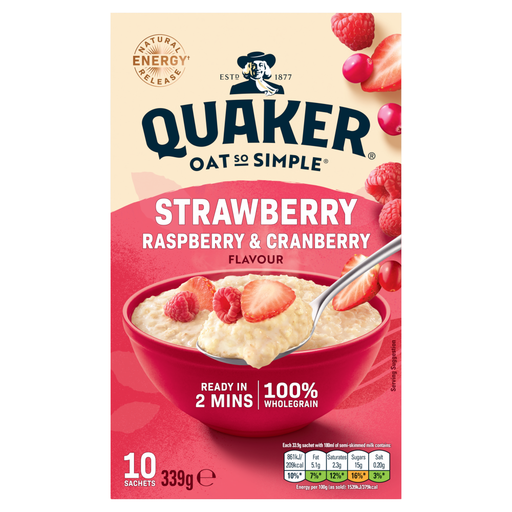 Image unavailable
A portioned microwave porridge option for a shared kitchen with a bowl and milk.
Declared fibre: 7.2 g per 100 g. The pack contains 10 sachets, each prepared with milk in a bowl and microwaved for 2 minutes.
It contains oats and cereals containing gluten, and may contain barley, soya and wheat. Do not assume gluten-free or coeliac suitability.
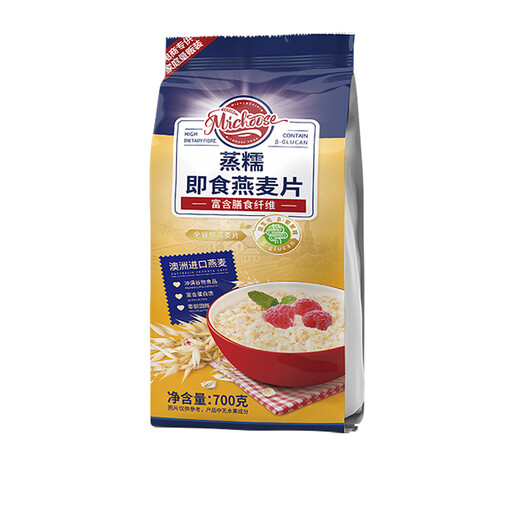 Image unavailable
A hot-water option for minimal-equipment meal preparation.
Declared fibre: 9.9 g per 100 g. The stated method is to add hot water, stir and serve after one minute.
Check the pack for serving guidance, allergen information and gluten-free or coeliac suitability before comparing it with portioned formats.
Under the nutrition-claim rules published on legislation.gov.uk, a product may use a high-fibre claim only where it contains at least 6 g fibre per 100 g or at least 3 g fibre per 100 kcal. Check the nutrition panel rather than assuming wholegrain wording is enough.
NHS guidance says adults should aim for 30 g of dietary fibre a day as part of a healthy balanced diet. Instant oats can contribute, but consider a serving alongside the rest of the day’s foods.
They can provide a quick warm dinner base when cooking access is limited. NHS guidance recommends getting fibre from a variety of foods within a healthy balanced diet, so add other meal components that suit your dietary requirements.
Do not assume they are. The Food Standards Agency states that foods labelled gluten-free must contain no more than 20 mg/kg gluten, and oats remain an allergen in their own right; check the exact current pack for its suitability statement and allergen information.
Choose sachets when you have a bowl plus a microwave or hob. Choose a pot when you only have boiling water, but check its individual instructions: Quaker says its Original Pot is not suitable for microwaving.