What to check before choosing
Start with the portion and the equipment available where you will eat breakfast, then compare the exact variant’s ingredients and preparation instructions.
| Priority |
What to check |
Your needs |
| Portion size |
Compare dry weight and any stated serving basis. Cited sachets range from 27 g to 36 g, while larger sachets and pots can exceed that. |
I want a measured bowl without guessing from a large bag, but I still need enough oats for my appetite. |
| Preparation access |
Check whether you need a bowl, microwave, hob or boiling water. Follow the instructions for the exact pot, as not every pot can be microwaved. |
I need breakfast that works with the equipment and liquid available at home, work or while travelling. |
| Ingredients and allergens |
Read the exact flavour’s ingredient list and allergen statement. Plain sachets, flavoured pots and protein products can contain different added ingredients. |
I want to control sweetness and toppings, or I need to check whether a particular ingredient or precautionary statement is suitable for me. |
| Convenience value |
Compare products using the same £/kg unit where it is displayed, alongside the portion control and washing-up convenience you are paying for. |
I use single portions for convenience, but I want to decide whether that convenience is worthwhile for routine breakfasts. |
Joybuy instant oat options
Joybuy product options for a one-person breakfast, including larger sachets and flavoured or protein-focused variants that need a bowl and cooking access.
 No image available
Quaker Oat So Simple Big Bowl Original 6 Pack 231g
A larger measured option for a solo breakfast where a bowl and microwave are available.
Six 38.5 g sachets; each sachet is stated as 33% bigger than a standard 27 g sachet. Prepare with water or milk in 2½ minutes. Check the current allergen statement if coeliac disease or wheat or soya allergy is relevant.
Joybuy
 No image available
Quaker Oat So Simple Peanut Butter Protein Sachets 8 Pack 344g
A larger sachet option for buyers specifically looking for a protein-focused breakfast.
Eight 43 g sachets, stated to provide 9 g plant protein from soya per serving. Cook with 180 ml water or milk using a microwave or hob; the listing states possible milk, peanut and nut presence.
Joybuy
 No image available
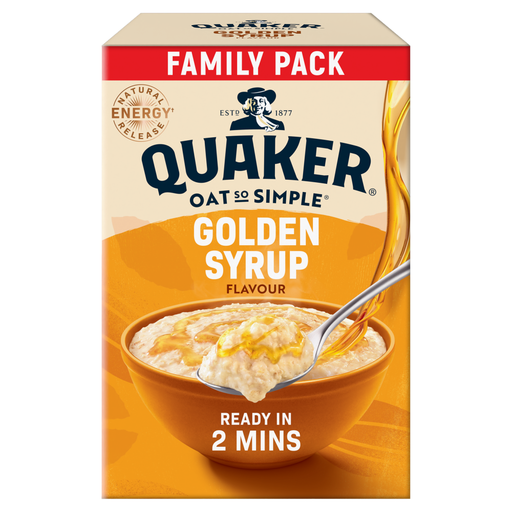
Quaker Oat So Simple Golden Syrup 20 Sachets 720g
A repeatable microwave breakfast portion for home or workplace use with milk available.
Twenty 36 g sachets. The stated method uses about 180 ml milk in a microwaveable bowl for two minutes; this is a sweetened golden syrup variant containing sugar and natural flavourings.
Joybuy
 No image available
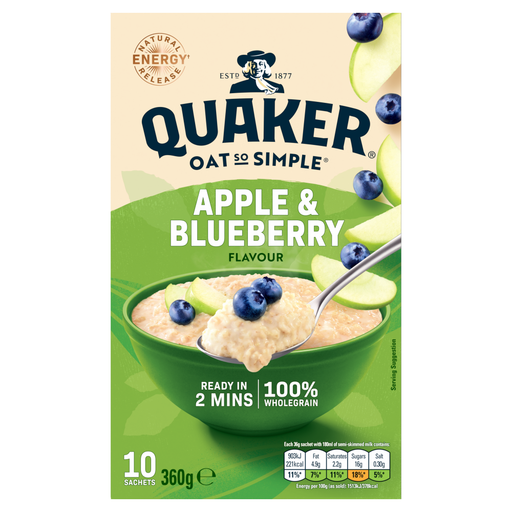
Quaker Oat So Simple Apple & Blueberry 10 Pack 360g
A defined flavoured portion for a quick bowl-based solo breakfast.
Ten 36 g portions, stated to be ready in two minutes with water or milk. This variant contains sugar, flavouring and dried fruit pieces rather than plain oats.
Joybuy
 No image available
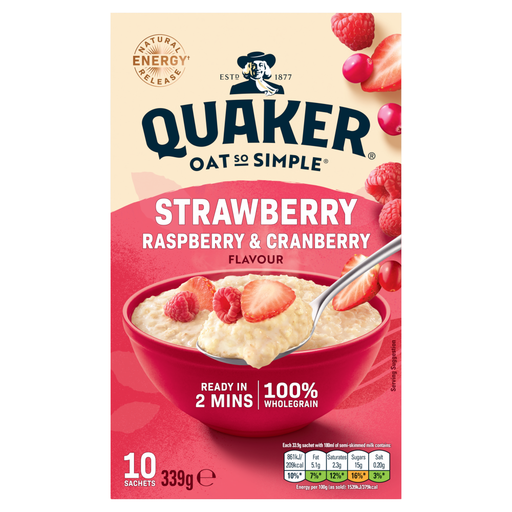
Quaker Oat So Simple Strawberry, Raspberry & Cranberry 10 Sachets 339g
A measured flavoured sachet for a microwave breakfast with milk available.
Ten 33.9 g sachets prepared in a bowl with milk for two minutes. It contains sugar and mixed-berry flavouring; check the pack if wheat, barley or soya avoidance is relevant.
Joybuy
Frequently asked questions
What counts as a single portion of instant oats?
There is no universal dry weight for a single portion. Tesco Groceries, M&S and Flahavan’s cite products ranging from Quaker’s 27 g sachet to Flahavan’s 35 g sachet described as an adult serving, plus 44–45 g pots; compare the dry weight and required liquid with your appetite and toppings.
Are porridge pots better than sachets for one person?
A pot is useful when you need its supplied container and have boiling water, while a sachet suits a bowl-based breakfast where you want more choice over liquid and toppings. Follow the exact instructions: Quaker UK states that its cited Original pot is not suitable for microwaving, whereas Flahavan’s says its cited pot can use boiling water or a microwave.
Can I assume all plain oat sachets are suitable for coeliac disease or wheat allergy?
No. M&S states that its cited Traditional Porridge is not suitable for coeliacs or people with wheat allergy, while Quaker UK’s cited Gluten Free sachet states “may contain wheat”. Check the current label for the exact pack and follow medical advice where applicable.
Do protein porridge sachets replace a normal oat sachet directly?
Not necessarily. Quaker UK states that its cited Protein Original sachet contains soy protein and gives prepared nutrition using 190 ml semi-skimmed milk, so its ingredients, allergens and preparation differ from plain oats. Choose this format for its specific protein feature rather than simply because it is a single serve.
How should empty oat packaging be recycled in the UK?
Check the pack’s material instructions and your local authority’s collection rules. GOV.UK defines commonly collected kerbside packaging as material collected by at least 75% of local authorities across the four UK nations, so a general packaging claim does not guarantee collection at your address.


