Low-effort cupboard-backup shoppers
You want a dry, shelf-stable food that can be prepared after collecting or receiving takeaway, with the choice driven by whether you have boiling water, a microwaveable bowl and the required liquid.


Think of instant oats as a shelf-stable fallback or later snack, rather than a standard accompaniment to a Chinese takeaway. Choose a pot when you have boiling water but no bowl, choose sachets when you have a microwaveable bowl and the required liquid, and select an explicitly gluten-free product only when that requirement applies. Plain oats give more control over sweetness and toppings, while flavoured or milk-containing options need closer ingredient checks.
You want a dry, shelf-stable food that can be prepared after collecting or receiving takeaway, with the choice driven by whether you have boiling water, a microwaveable bowl and the required liquid.
You prefer an unsweetened oat base so the flavour can remain neutral or be adjusted separately, rather than buying a pre-sweetened pot or flavoured sachet.
You need to distinguish an explicit gluten-free claim from general oat products and still check for milk, oat allergy and precautionary allergen statements on the exact pack.
Choose this when: You want a compact cupboard staple and have a bowl, the stated liquid and microwave or hob access.
Consider: Sachets need separate equipment; standard oat sachets are not automatically gluten-free.
Choose this when: A kettle is available and you want the serving vessel included.
Consider: Some pots are unsuitable for microwave cooking and can contain milk ingredients.
Choose this when: An explicitly gluten-free claim is required for the person who will eat it.
Consider: Gluten-free products can still contain oats, milk ingredients and added sugar.
| Priority | What to check | Your needs |
|---|---|---|
| Preparation equipment | Check whether the pack requires boiling water, a microwaveable bowl, a hob or a stated liquid. Follow the preparation and standing instructions for that exact format. | A kettle-only option suits me when I do not want to wash a bowl. If I have a microwave and bowl, a sachet can be practical instead. |
| Ingredients and sweetness | Compare the ingredient list for plain oat flakes or wholegrain oats against sugar, flavouring and milk ingredients. Use the per-serving information shown on the pack when comparing sweetness. | I may prefer a neutral oat base that I can leave plain or top differently, rather than a ready-flavoured serving. |
| Allergen and gluten-free claims | Look for the exact gluten-free claim and read ingredients, milk information and precautionary statements for the specific variant. The Food Standards Agency states that food labelled gluten-free contains no more than 20mg/kg gluten as sold to the final consumer. | If gluten, milk or oat allergy matters in my household, I need the current pack label to match that requirement rather than relying on the product category. |
| Portion and storage format | Compare individually portioned sachets with self-contained pots, then check cool, dry storage directions and the best-before date on the pack. | I might favour sachets for compact measured portions, or a pot when having its own serving container matters more. |
A pot may require boiling water and be unsuitable for microwave cooking, while a sachet may need a separate microwaveable bowl and a stated quantity of water or milk. The wrong format can be impractical on the night.
Match the pack instructions to the equipment you will actually have: kettle, microwave, hob, bowl and preferred liquid.
Gluten-free food can still contain oats, and oat is an allergen in its own right. Gluten-free porridge pots can also contain milk ingredients.
For coeliac disease or allergy needs, choose only a product whose current label meets the required claim and allergen profile; do not rely on the category name or an earlier pack.
Flavoured porridge pots can include sugar, flavouring and milk ingredients, which reduces control over the final flavour and ingredients.
Choose an oat-flake-only or plain wholegrain-oat product for greater flexibility, and select flavoured products only when those ingredients and taste are wanted.
Ingredients, allergen details and preparation instructions can change when a product is reformulated or a variant is updated.
Read the current pack label, including ingredients, allergen warnings, preparation instructions and best-before date, whenever you buy a new variant.
A Quaker range of microwaveable instant-oat sachets and pots, including Original and explicitly gluten-free variants.
Own-label instant oats covering plain water-prepared sachets and gluten-free porridge pots.
Own-label instant porridge pots, including Original and Free From options prepared with boiling water.
M&S Food offers portioned traditional porridge sachets and ready-with-hot-water porridge pots, including gluten-free choices in the wider range.
An oat specialist with organic natural porridge sachets and quick-oat products.
These Joybuy options cover portioned porridge sachets and plain rolled oats for a dry cupboard fallback when the available equipment, preferred flavour and dietary checks suit the product.
 No image available
A portioned plain-oat option for a cupboard backup when you have a microwave-safe bowl and liquid available.
Six larger sachets; wholegrain rolled oats only; microwave preparation with water or milk; store in a cool, dry place.
Requires a microwave-safe bowl and liquid, rather than working as an add-boiling-water pot. Check the physical label if precautionary allergen information matters.
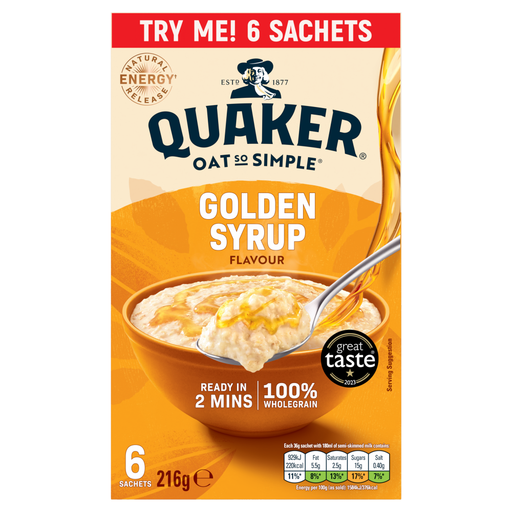 No image available
A ready-flavoured cupboard sachet option for homes with a bowl, microwave and preferred liquid available.
Six 36g sachets; mix one sachet with 180ml of milk or water and microwave for 2 minutes; store in a cool, dry place.
Contains sugar and natural flavourings, so it is not a neutral oat base. It contains oats and lists possible barley, soya and wheat, and is not explicitly gluten-free.
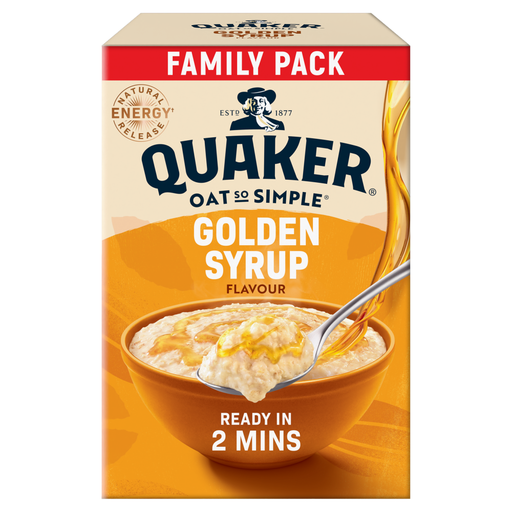 No image available
A larger pack of portioned golden-syrup sachets for households expecting to use several cupboard servings.
Twenty 36g sachets; the stated method uses a microwaveable bowl, approximately 180ml milk and a short standing time; store in a cool, dry place.
The stated preparation uses milk, and water substitution should be checked on the current pack. It contains sugar and natural flavourings and is not explicitly gluten-free.
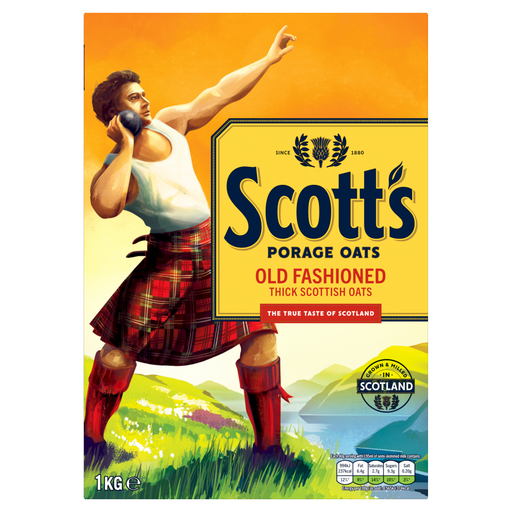 No image available
A plain rolled-oat choice for shoppers willing to measure portions and use their own bowl or pan.
1kg of 100% rolled oats; stated water-or-milk methods for a microwave-safe bowl or hob; microwave cooking takes 2–3 minutes and hob cooking 4–5 minutes.
This is not a portioned instant sachet or add-boiling-water pot. It may contain wheat and barley and is not explicitly gluten-free.
For this cupboard plan, treat instant oats as a separate shelf-stable fallback or later snack rather than an accompaniment. Choose the format according to the equipment and dietary needs in your home.
No. Sainsbury's Original Pot is prepared with approximately 170ml boiling water and a 2–3 minute standing time, while Quaker Original sachets have milk-based microwave or hob directions and Tesco Natural Oats has water-based microwave and hob directions. Follow the exact pack rather than transferring instructions between formats.
No. In the UK, food labelled gluten-free must meet the 20mg/kg gluten threshold, but the Food Standards Agency notes that oats are still an allergen in their own right. Check the individual product for milk and other allergen information as well.
Keep unopened packs in a cool, dry place and follow the best-before information on the package. After preparing a porridge pot, consume it immediately as directed rather than assuming it can be stored for later.
Use a webpage as a guide, then read the physical label at purchase and before eating. Ingredients, nutrition and allergen information can change when products are reformulated.