Buying priorities
Choose the preparation format first, then compare the label for fibre, sugars, ingredients and suitability information for the exact variant.
Plain high-fibre sachets
Choose this when: A neutral, repeatable porridge base gives you the most control over toppings, sweetness and texture.
Consider: A plain format is not automatically accepted, and current allergen and coeliac-suitability information still needs checking.
High-fibre hot-water pots
Choose this when: You need a portable option that can be prepared with hot water rather than a microwave.
Consider: Pots can give less control over portion size and texture than sachets or loose quick oats.
Sweetened instant oat pots
Choose this when: A familiar sweet flavour is a realistic first step and the pack information suits the eater.
Consider: Compare sugars and fibre on the same serving basis; a sweeter flavour does not necessarily provide more fibre.
| Priority |
What to check |
Your needs |
| Acceptance and texture |
Look for a plain or lightly flavoured base, controllable toppings and a portion that can be kept small. Check whether the preparation method lets you adjust consistency. |
A familiar bowl is easier to re-offer calmly. I would start with a manageable portion and return to it another time if it is refused, rather than making the meal a test. |
| Fibre claim |
Compare fibre per 100 g across formats. A UK high-fibre claim requires at least 6 g fibre per 100 g or 3 g per 100 kcal, according to legislation.gov.uk and Department of Health and Social Care guidance. |
I want a label-based way to distinguish a genuinely high-fibre product from one that is simply oat-based. Check the exact flavour and format, not a claim made for another variant. |
| Convenience and suitability |
Confirm whether preparation needs a microwave or only hot water. Compare sugars on the stated serving basis, then read ingredients and allergen statements on the current pack. |
I need a quick option that works where it will be eaten, without overlooking milk, gluten-related requirements or the difference between plain and sweetened versions. |
Joybuy product options
Joybuy product options for quick high-fibre instant oat meals, including plain sachets, a plain hot-water oatmeal and a fruity microwave sachet.
 No image available
Quaker Oat So Simple Big Bowl Original, 6 Sachets
A plain microwave porridge option for a familiar, adaptable base.
The listing states 38.5 g sachets, 9.0 g fibre per 100 g, 1.0 g sugars per 100 g and wholegrain oats with no added ingredients.
This is described as a larger portion; consider whether a full sachet suits the eater. Check the current pack for allergen and coeliac-suitability information.
Joybuy
 No image available
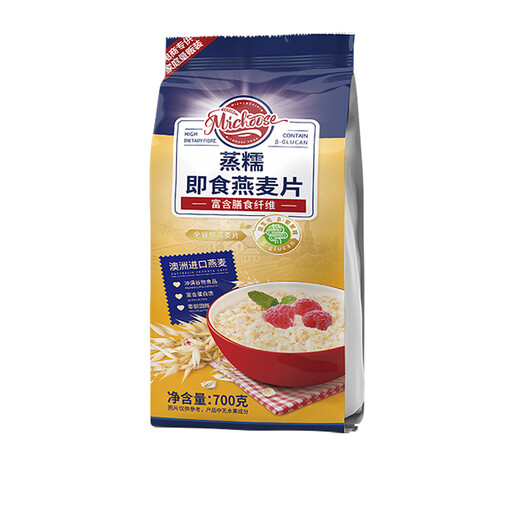
Steamed Instant Oatmeal, 700 g
A plain hot-water option for quick, simple preparation.
The listing states one-minute hot-water preparation, 100% oatmeal and 9.9 g dietary fibre per 100 g.
Check the pack directions for small-portion preparation and read the current label for allergen, gluten cross-contact and coeliac-suitability information.
Joybuy
 No image available
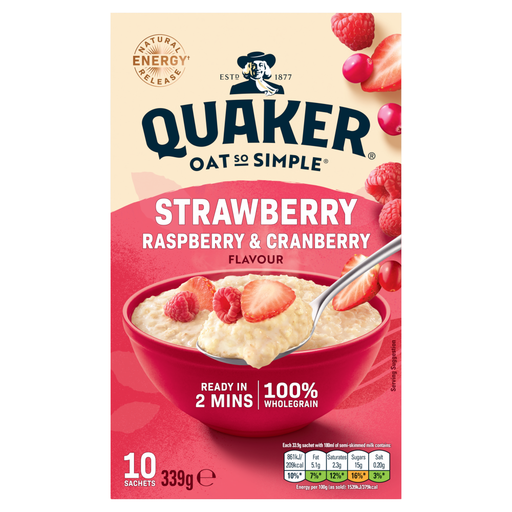
Quaker Oat So Simple Strawberry, Raspberry & Cranberry, 10 Sachets
A fruity, portioned microwave option to consider when berry flavour is already familiar.
The listing states 33.9 g sachets, 7.2 g fibre per 100 g, 19 g sugars per 100 g, fruit pieces and two-minute microwave preparation.
It contains cereals containing gluten and oats and may contain barley, soya and wheat. Its preparation instructions specify milk and a microwave.
Joybuy
Frequently asked questions
What counts as high fibre on a UK instant-oats label?
A food may make a high-fibre claim only if it contains at least 6 g fibre per 100 g or at least 3 g fibre per 100 kcal, according to legislation.gov.uk and Department of Health and Social Care guidance. Check the specific flavour and format because an oat-based product is not automatically high in fibre.
Should I choose plain or sweetened instant oats for a fussy eater?
Start with the format and flavour the eater is most likely to tolerate, then compare the nutrition panel. Tesco’s prepared Original and Golden Syrup pots both list 2.9 g fibre per pot, while Golden Syrup lists 13.1 g sugars against 9.0 g for Original.
How should I introduce porridge if my child refuses it?
Offer a small portion, keep the meal calm and return to porridge another time rather than forcing it. NHS guidance says children may need many attempts before accepting foods and recommends continuing to offer variety.
Can instant oats be assumed suitable for coeliac disease or milk allergy?
No. Check the exact pack label each time. M&S states that its Traditional Porridge Sachets and Traditional Porridge Pot are not suitable for coeliacs, and the pot contains dried whole milk; Quaker Original also lists possible wheat, barley and soya presence.
What preparation and safety checks matter for instant oat pots?
Follow the preparation method and hot-food guidance on the pack. Tesco’s pots require boiling water and standing time, are not suitable for microwave cooking, and the retailer advises checking the current label because food information can change through reformulation.


