Large households prioritising breakfast cost
You regularly serve porridge to several people and can measure portions rather than needing every serving pre-packed. Comparing unit price and preparation time matters more than brand familiarity.


For frequent family breakfasts, larger plain porridge-oat packs are usually the more economical route when everyone can measure their own portions. Tesco Groceries’ cited comparison placed loose oats below the selected sachet formats on unit price; choose sachets when pre-measured portions and a short microwave routine solve a real weekday problem, and always check the current pack for allergen and gluten wording.
You regularly serve porridge to several people and can measure portions rather than needing every serving pre-packed. Comparing unit price and preparation time matters more than brand familiarity.
You may accept a higher unit price when individual sachets or quick oats make it practical for family members to prepare breakfast independently in around two minutes.
You need to distinguish a product carrying an explicit gluten-free claim from ordinary oats, and to read the current pack because oats remain an allergen and products can carry additional warnings.
Choose it when: Your household can measure portions and has time for a bowl or pan preparation.
Trade-off: Loose oats are not individually portioned, so measuring and cooking equipment are part of the routine.
Choose it when: Pre-measured portions and a short microwave method help family members manage busy mornings.
Trade-off: Tesco Groceries’ cited comparison showed selected sachet formats above loose oats on unit price.
Choose it when: A preferred flavour or serving format is important enough to make breakfast easier to use consistently.
Trade-off: Ingredients, allergen statements and preparation instructions vary between products and need checking pack by pack.
| Priority | What to check | Your needs |
|---|---|---|
| Repeat-buy cost | Compare the displayed unit price for the exact pack. Check pack weight and stated portion size before comparing loose oats with sachets. | For several breakfasts each week, I want to compare formats fairly rather than relying on the shelf price alone. |
| Morning preparation | Check the product-specific microwave or hob method, required liquid, bowl size and standing time. | A reliable routine matters when different people need to make breakfast before school or work. |
| Ingredients and fibre information | Read the ingredient list and compare nutrition on the same basis, such as per 100g or per prepared serving. | I may prefer plain oats when I want to choose my own toppings and flavour additions. The NHS identifies porridge oats as a source of fibre within a varied diet. |
| Allergen and gluten suitability | Check the current allergen statement and use an explicit gluten-free claim where required. Do not assume one flavour or format has the same suitability as another. | For an allergy-managed household, the exact pack statement matters more than the brand name. The Food Standards Agency notes that oats remain an allergen even in food labelled gluten-free. |
A larger pack can still cost more for the same weight of oats when it contains pre-portioned sachets or added convenience.
Compare the displayed unit price for the exact formats you are considering, then decide whether portion control and speed justify the difference for all or only some family breakfasts.
Ordinary oat products can carry cross-contact statements, and a simple-looking oat porridge may still be unsuitable for coeliac dietary requirements.
Use the current pack label, select an explicit gluten-free claim where required and check each flavour, format and brand separately.
Retail listings can show loyalty prices alongside higher standard prices, so the apparent value route can change after an offer ends.
Check the final unit price, offer dates and eligibility for the exact store or delivery basket before planning repeat purchases around a promotion.
Loose oats require portioning and suitable bowls or a pan, while cooking instructions and ingredients can differ between products.
Make sure the household has a practical measuring method, appropriate cookware and storage space, then follow the current pack instructions.
A relevant own-label route for a large family shop, with loose porridge oats and a broad porridge-sachet category in the UK.
Relevant for comparing familiar microwave sachets, larger multipacks, flavoured sachets and protein-oriented variants against loose oats.
A quick-oat alternative for households wanting a less heavily portioned format with fast microwave preparation.
Relevant for shoppers considering a pre-portioned porridge option with clearly stated preparation and dietary information.
Joybuy product options for a large family shop, including self-portioned plain oats, pre-measured sachets and specialised instant formats.
 No image available
A self-portioned option for households needing an explicitly gluten-free oat base.
1kg pack; 25 stated portions on a 40g basis; made from 100% gluten-free oat flakes. Check the current pack for preparation instructions and allergen suitability.
 No image available
A plain-oat choice for households that are happy to measure portions for breakfast.
1kg of 100% rolled oats; stated 40g serving method; microwave preparation takes 2–3 minutes, with a one-minute standing time. The listing states it may contain wheat and barley.
 No image available
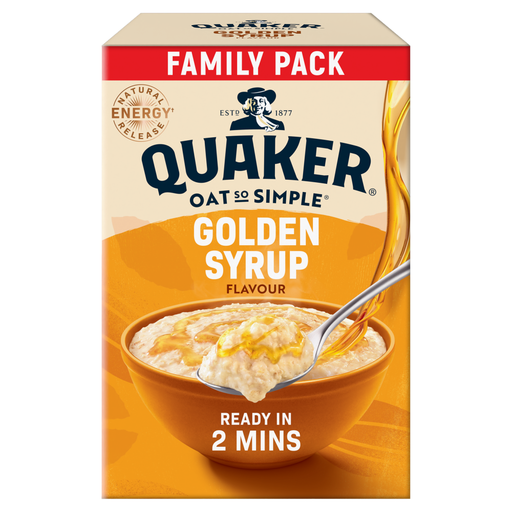
A pre-measured format for rushed mornings when individual portions reduce measuring effort.
20 sachets of 36g; stated two-minute microwave method with approximately 180ml milk and a one-minute standing time. Contains oats and may contain barley, wheat and soya.
 No image available
A larger plain-oat format for frequent self-portioned family breakfasts.
Two 1kg bags of 100% organic wholegrain oat flakes, with a stated 40g serving basis. Check the current pack for cooking instructions and dietary suitability.
 No image available
A specialised sachet option when a protein-oriented porridge format is more important than high-volume family servings.
Eight 43g sachets; stated two-and-a-half-minute microwave method and one-minute hob method. Contains oats and soya and may contain milk, peanuts and nuts.
Usually, they can be when your household can measure portions itself. Tesco Groceries’ cited comparison placed its loose porridge oats below the selected larger Quaker sachet formats on unit price, but check the current pack, retailer and offer before buying.
The difference can be small for microwave preparation, but it depends on the exact product. Quaker UK states that Original sachets take two minutes with milk, while the cited Tesco loose-oat instructions include microwave cooking followed by standing time; hob preparation takes longer.
No. Choose a product explicitly labelled gluten-free where that is required, then read the current pack statement. The Food Standards Agency states that gluten-free food must contain no more than 20mg/kg gluten and that oats must still be emphasised as an allergen; the cited M&S Traditional Porridge product is stated as not suitable for coeliacs.
Yes. Retail listings can include time-limited loyalty offers and changing availability. Sainsbury's notes that prices can differ between supermarkets and convenience stores, so compare the final displayed unit price for the exact pack and shopping method you are using.