Salt-conscious evening snack shoppers
You want a warm oat meal after work or in the evening while keeping track of salt from packaged foods and toppings across the day.


For a lower-salt evening bowl, compare salt declarations on the same basis: prepared-pot figures are useful for ready-to-eat portions, while dry per-100g figures are most useful when comparing sachets. Plain oats can give you more control over toppings, but preparation method, milk ingredients and allergen statements still need checking; the UK Government advises adults to have no more than 6g of salt a day.
You want a warm oat meal after work or in the evening while keeping track of salt from packaged foods and toppings across the day.
You need a hot bowl with only boiling water available or with a microwave nearby, and want to choose the right pot or sachet format.
You need to check milk, gluten-related suitability and may-contain statements rather than assuming that plain or original oats meet those requirements.
Start with a like-for-like salt comparison, then confirm how the oats are prepared and whether the exact pack suits your ingredient requirements.
| Priority | What to check | Your needs |
|---|---|---|
| Salt per portion | Check whether salt is stated per prepared pot, prepared serving or per 100g dry product. Compare only figures with the same serving and preparation basis. Include any salty toppings separately. | I want the oat portion to fit alongside the rest of my evening meal. The UK Government advises adults to have no more than 6g of salt a day. |
| Preparation format | Check whether the pack needs boiling water, a microwave or a hob. Look for the required liquid and the stated standing or cooking time. | I need to know whether I can make the bowl with the equipment available that evening, rather than discovering that a pot or sachet needs a different method. |
| Ingredients and allergens | Read the ingredient list, allergen statement and any coeliac-suitability wording on the exact pack. Check for dried milk, wheat, barley, soya and may-contain statements where relevant. | A plain or original flavour should not make me assume that it is free from milk or suitable for a gluten-related restriction. |
A dry per-100g figure, a dry sachet figure and a bowl prepared with water or milk describe different amounts of food. Quaker lists its Original sachet prepared with semi-skimmed milk, while its Original Pot is prepared with water.
Compare prepared servings only when the liquid and serving basis match. Otherwise, compare dry per-100g figures or use the exact serving size shown on the pack.
Original instant oats can contain dried milk or carry may-contain statements. M&S states that its Traditional Porridge products discussed here are not suitable for coeliacs.
Check the ingredient list, highlighted allergens and suitability statement every time you buy the exact product, especially where dairy, wheat or gluten-related restrictions apply.
Tesco Groceries lists 0.08g salt per prepared pot for both its Original and Golden Syrup instant-oat pots, while the Golden Syrup pot lists 13.1g sugars per pot compared with 9.0g for Original.
Choose using salt figures on a matched serving basis first, then decide whether the flavour, sweetness and ingredients suit your intended evening meal.
Tesco own-label options discussed here include a plain oat sachet product and hot-water instant pots, providing a contrast between a simple ingredient list and a ready-pot format.
Quaker's Oat So Simple range includes microwaveable sachets and add-hot-water pots, making the preparation format an important part of the choice.
M&S offers portioned microwaveable porridge and hot-water porridge pots for shoppers who want a measured evening portion.
Flahavan's is relevant where an oat-based protein pot is being considered alongside standard instant oats for an evening meal.
Joybuy options for microwaveable instant-porridge sachets suited to a warm evening bowl.
 No image available
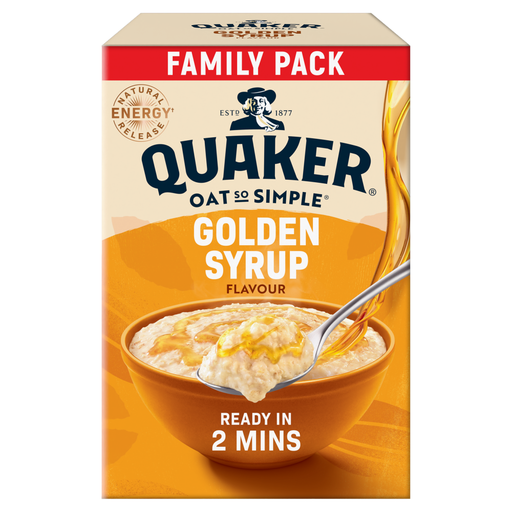
A microwave option for an evening bowl when a bowl and preparation liquid are available.
The listing states 36g sachets, preparation with about 180ml milk in two minutes, and 0.20g salt per dry sachet.
Contains sugar and salt; it contains oats and may contain barley, wheat and soya.
 No image available
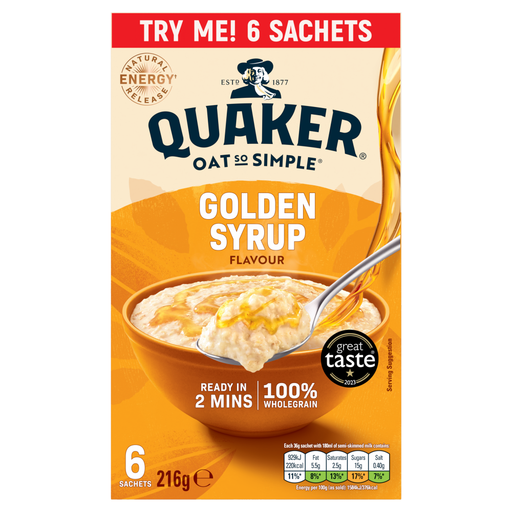
Suitable for a quick microwave comfort bowl when you can add water or milk.
The pack contains six 36g sachets and states a two-minute microwave preparation time. Salt is declared as 0.56g per 100g dry product.
Contains sugar and salt; it contains oats and may contain barley, soya and wheat.
 No image available
A larger microwaveable sachet option when you want to choose the liquid and toppings yourself.
The listing identifies a 38.5g sachet, described as 33% bigger than a standard 27g sachet, with wholegrain rolled oats as the ingredient.
Check the current pack's salt declaration before buying for a lower-salt choice, as the listing gives conflicting nutrition entries. The listing identifies oats as the allergen.
Compare the declared salt value on a like-for-like basis. For a pot eaten after adding water, use salt per prepared pot; for dry sachets, compare per 100g only with other dry products or use the stated serving size. Tesco Groceries lists less than 0.01g per prepared serving for Tesco Natural Oats, while Quaker lists 0.07g per prepared Original Pot.
No. The UK Government advises adults to have no more than 6g of salt a day, so include salty additions such as stock, cheese, cured meat, sauces or savoury seasoning when considering the whole evening meal.
Yes, if the exact pack supports that method. Quaker states that its Oat So Simple Original Pot is made with boiling water and left for about two minutes, while Tesco Natural Oats can be cooked in a microwave or on a hob. Quaker says its Original Pot is not suitable for microwave preparation.
No. Quaker Original Pot contains skimmed milk powder and has may-contain warnings for wheat, barley and nuts. M&S states that its Traditional Porridge products discussed here are not suitable for coeliacs, so check the current pack before purchase or use.
Sachets and pots are the formats covered here. Treat a tin as a format to check with the retailer rather than assuming it identifies a standard instant-oat product, and compare the nutrition panel on the exact pack you intend to buy.