Meals-on-wheels coordinators serving repeat shared breakfasts
For organisers deciding whether regular attendance justifies a 20-plus-sachet pack rather than several smaller packs, while keeping a practical process for checking dietary needs.


Choose a 20-plus-sachet pack when shared breakfasts are predictable, dry storage is suitable and the same plain-oat product can be safely used for the group. Smaller 8-to-10-sachet packs are more flexible when attendance, portion preferences or dietary requirements vary. Individual sachets support portion control, but the current label and each recipient’s care guidance remain decisive for allergies, coeliac disease, dysphagia or a personalised nutrition plan.
For organisers deciding whether regular attendance justifies a 20-plus-sachet pack rather than several smaller packs, while keeping a practical process for checking dietary needs.
For people who need quick, repeatable portions but must follow preparation instructions, check allergen information and avoid assuming one texture or nutrition profile suits everyone.
For services supporting recipients with allergies, coeliac disease, dysphagia, poor appetite or a clinician-led nutrition plan, where confirmed ingredient, allergen, texture and nutrition suitability matter more than pack size.
Consider it: when the same service regularly needs many plain portions and can use the pack within its date.
Watch for: a fixed sachet size and an allergen statement that may not suit every recipient.
Consider it: when attendance is uncertain or the service needs to compare portion sizes or products.
Watch for: fewer servings per pack, so repeat demand may require more frequent ordering.
Start with the number of suitable portions needed for a typical run, then check preparation, ingredients and each recipient’s care requirements.
| Priority | What to check | Your needs |
|---|---|---|
| Pack size and portions | Compare sachet count, stated portion size, storage conditions and the expected number of breakfasts. A 22-sachet Quaker pack, 10-portion options and 8-portion options serve different levels of repeat demand. | I need enough portions for regular breakfasts without committing every recipient to one product for too long. |
| Preparation routine | Use the manufacturer’s method, including microwave time, stirring and standing instructions where given. Ensure the service has the required microwave, bowl, water or milk before choosing a format. | I need volunteers or staff to prepare each portion consistently and check it before serving. |
| Ingredients and allergens | Read the current physical pack label for the exact flavour and variant. Check allergen statements and any coeliac or allergy exclusions against the individual recipient’s plan. | A plain, wholegrain or organic description is not enough for me to decide whether a product is appropriate for a particular person. |
| Texture and nutrition plan | Check whether the prepared food meets the documented texture requirement. Use protein-containing or flavoured formulations only where they fit the individual plan and ingredient checks. | I need oats to be one suitable part of breakfast, not an assumed answer to a prescribed texture or nutrition requirement. |
A 22-sachet pack reduces buying frequency only when enough recipients can use the same formulation. Variable attendance, portion needs and dietary requirements can leave unsuitable sachets unused.
Estimate repeat breakfast demand first, then choose the smallest pack that reliably covers it while retaining an appropriate alternative where needed.
Products can have different allergen statements. The checked options include possible wheat, barley, soya or milk-trace exposure, and M&S states that its Traditional Porridge is not suitable for coeliacs or for people with specified allergies.
Use the current pack label at the point of serving, keep allergen information available to staff and volunteers, and recheck it before changing brand or flavour.
For people with dysphagia, an unsuitable texture can create a choking or aspiration risk. University Hospitals Birmingham NHS Foundation Trust guidance describes Level 4 purée food as smooth, thick, moist and free from bits or lumps.
Follow the individual’s documented IDDSI or clinician guidance; a quick microwave method or smoother-looking porridge does not demonstrate compliance.
Microwaved food can heat unevenly, with hotter edges and a cooler centre. Food Standards Agency caterer guidance identifies standing and stirring as part of microwave cooking or reheating.
Follow the manufacturer’s instructions, stir and stand where directed, use the service’s food-safety procedures and serve promptly or use appropriate hot holding.
A microwaveable sachet range including a 22 x 27g Original Big Pack for recurring plain breakfasts, alongside separate higher-protein 8-sachet variants.
Tesco Natural Oats Porridge is a 10 x 35g plain instant-oats option for a smaller shared-breakfast run.
M&S offers a 10-portion Traditional Porridge sachet product for teams that prefer a moderate-size pack and a stated three-minute microwave method.
Flahavan’s offers 8 x 35g Organic Natural sachets and a separate Quick Oats format for services considering plain-oat options with stated portion sizes.
Joybuy product options for meals-on-wheels shared breakfasts, including larger sachet packs, smaller packs for variable attendance and hot-water formats.
 No image available
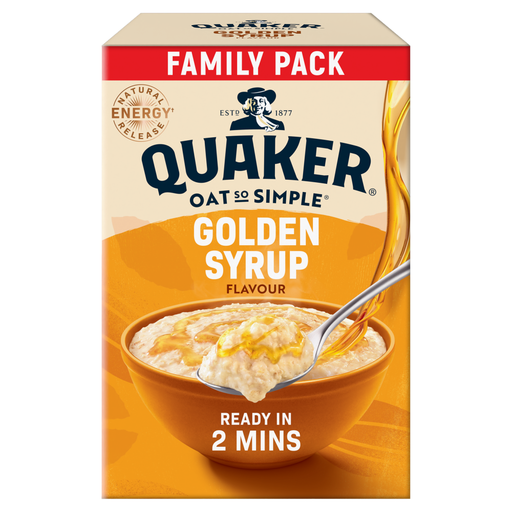
A 20-sachet format for predictable shared breakfasts where a golden-syrup flavour is suitable for the group.
Individually portioned microwaveable sachets. The product contains sugar and is not a plain-oat option.
It contains oats and may contain barley, wheat and soya; check the current pack label against each recipient’s allergy or coeliac plan.
 No image available
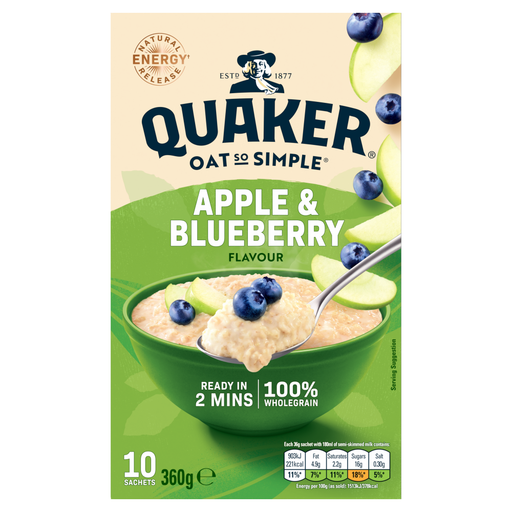
A smaller 10-sachet option when attendance varies or the service wants to limit commitment to one flavour.
Each stated 36g serving has a two-minute preparation method with water or milk.
It contains sugar, oats and may contain wheat, barley and soya; check the current physical label before serving.
 No image available
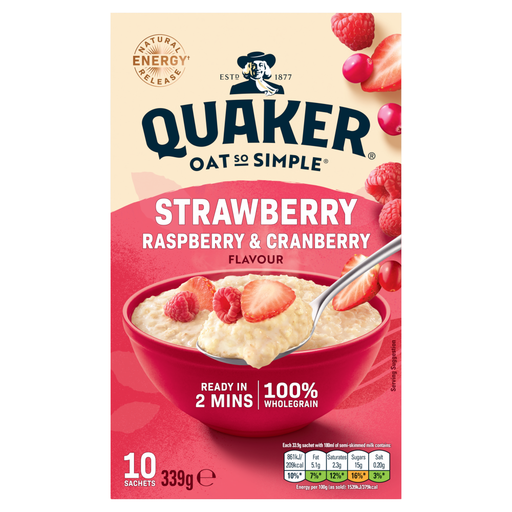
A 10-sachet pack for a smaller shared-breakfast run or for testing a berry-flavoured option.
The product has stated 33.9g sachets and a listed two-minute microwave method, including stirring before eating.
It contains sugar, oats and may contain barley, soya and wheat; assess the current label for individual allergy or coeliac requirements.
 No image available
A six-sachet plain-oat option for low attendance or a smaller product trial.
The listing states 38.5g sachets, wholegrain rolled oats and a 2½-minute preparation time.
Obtain and follow the complete current preparation instructions, and check the label against individual allergy, coeliac and texture-care requirements.
 No image available
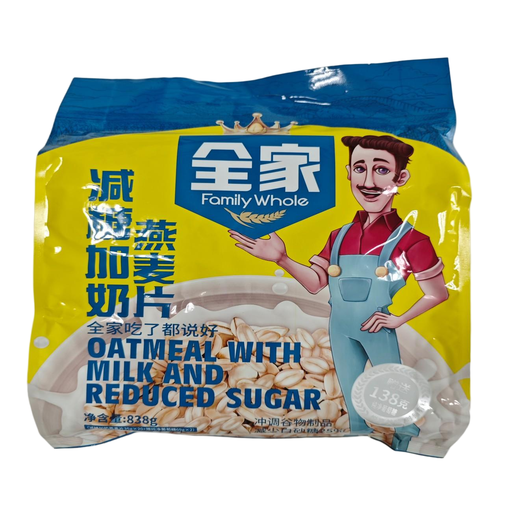
A 20-bag hot-water breakfast format for managed group preparation where microwave access is limited.
Each listed bag is prepared with approximately 175ml boiling water and stirring. The pack includes separate pure-glucose sachets.
The mix is stated to contain 30% oat flakes and includes wheat, soya, milk and black sesame; do not add glucose without checking the recipient’s nutrition plan.
No. A larger pack is practical only when attendance is repeatable, the same product suits the intended recipients and the organisation can store and use it appropriately. A 22-sachet pack provides more pre-portioned servings, while 8- and 10-portion formats can be easier to manage when attendance or suitability varies.
Do not assume so. Dysphagia may require a clinician-specified texture-modified diet; University Hospitals Birmingham NHS Foundation Trust guidance says Level 4 purée food must be smooth throughout, thick, moist and free from bits or lumps. Check preparation against the person’s prescribed level and care plan.
No. The checked Quaker Original product may contain wheat, barley and soya; the checked M&S product is labelled unsuitable for coeliacs and for several stated allergies; and Flahavan’s Organic Natural sachets may contain traces of milk. Check the current label and the recipient’s individual plan before serving.
Follow the manufacturer’s microwave instructions, including standing and stirring where stated. Food Standards Agency caterer guidance says that stirring is part of microwave cooking or reheating, helping staff avoid serving food with uneven temperatures. Serve promptly or follow the service’s hot-holding procedures.
Availability and eligibility depend on the local provider. GOV.UK directs people in England and Wales to their local council or another organisation, while the Northern Ireland Department of Health describes meals on wheels for people who are unable to, or find it difficult to, prepare a meal. Check the relevant council or provider for local arrangements.