What to compare before ordering
Start with the format you can prepare, then compare like-for-like packs, the preparation basis and the delivered product label.
| Priority |
What to check |
Your needs |
| Comparable value |
Compare the live unit-price display only between similar formats and preparation methods. Check the ingredient list as well as pack size. |
A single pot may look inexpensive in a basket, but I want to compare the cost of similar boiling-water portions on the same basis. |
| Preparation method |
Check whether the pack needs boiling water, a microwave-safe bowl, measured liquid or hob preparation. Standard Tesco and Sainsbury’s pots state that they are not suitable for microwave cooking. |
If I only have a kettle, I need a hot-water pot. If I have a bowl and microwave or hob, sachets and quick oats are practical alternatives. |
| Allergens and dietary suitability |
Check for a current gluten-free label where required, plus the ingredients and allergen statement. Confirm the delivered pack rather than relying on a category filter. |
I need the exact product label to match my dietary requirements, especially where oats, milk or possible cross-contact are relevant. |
| Nutrition basis |
Check whether nutrition figures are for the dry product or a prepared serving, and whether milk is included. Compare values only on the same preparation basis. |
I want to understand what is in the sachet or pot itself, rather than comparing a milk-prepared serving with a water-prepared one as if they were identical. |
Joybuy instant-oat options
Joybuy product options for shoppers choosing between microwave sachets and a hot-water porridge pot for online breakfast orders.
 No image available
Quaker Oat So Simple Peanut Butter Protein Sachets, 8 Pack 344g
For a bowl-based microwave or hob breakfast with individual portions.
43g sachets; the supplied listing states 9g plant protein per serving and 22g per 100g dry mix from soy protein. Contains oats and soy, and may contain milk, peanuts and nuts. Requires a separate bowl and liquid.
Joybuy
 No image available
Quaker Oat So Simple Golden Syrup 57g Pot
A single-serve option for kettle-only or on-the-go breakfasts.
57g pot with stated hot-water preparation and a two-minute wait. Contains cereals containing gluten, milk and oats; the supplied nutrition table lists 12g sugars per 57g serving.
Joybuy
 No image available
Quaker Oat So Simple Big Bowl Original, 6 Pack 231g
For shoppers who want larger plain-oat microwave portions and separate toppings.
Six 38.5g sachets; wholegrain rolled oats are the sole listed ingredient. Contains oats and requires a separate bowl and liquid.
Joybuy
 No image available
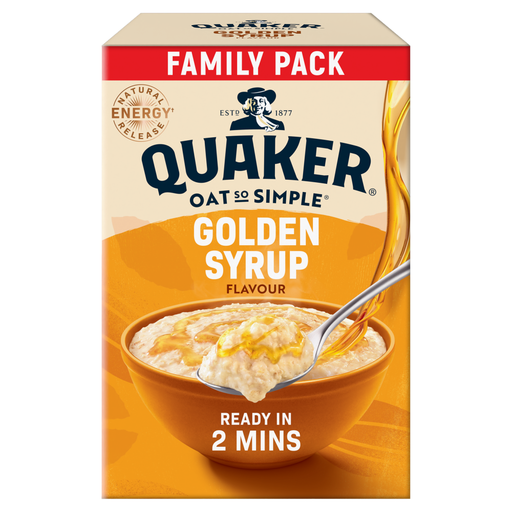
Quaker Oat So Simple Golden Syrup Family Pack, 20 Sachets 720g
For a household cupboard supply of individually portioned microwave breakfasts.
Twenty 36g sachets with a stated two-minute microwave method using approximately 180ml milk. Contains oats and may contain barley, wheat and soy; the listing gives 6.4g sugars per sachet.
Joybuy
 No image available
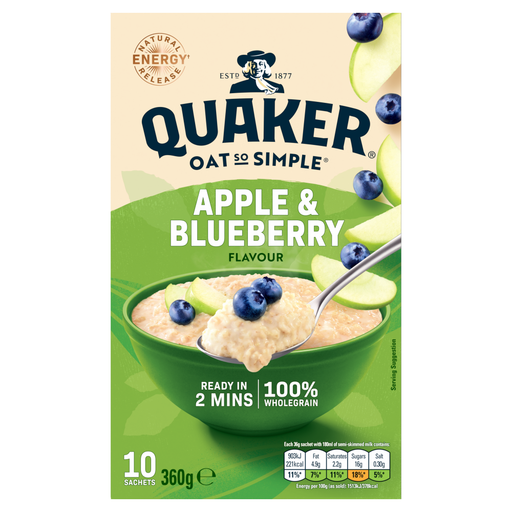
Quaker Oat So Simple Apple & Blueberry Porridge, 10 Pack 360g
For a flavoured, individually portioned microwave breakfast.
Ten 36g sachets with a stated two-minute preparation method. Contains oats and may contain wheat, barley and soybeans; the supplied listing shows 7.7g sugars per 36g dry serving.
Joybuy
Frequently asked questions
Is a lower pot price always better value for instant oats?
No. Compare the live unit-price display for products with comparable formats and preparation methods, then check the ingredient list and dietary suitability. Tesco Groceries and Sainsbury’s listings show that similar boiling-water pots can differ in unit price and formulation.
Can I microwave a standard instant porridge pot?
Do not assume so. The cited Tesco Original and Sainsbury’s Original pot instructions state that they are not suitable for microwave cooking; both are prepared with boiling water and left to stand.
Are ordinary instant oats suitable for coeliac disease?
Choose a product only when its current label meets your dietary requirement. The Food Standards Agency states that food labelled gluten-free must contain no more than 20mg/kg gluten, while oat must still be emphasised as an allergen; suitability statements differ between products.
Why can nutrition figures differ between similar oats?
Check whether the figures describe the dry product or a prepared serving, and whether milk is included. Quaker’s Original sachet serving information uses semi-skimmed milk, while standard pots may be prepared with boiling water, so the results are not directly interchangeable.
What should I check after an online substitution?
Read the delivered pack’s ingredients, allergen statement, preparation instructions and best-before date. Tesco Groceries, Sainsbury’s and M&S advise checking the label because product information and formulations can change.


