Households sharing weekday porridge
Suitable for people serving porridge to several family members who want pre-measured portions and need to judge whether a 20- to 22-sachet box will be used regularly.


Choose a 20- to 22-sachet pack when several people regularly eat the same flavour and portion size. Smaller boxes work better when preferences or dietary needs differ, while loose quick oats allow adjustable portions; when an easy-chew texture is needed, assess the prepared porridge rather than relying on the instant-oat format alone.
Suitable for people serving porridge to several family members who want pre-measured portions and need to judge whether a 20- to 22-sachet box will be used regularly.
For adults who can chew soft, tender foods but find firm textures tiring. Porridge still needs to be prepared to suit the individual; this is different from a clinician-prescribed swallowing texture.
Useful for buyers comparing plain, flavoured, fruit-containing and gluten-free-labelled oat products, where the exact pack label matters more than the brand name.
Choose it when: The household repeatedly serves the same recipe and can use a fixed sachet portion.
Consider: A larger box commits everyone to one flavour and portion size, and the prepared texture still needs checking.
Choose it when: You are trying a flavour, need fewer servings or have people with different preferences.
Consider: Compare unit prices for the exact products rather than assuming the smaller box offers the same value.
Choose it when: Serving sizes and additions need to vary between eaters.
Consider: You will need to measure portions and keep the oats dry after opening.
| Priority | What to check | Your needs |
|---|---|---|
| Prepared texture | Use sufficient liquid, cook until soft and moist, stir thoroughly, and assess any fruit pieces, pips or seeds separately. Cambridge University Hospitals NHS Foundation Trust notes that easy-to-chew food is not suitable for someone at increased choking risk. | I need porridge that is soft and manageable for the eater, rather than simply choosing a product labelled instant. |
| Pack size and portions | Compare sachet count and serving weight. Tesco Groceries listed 22 x 27 g and 20 x 36 g large sachet formats, while M&S listed a 10-portion, 360 g box. | A repeat breakfast routine may suit one large box; differing appetites or flavours can make a smaller box or loose oats more practical. |
| Unit-price comparison | Compare the shelf or online unit price for the exact recipe, sachet weight and pack size. Check it again when buying, as prices and offers can change. | I want to compare like-for-like packs rather than treating the largest box as automatically better value. |
| Ingredients and allergens | Read the current ingredient list, allergen statement and any gluten-free claim. The Food Standards Agency states that a gluten-free claim has a limit of no more than 20 mg/kg gluten, while oats remain an allergen. | I need the exact recipe and label to suit every intended eater, especially where coeliac disease or an allergy is relevant. |
Pack count, sachet weight and flavour can change the unit price. Tesco Groceries displayed different per-kilogram figures across listed Quaker sachet options on 30 September 2026.
Compare the shelf or online unit price for the exact recipes, then choose a larger pack only if it will be used before its best-before date.
A large branded pack can still carry a higher price per kilogram than another option.
An easy-to-chew diet depends on chewing ability, choking risk, prescribed texture and the finished food, not on the packaging format.
For a swallowing or choking concern, follow the clinician’s texture instructions. Otherwise, cook porridge until soft and assess additions such as fruit pieces or seeds individually.
Some sachets include dried fruit, freeze-dried pieces, seeds or added sugars, which can change texture and dietary suitability.
Read the ingredient list and choose a plain option when you need full control over texture and additions. Use flavoured recipes only when their ingredients suit every intended eater.
Standard oat packs may not suit coeliacs, and oats remain an allergen even when a product carries a gluten-free claim.
Check the current pack’s gluten-free claim, allergen statement and precautionary wording rather than relying on the category or a previous purchase.
A widely listed UK instant-porridge sachet range with standard, larger-pack, flavoured and protein variants.
Tesco’s own-label instant-oat sachet line for buyers comparing standard packs with branded family packs.
A retailer range covering portioned porridge sachets, tubs and larger loose-oat packs, with fine-milled and jumbo options for different porridge textures.
An oat specialist offering quick-oat sachets and a larger quick-oat drum for households that prefer adjustable portions.
Joybuy options for shared breakfasts, including larger sachet packs, smaller trial packs and a loose-oat format where portion sizes can vary.
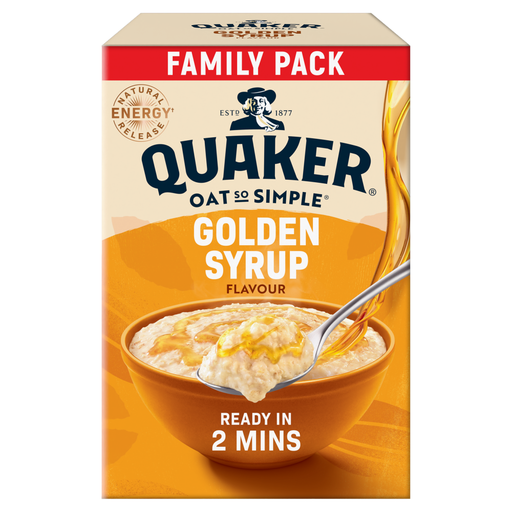 No image available
A larger fixed-portion option for households repeatedly serving the same golden-syrup recipe.
The listing states 20 x 36 g sachets, around 180 ml milk per sachet, two-minute microwave preparation, stirring and a one-minute standing time.
Contains oats and may contain barley, wheat and soy. Prepare with enough liquid and assess the finished texture for the individual eater.
 No image available
A smaller measured-portion choice where a large shared box may be excessive.
The listing states six 38.5 g sachets, described as 33% larger than a 27 g sachet, with 2.5-minute microwave preparation.
The listed ingredient is wholegrain rolled oats, allowing additions to be chosen separately. Check the current label for allergy or coeliac requirements.
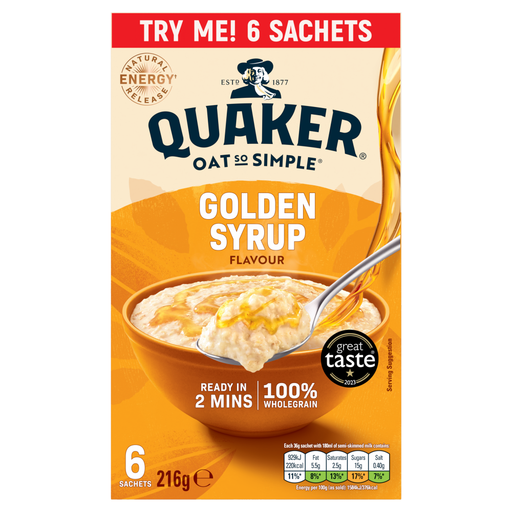 No image available
A short-run flavoured option for trying a recipe without buying a family-size box.
The listing states six 36 g sachets, 180 ml milk or water per serving and two-minute microwave preparation.
The recipe includes sugar and natural flavourings, and may contain barley, soy and wheat as well as oats.
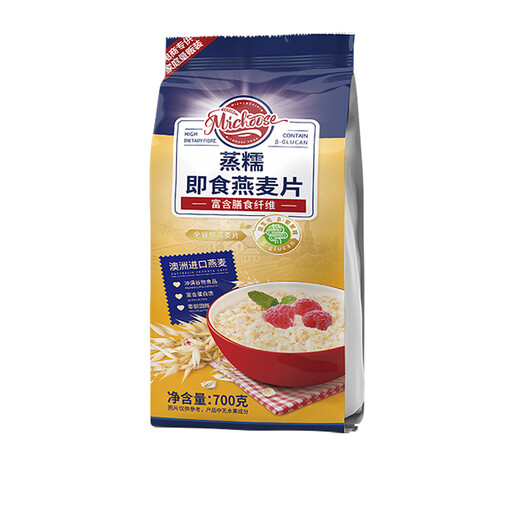 No image available
A loose-oat option for households that want to adjust serving sizes rather than use fixed sachets.
The listing states a 700 g bag, 100% oatmeal and one-minute preparation with hot water and stirring.
Measure portions and store the bag dry after opening. Check the physical pack for full preparation, allergen and gluten-free information where needed.
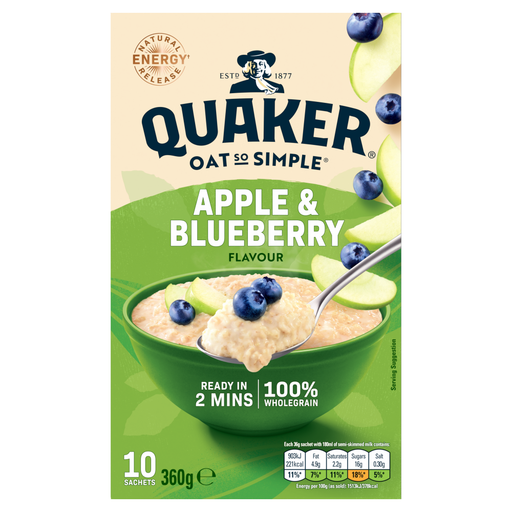 No image available
A moderate-size sachet box for households that want a shorter flavoured pack.
The listing states ten 36 g portions and two-minute preparation, with dried apple and dried blueberry pieces.
Assess the fruit pieces individually where an easy-chew texture matters. The listing also notes oats and possible wheat, barley and soybeans.
Cook the oats with enough liquid until the porridge is soft and moist, then stir thoroughly and check for hard inclusions. For an IDDSI Level 7 easy-to-chew plan, NHS guidance says food should break apart easily with the side of a fork or spoon.
No. An instant sachet alone does not establish suitability for dysphagia or choking risk. Easy-to-chew guidance is for people who can chew soft, tender foods without tiring; follow written speech and language therapy guidance where a texture has been prescribed.
Assess the actual inclusions rather than choosing by flavour name. NHS easy-to-chew guidance advises avoiding pips and seeds, and some fruit sachets contain dried or freeze-dried pieces; plain, fully softened porridge is a simpler starting point unless individual care guidance says otherwise.
Do not assume so. The Food Standards Agency states that a product labelled gluten-free must contain no more than 20 mg/kg gluten, and the exact pack still needs allergen information. Check the specific product label every time.
No. Compare the displayed price per kilogram for the exact recipes, sachet weights and pack sizes you are considering. A bigger box can reduce measuring and shopping frequency, but it only suits the household if the recipe will be used before its best-before date.