Lower-salt pancake makers using oats
Compare salt per 100g across plain oat products before adding other pancake ingredients. Flahavan's Quick Oats declares less than 0.01g salt per 100g, according to Sainsbury's and ASDA Groceries product labels.


Choose plain Flahavan's Irish Quick Oats when a fast-cooking oat with a declared salt figure below 0.01g per 100g is the priority. Portioned Quaker Oat So Simple Original or M&S Traditional Porridge sachets can be more practical for measured portions, but check the current nutrition panel before comparing salt; M&S declares 0.03g per 100g, while the available Quaker Original label did not show a salt value.
Compare salt per 100g across plain oat products before adding other pancake ingredients. Flahavan's Quick Oats declares less than 0.01g salt per 100g, according to Sainsbury's and ASDA Groceries product labels.
Sachets can simplify measuring before you blend the oats for batter. Tesco Groceries describes Quaker Original as unflavoured, made with 100% British wholegrain oats and ready in two minutes; M&S Traditional Porridge uses individual packs and a three-minute microwave method.
Choose oats specifically labelled gluten free rather than assuming ordinary oats are suitable. The Food Standards Agency states that oats remain an allergen even in gluten-free foods.
Start with a comparable salt declaration, then choose between flexible loose oats and portioned sachets based on the pancake recipe you plan to make.
| Priority | What to check | Your needs |
|---|---|---|
| Comparable salt value | Compare the nutrition panel per 100g. Flahavan's Quick Oats declares less than 0.01g per 100g, while M&S Traditional Porridge declares 0.03g per 100g. | I want to compare the oat base before adding salt from other pancake ingredients. Plain oats also give me control over flavourings and toppings. |
| Batter texture | Use a blender or food processor to blitz oats into oat flour before mixing the batter. Follow an oat-pancake recipe rather than swapping flakes directly for wheat flour. | I need a batter with a finer texture, not whole flakes that may behave differently from flour. |
| Speed and portions | Check whether the pack is loose oats or individual sachets, and compare the sachet weight with the recipe quantity. Two-minute preparation is stated for Flahavan's Quick Oats and Quaker Original. | Measured sachets suit quick preparation, while a loose pack lets me measure exactly what the recipe needs. |
| Gluten-free and allergen checks | Look for an explicit gluten-free claim where required and read the exact pack's allergen statement. Check every other pancake ingredient too. | If I need gluten-free oats, I want a labelled product rather than relying on ordinary oats. I also need to remember that oats remain an allergen. |
A plain product may still lack a visible salt declaration. Tesco's available Quaker Original page confirms 100% wholegrain oats with nothing added, but does not show a salt figure for a like-for-like comparison.
Compare the current on-pack nutrition panel per 100g before buying, rather than relying on wording such as “plain” or “no added sugar”.
Quick and traditional oat flakes do not automatically work like fine flour in a pancake recipe. M&S oat-pancake guidance uses blitzed oats to make oat flour.
Blend the oats first, then follow a tested oat-pancake recipe for the liquid, egg and cooking method.
The Food Standards Agency says that oats must still be highlighted as an allergen even where a food is labelled gluten free.
For a coeliac or allergy requirement, check both the gluten-free wording and the allergen statement on the exact pack.
Sachets can simplify portions, but their fixed serving size may not match the quantity needed for a pancake recipe.
Choose sachets when measured portions are useful; choose loose quick oats when flexible recipe quantities matter more.
Loose Irish quick oats for shoppers who want microwaveable oats rather than pre-portioned sachets.
Microwaveable porridge sachets for shoppers who prefer ready-measured oat portions.
Porridge options spanning portioned sachets and gluten-free traditional oat flakes.
A supermarket own-label route with instant porridge sachets alongside branded products.
Joybuy product options for oat-based pancake batter, including loose oat flakes, gluten-free oats and portioned microwaveable sachets.
 No image available
A gluten-free oat-flake option for pancake batter after blending.
Check the current pack for an exact salt value if you need a per-100g comparison. Oats remain an allergen despite the gluten-free claim.
 No image available
A portioned oat-sachet option for cooks who prefer ready-measured servings before blending.
The pack contains six 38.5g sachets. Check the live nutrition panel before using it as a lower-salt choice, and adjust the recipe for the sachet quantity.
 No image available
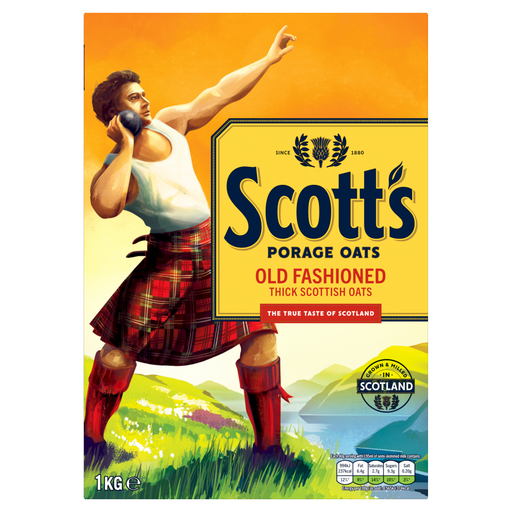
A loose 1kg rolled-oat pack for flexible pancake recipe quantities after blending.
The listing states 0g salt per 100g and a 100% rolled-oat ingredient list. It is not pre-portioned, and may contain wheat and barley.
 No image available
A loose oat-flake option for measuring pancake ingredients to suit the recipe.
The listing declares less than 0.01g salt per 100g and 100% organic wholegrain oat flakes. Blend before use; it is not identified as an instant-oat product.
 No image available
A two-pack option for frequent pancake making or households using oats regularly.
Each 1kg pack is listed with less than 0.01g salt per 100g and 100% organic wholegrain oat flakes. It needs storage space and is not identified as instant oats.
Yes, provided you process the oats into oat flour before making the batter. M&S oat-pancake guidance states that oats are blitzed to form a flour; use the liquid, egg, raising agent and cooking method specified by your chosen recipe.
Among the compared labels, Flahavan's Irish Quick Oats Original has the lowest declared figure: less than 0.01g salt per 100g, according to Sainsbury's and ASDA Groceries. M&S Traditional Porridge declares 0.03g per 100g, so compare like-for-like labels before buying.
Do not assume so. The Food Standards Agency says a product labelled gluten free must contain no more than 20mg/kg gluten, while oats must still be emphasised as an allergen. Choose an explicitly labelled gluten-free product where needed and check every other pancake ingredient.
No. Oats are an allergen, and individual packs can have additional suitability restrictions. For example, M&S states that its Traditional Porridge is not suitable for people with coeliac disease or milk, nut, peanut or wheat allergies.