One-person microwave meal planners
A measured, shelf-stable oat portion can suit home, work or student accommodation where a microwave-safe bowl is available. Plain sachets leave room to choose your own toppings and sweetness.


Choose a plain single-serve sachet when you have a microwave and want to add your own toppings; choose a hot-water pot when a kettle is available but a microwave is not. Pick protein or gluten-free variants only for those specific requirements, and compare labels on the same preparation basis because portion size and the liquid used can change the displayed nutrition.
A measured, shelf-stable oat portion can suit home, work or student accommodation where a microwave-safe bowl is available. Plain sachets leave room to choose your own toppings and sweetness.
A hot-water pot can suit a warm single portion when there is boiling water but no microwave. Choose a pot whose pack specifically gives boiling-water instructions.
Choose around gluten, allergens, added ingredients or protein content rather than assuming every instant-oat format has the same ingredients or dietary suitability.
Start with the equipment at the place you will eat, then compare portion size, ingredients and the current pack declaration.
| Priority | What to check | Your needs |
|---|---|---|
| Preparation method | Check whether the product needs a microwave-safe bowl, boiling water, a stated liquid amount and a standing time. Some pots are not suitable for microwave cooking. | I want a warm portion where I am eating it. A microwave sachet suits a microwave kitchen; an explicitly hot-water pot suits kettle-only locations. |
| Ingredients and recipe | Compare dry serving weight, ingredient list, sugars, fibre and protein on like-for-like labels. Keep the liquid and toppings separate from the dry-product comparison. | I may prefer plain oats for flexible toppings, a pre-flavoured recipe, or a protein sachet where soy and the stated ingredients suit me. |
| Gluten and allergens | Read the current allergen declaration, including may-contain wording. For gluten avoidance, look for a specifically labelled gluten-free product. | I need a product whose pack declaration matches my dietary requirement, rather than relying on plain oats or a product name alone. |
| Portion size | Compare the dry portion weight and the liquid required. Check whether the format is a standard, larger or protein-focused serving. | I want a portion that works as my single meal, not one chosen only because the pack calls it a bowl or a snack. |
Microwave sachets can need a bowl, measured liquid and microwave access, while some pots specifically say they must not be microwaved.
Choose the format after checking the preparation instructions for your location: use a microwave sachet in a microwave kitchen, or a boiling-water pot where only a kettle is available.
Serving weights, ingredients and preparation bases differ. Protein recipes can include soy protein, while flavoured recipes can include sugar.
Compare dry serving weight, ingredients, sugars, fibre and protein across candidates, then consider the liquid and toppings separately.
Standard oat products can carry may-contain statements, and a gluten-free claim has defined conditions. The Food Standards Agency states that food sold as gluten-free must contain no more than 20mg/kg gluten.
For coeliac disease, gluten avoidance or allergies, select a specifically suitable product and recheck the current pack declaration before use.
Single portions can vary substantially in dry weight and in the amount of liquid needed to prepare them.
Use portion weight and preparation liquid as practical starting points, then choose a standard, larger or protein-focused portion according to your appetite.
Quaker UK has plain microwave sachets, protein sachets and add-boiling-water pots for different preparation settings.
Tesco is a relevant own-brand option for hot-water instant-oat pots and Free From instant-porridge sachets.
M&S Foodhall offers individually portioned porridge sachets, including a traditional whole-oat product.
Flahavan's offers plain organic single-portion sachets for shoppers seeking a simple ingredient list and a stated 35g adult serving.
Sainsbury's is useful as a grocery retailer for checking current on-pack cooking, storage, nutrition, dietary and ingredient information.
Joybuy options for microwave-based single-portion instant oats, including larger plain portions and flavoured or protein sachets.
 No image available
A larger plain portion for a microwave-equipped kitchen where you want to add your own toppings.
Each sachet is 38.5g and is stated to be 33% bigger than a standard 27g sachet; the listed method uses microwave preparation in 2½ minutes.
Check the current pack declaration if gluten or other allergens matter to you.
 No image available
A measured protein-focused option when a microwave or hob is available and soy is suitable for you.
Each 43g sachet is stated to provide 9g plant protein and uses 180ml water or milk; microwave preparation is listed as 2½ minutes.
Contains soya and oats; the listing also states that it may contain milk, peanuts and nuts.
 No image available
A larger box of individually portioned microwave oats for stocking several one-person meals.
The pack contains 20 36g sachets. The listed method uses about 180ml milk in a microwaveable bowl and two minutes at 900W.
Contains added sugar and salt; the listing states that it may contain barley, wheat and soya.
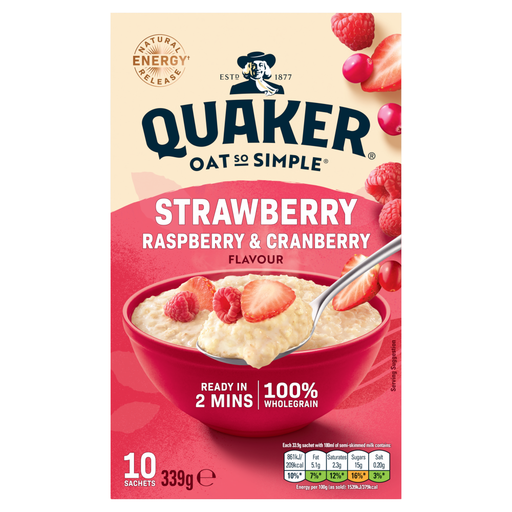 No image available
A pre-flavoured microwave option for a measured fruity oat portion at home, work or student accommodation.
The pack contains 10 individual 33.9g sachets, with a listed two-minute microwave method at 900W.
Contains added sugar and cereals containing gluten; check the pack if allergy or gluten-free suitability is required.
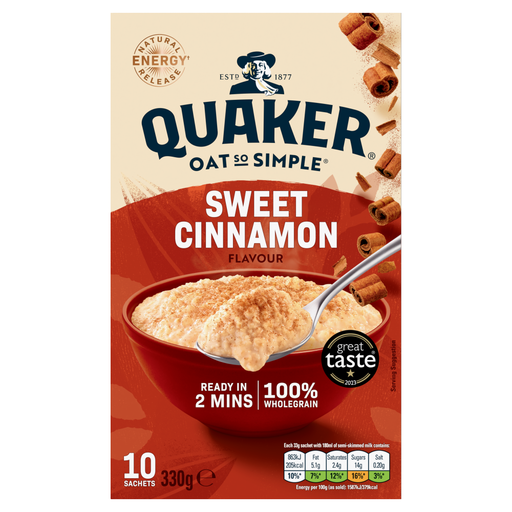 No image available
A cinnamon-flavoured microwave porridge option where a bowl and microwave are available.
The listed method uses 180ml milk or water and two minutes of microwave cooking. The recipe lists oat flakes, sugar and cinnamon.
The listing says it is produced in a facility processing wheat; check the current pack for allergy and gluten-free requirements.
Yes, if the product instructions explicitly allow boiling-water preparation. Quaker Original Pot uses 170ml boiling water and a standing period, while Tesco Instant Oats Original Pot also uses boiling water and is not suitable for microwave cooking. Do not assume a microwave sachet will work with a kettle unless its own instructions say so.
No. Choose a product specifically labelled gluten-free when this is required. The Food Standards Agency defines gluten-free food as containing no more than 20mg/kg gluten when sold, and standard Quaker Original states that it may contain wheat, barley and soya.
Choose plain oats when you want a short ingredient list and flexibility with toppings. Choose a protein version only when the stated protein content is useful to you and soy is suitable: Quaker Protein Original lists soy protein and 8.1g protein per 37.7g dry sachet, compared with 3.0g per 27g dry sachet for Quaker Original.
Follow the storage instructions on the individual pack and keep portions sealed until use. Check the pack for shelf-life and allergen details before eating, particularly if you bought the product some time ago.
Use a retailer page for planning, but check the physical pack before eating. Tesco and M&S advise shoppers to read the label because food products can be reformulated.