Parents building a quick weekday breakfast cupboard
For households choosing between a larger instant cereal pack and portioned sachets before term starts.


Choose a larger instant-oat pack for flexible breakfasts made at home, portioned microwave sachets for a predictable weekday routine, and a porridge pot only where boiling water is safely available. Check the current allergen statement, preparation method and your school’s allergy policy before packing any oat product for use on site.
For households choosing between a larger instant cereal pack and portioned sachets before term starts.
For readers considering a porridge pot for travel or study spaces where boiling water, rather than a microwave, is available.
For those who need to distinguish gluten-free-labelled oats from standard oats and confirm a school’s food-allergy arrangements.
Start with where breakfast will be prepared, then check the pack format and allergen information for the individual who will eat it.
| Priority | What to check | Your needs |
|---|---|---|
| Preparation method | Check whether the product needs a microwave, a bowl, boiling water or a hob. The cited Sainsbury’s pot needs about 170ml of boiling water and is not suitable for microwave use; Quaker Original sachets are listed as ready in 2 minutes in a microwave. | I need breakfast to work with the equipment available before leaving home or at the place where it will be eaten. |
| Pack format | Compare a larger pack that needs measured portions with individually portioned sachets. Check the stated number and size of servings, plus whether a separate bowl is required. | A larger cupboard pack suits us when portions can be measured at home; sachets suit a routine where fewer decisions are useful in the morning. |
| Allergens and gluten | Read the current ingredients and precautionary allergen statement for the exact variant. For gluten avoidance, look for a gluten-free label rather than relying on phrases such as “100% oats” or “pure oats”. | I need an option that fits the individual’s dietary requirements and the food arrangements at school. |
| Protein-labelled sachets | Check the stated protein amount and the ingredient list. Quaker Protein Original, for example, lists soy protein and may contain wheat and barley, according to Quaker UK and Sainsbury’s product information. | If added protein matters to us, I also need to know whether the added ingredients introduce allergens that are relevant. |
Microwave sachets need a bowl and microwave, while the cited pots use boiling water and are not suitable for microwave preparation. The wrong format can be impractical on a rushed morning.
Decide whether breakfast will be made at home, somewhere with a microwave, or somewhere with safely handled boiling water before choosing the format.
Standard oats can be affected by gluten-containing grains, and individual products may contain milk, soya or precautionary warnings for other allergens.
Read the current label whenever the product or pack changes. If gluten avoidance is required, choose only a product labelled gluten free where gluten-free oats are appropriate for that individual.
School allergy arrangements and practical rules may affect what can be brought on site, and hot-water preparation may not be available or permitted.
Check the school’s current allergy policy and food-preparation rules before relying on a porridge pot or sending oats and toppings for consumption at school.
A UK oat brand with microwave sachets, hot-water porridge pots and protein sachets for quick breakfast routines.
Quaker’s registered range includes microwave sachets and hot-water porridge pots.
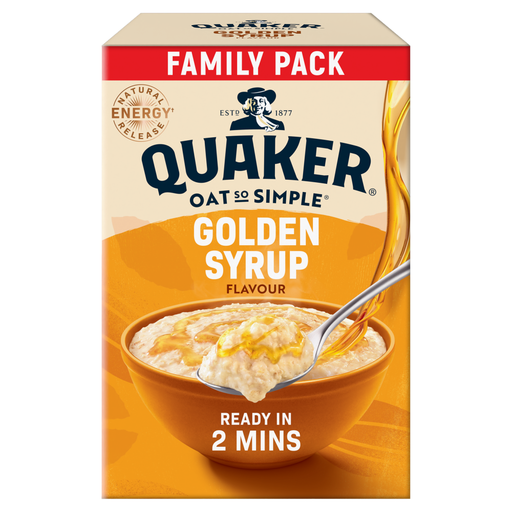
Own-label choices include a larger instant cereal pack for home use and a single hot-water porridge pot.
A retailer range with portioned porridge, on-the-go pots and a separate gluten-free traditional-oat option.
An oat specialist with Irish Quick Oats positioned for microwave preparation.
These Joybuy options cover portioned microwave sachets for home breakfasts and a gluten-free-labelled oat pack for cupboard use where gluten-free oats are appropriate for the individual.
 No image available
A portioned option for rushed breakfasts made at home before leaving.
20 pre-portioned 36g sachets with a stated 2-minute 900W microwave method.
Requires a microwaveable bowl and approximately 180ml milk. Contains oats and may contain barley, wheat and soya; check the current pack label and school policy before packing it.
 No image available
A measured larger-portion sachet option for breakfasts prepared at home.
Six 38.5g sachets; the product is stated to be microwaveable and ready in 2½ minutes.
It requires separate liquid, a bowl and microwave preparation. Check the current allergen statement if gluten avoidance is relevant.
 No image available
A portioned choice for households that want a sachet with stated added plant protein.
Eight 43g sachets with 9g plant protein per serving, plus stated microwave and hob preparation methods.
Must be cooked before eating. Contains oats and soya, and may contain milk, peanuts and nuts; check whether these are relevant to the individual and school arrangements.
 No image available
A larger cupboard pack for people for whom gluten-free oats are appropriate.
Explicitly labelled gluten free, with 100% gluten-free oat flakes, 25 portions and resealable cool, dry storage after opening.
Confirm the preparation instructions and cooking time before relying on it for rushed mornings. A gluten-free label does not replace individual clinical advice.
No. Coeliac UK says that terms such as “100% oats”, “pure oats” and “organic” do not establish that an oat product is gluten free. Standard oats may be contaminated with wheat, barley or rye, so choose a gluten-free-labelled product only where gluten-free oats are appropriate for the individual.
No. In England, schools must publish an allergy safety policy setting out arrangements to reduce contact with known allergens, according to the Department for Education’s GOV.UK guidance. Check the individual school’s current policy, the pupil’s needs and the exact pack allergen statement before sending oats or toppings on site.
Follow the instructions on the exact pot. The cited Sainsbury’s Original Porridge Pot and Quaker Oat So Simple Original Pot use boiling-water preparation and state that they are not suitable for microwave use.
Follow the individual pack label. The cited Sainsbury’s porridge pot specifies cool, dry storage and immediate preparation and consumption once opened; M&S also advises cool, dry storage for its porridge sachets.
Not necessarily. The cited Quaker Protein Original uses soy protein and may contain wheat and barley, according to Quaker UK and Sainsbury’s product information. Check the ingredients and precautionary allergen statement for the exact flavour and pack.