Households sharing school-morning breakfasts
Useful for families using individual oat sachets several mornings a week, where serving count, likely weekly use and preparation time all affect whether a larger box is practical.


Choose a 20–22-sachet pack when your household will use the portions regularly and has the bowl, liquid and microwave time needed for preparation. Smaller plain packs can make more sense for lighter use, while flavoured, larger-portion and ready-pot formats work best when their serving size, ingredients and preparation method suit the pupil’s routine.
Useful for families using individual oat sachets several mornings a week, where serving count, likely weekly use and preparation time all affect whether a larger box is practical.
Relevant when the exact pack’s allergen statement and the school’s own food policy need checking before oats are packed or served around school.
For families choosing between plain 27g sachets, sweeter flavoured portions and larger servings, where likely portion size and flavour acceptance can affect waste and repeat purchases.
Start with how many breakfasts the pack must cover, then check preparation equipment, serving size and the exact label for the chosen product.
| Priority | What to check | Your needs |
|---|---|---|
| Pack size and repeat use | Compare sachet count, grams per sachet and the number of breakfasts your household expects to use. A 22 x 27g pack provides 22 servings, while several other sachet packs contain 8 or 10 portions. | I want enough portions for shared breakfasts without leaving sachets unused. A larger box reduces repurchasing only when it matches our regular use. |
| Morning preparation | Check whether the format needs a bowl, milk or water, a microwave, hob or kettle. Confirm heating time, standing time and whether reheating is permitted. | Our breakfast has to fit the time and equipment available before leaving home. A ready pot still needs boiling water and standing time. |
| Plain or flavoured oats | Read the ingredients and nutrition panel for the exact variety. Plain oats can be topped separately, while flavoured sachets may have a different serving size and listed sugars. | I want the flavour and portion size to be one the pupil is likely to finish, rather than buying a larger serving that goes uneaten. |
| Allergen information | Read the current physical pack every time, including may-contain wording and any gluten-free statement. Check the school’s own policy separately. | I need the product’s label to fit the household’s allergy requirements. Similar plain oat sachets can carry different allergen cautions. |
A 22-sachet box may cover more breakfasts, but pack count alone does not show whether it is the most economical choice for the household.
Estimate how many breakfasts will be used before the best-before date, then compare the pack’s price per kg rather than relying on the box size.
Unused sachets can mean spending more on portions that are never eaten.
Verified plain products have different may-contain and suitability wording, even when their portion sizes look similar.
Read the current label for every repurchase and check the individual school’s allergen policy before substituting one pack for another.
A flavoured sachet can have different listed sugars and a larger portion may not suit every pupil’s appetite.
Start with the portion the pupil is likely to finish. Choose plain oats for topping control, and select flavoured or bigger portions only as a deliberate preference.
An oversized portion or an unwanted flavour can lead to food being left uneaten.
Sachets need a bowl, liquid and heating directions, while a ready pot needs boiling water and must not be microwaved or reheated.
Match the format to the available equipment and supervision. Allow time for preparation, standing and safe eating before leaving home.
Quaker’s Original Big Pack is a 22 x 27g plain microwaveable sachet option, while the range also includes larger Golden Syrup portions.
Tesco Easy Oats Original is a 10 x 27g plain sachet option, while its instant oat pot is intended for occasional kettle-only preparation.
Sainsbury's offers plain 10 x 27g sachets and Golden Syrup 8 x 36g sachets for households deciding between plain oats and a flavoured option.
M&S offers a 10-pack traditional porridge sachet format for shoppers who prefer individually portioned oats over a larger family box.
Flahavan's Organic Porridge Oat Sachets are an 8 x 35g plain-oat option rather than a large family-size pack.
Joybuy instant-oat options for shared school-morning breakfasts, including a 20-sachet family pack and smaller flavoured or larger-portion alternatives.
 No image available
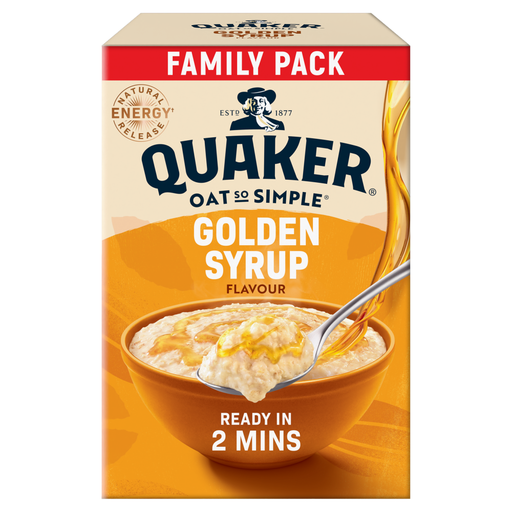
A 20-sachet option for households sharing breakfasts regularly, provided a sweetened golden-syrup flavour suits the family.
Each sachet is 36g; the stated method uses about 180ml milk and two minutes in a microwave, followed by a one-minute standing period.
It lists sugar and salt and may contain barley, wheat and soya. Check the current physical label and the individual school’s allergen policy.
 No image available
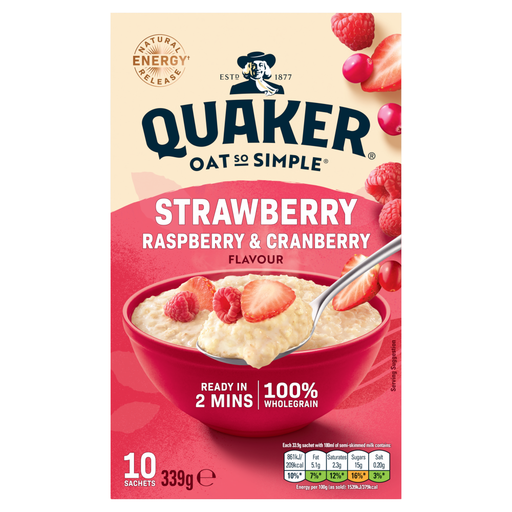
A smaller berry-flavoured option when a fruity flavour is more likely to be eaten than plain oats.
The pack contains 10 x 33.9g sachets and states a two-minute microwave method with milk.
The ingredients include sugar. It contains cereals containing gluten and oats and may contain barley, soya and wheat; consume the prepared product immediately.
 No image available
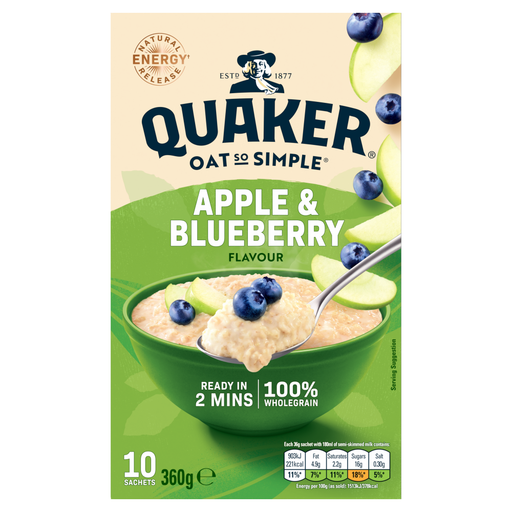
A 10-portion flavoured alternative for occasional shared breakfasts rather than a large family-size purchase.
The record states 10 portions of 36g, a two-minute preparation time and 7.7g sugars per 36g serving.
It contains oats and may contain wheat, barley and soya. Check the physical pack to confirm whether the supplied format is sachets or cups.
 No image available
A smaller six-sachet choice for a pupil who genuinely wants a larger individual breakfast portion.
Each sachet is 38.5g and is stated to be 33% bigger than a standard 27g sachet. The listed ingredient is wholegrain rolled oats and preparation takes about 2½ minutes in a microwave.
It needs water or milk and microwave preparation. Check the current pack for gluten-free status, cross-contact information and school policy requirements.
 No image available
An eight-sachet flavoured option for households deliberately choosing a peanut-butter recipe rather than a bulk plain-oat pack.
Each sachet is 43g and states 9g plant protein per serving. Microwave and hob methods use 180ml water or milk.
It contains oats and soya and may contain milk, peanuts and nuts. The recipe includes sugar and salt; cook before eating and allow it to cool slightly.
The large verified option is Quaker Oat So Simple Original Big Pack at 22 x 27g, or 22 servings. The other compared sachet packs contain 8 or 10 servings, making them more suitable for trying the format, lower-frequency use or smaller households.
No. Compare the stated price per kg at the retailer when shopping, alongside the number of portions your household will realistically use. A larger pack can reduce repurchasing without necessarily being the lower-unit-cost option.
Usually, these products are better treated as breakfast foods because the verified sachets need preparation with milk or water and heating, while a ready pot needs boiling water and a standing period. Prepare safely at home only when it can be eaten promptly and the school permits it.
No blanket conclusion is safe. The Food Standards Agency states that food labelled gluten-free must contain no more than 20mg/kg gluten, but oats can themselves cause an allergic reaction. Check the exact pack for gluten-free status and may-contain wording; the verified Quaker Big Pack, for example, may contain wheat and barley.
Follow the exact pack instructions. The verified Sainsbury's sachet directions say not to reheat once cooled, and the verified Tesco ready pot also says not to reheat.