Budget households packing recurring school lunches
For households comparing unit prices and portion counts rather than assuming that the largest box is automatically the better value.


Choose plain sachet multipacks when measured portions and a practical hot-preparation routine matter most. Loose oats can suit lunches prepared at home, while any oat product for school needs a current label check and a check of the school's allergy arrangements.
For households comparing unit prices and portion counts rather than assuming that the largest box is automatically the better value.
For parents who value sealed, measured sachets, provided the child can safely use the required liquid and stated preparation method.
For families who need to check the exact product label and their school's allergy-safety policy before packing oats. Oats can remain an allergen even in gluten-free products.
Start with the preparation plan, then compare portion format, flavour and the current pack label before choosing a value pack.
| Priority | What to check | Your needs |
|---|---|---|
| Pack value and portions | Compare the retailer's current unit-price label; check sachet count, sachet weight and total pack weight; compare plain products with plain products. | I want a regularly packed lunch staple that does not look cheaper only because the shelf price is lower. |
| Practical preparation | Check whether the instructions require a microwave, water or milk; confirm what the school permits; compare sealed sachets with home-measured loose oats. | The oats need to be ready to eat in the child's actual lunch routine, not just easy to prepare at home. |
| Allergen and gluten suitability | Read the current ingredients and allergen declaration; check any may-contain statement; choose a gluten-free-labelled product only where this is medically required. | I need a product that fits the child's dietary requirements and the individual school's published allergy arrangements. |
| Flavour control | Check whether the sachets are plain or flavoured; compare the specific flavour's label; consider whether toppings will be added separately at home. | Plain oats let us choose sweetness and familiar toppings ourselves rather than relying on a fixed flavour. |
Allergen statements differ between products, and oats should not be assumed suitable for coeliac disease or wheat allergy simply because they are oats. The Food Standards Agency notes that oats remain an allergen in their own right, including in foods labelled gluten-free.
Read the current physical pack's ingredient and allergen declaration each time you buy it, then follow the school's allergy-safety policy.
Several sachet products require liquid and microwave heating, so a dry sachet may not be usable at lunchtime when those facilities are unavailable or not permitted.
Confirm the school's rules and practical facilities first; otherwise prepare oats at home in a suitable container or choose a ready-to-eat lunch item.
A higher sachet count can be convenient while still having a higher unit price than a smaller plain multipack.
Compare the retailer's unit-price label on the day of purchase and compare like-for-like products before deciding whether the extra convenience is worthwhile.
Loose oats can reduce the need for individually packed portions, but they still need measuring, preparation and a suitable container for a packed lunch.
Choose loose oats when you are willing to portion and prepare them at home, and check current availability before relying on a particular pack.
A supermarket own-label reference for plain instant sachets and loose porridge oats.
Oat So Simple is Quaker's relevant range for plain and flavoured microwaveable oat sachets.
An own-label porridge range with portioned sachets and loose oats for shoppers using M&S Foodhall.
An Irish oat specialist with plain Quick Oats sachets and other oat formats.
These Joybuy options cover portioned instant oats and loose oat packs for school lunches prepared at home or where safe, permitted hot preparation is available.
 Image unavailable
A portioned plain-oat option for children who can have prepared oats safely at school or before leaving home.
Six sealed 38.5g sachets; the supplied product information states wholegrain rolled oats only and a 2½-minute preparation time.
Oats are declared as an allergen. Check the current label, the required liquid and heating arrangements, and the school's allergy policy before packing.
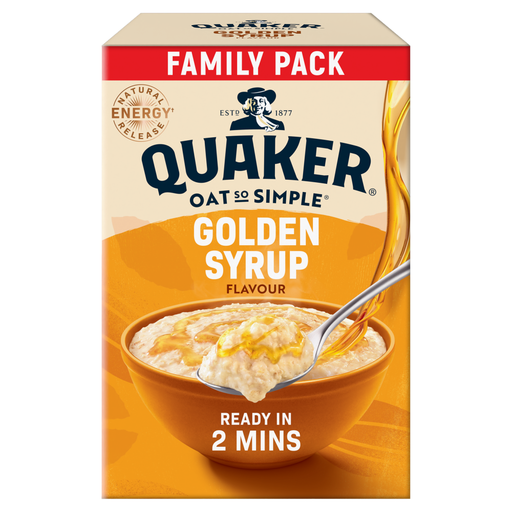 Image unavailable
A larger sachet pack for a recurring lunch routine where flavoured oats are wanted and hot preparation is practical.
Twenty separately packed 36g sachets; the stated method uses about 180ml milk and two minutes in a microwave.
This is a golden-syrup flavour and contains sugar. Check the current allergen label and whether milk and microwave heating are permitted at school.
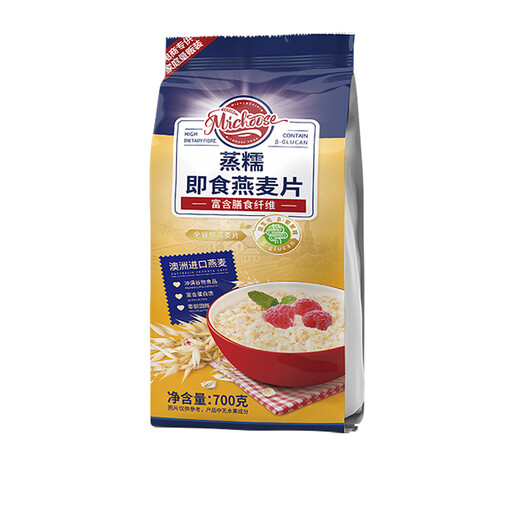 Image unavailable
A bulk option for households that portion oats at home rather than relying on sealed sachets.
One 700g bag; the supplied description states preparation with hot water in one minute.
It is not individually portioned, so prepare a measured serving in a suitable container. Check the current allergen declaration and whether hot water is available if sending it dry.
 Image unavailable
A loose-oat option for home portioning where a gluten-free-labelled product is medically required.
1kg pack; the supplied product text states 100% gluten-free oat flakes and 25 portions.
This is not an individually portioned instant sachet. Oats remain a declared allergen, so check the current pack label, medical guidance and the school's allergy policy.
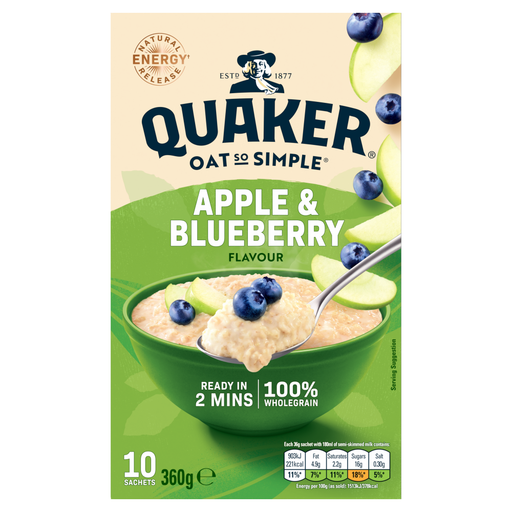 Image unavailable
A flavoured, portioned option for a shorter school-lunch routine where hot oats can be prepared safely.
Ten stated portions; the supplied description says to add water or milk and prepare in two minutes.
The supplied nutrition information lists 7.7g sugars per 36g serving. Check the current allergen label and the school's arrangements for water, milk and heating.
Only when there is a safe, school-approved way for the child to add the required liquid and prepare it. Tesco and Quaker sachets in this comparison are microwave-preparation products, while M&S sachets also specify water or milk plus microwave heating. Otherwise, prepare oats at home in a suitable container or choose a lunch item that does not need heating.
Not automatically. The Food Standards Agency states that a food labelled gluten-free must contain no more than 20mg/kg gluten, while oats must still be emphasised because oat is an allergen in its own right. Choose an explicitly gluten-free product where medically required and check the current physical pack label.
Yes. The Department for Education says schools must publish an allergy safety policy setting out arrangements to reduce the risk of contact with known allergens. Check your child's school policy and any class-specific instructions before sending a product with a relevant allergen.
No. Compare the retailer's displayed unit price as well as the number and weight of sachets. A larger pack can be convenient for repeated lunches while still costing more per kilogram than a smaller plain multipack.