Families making breakfast at home
Individually portioned sachets can suit mornings with a bowl, milk or water and microwave access before leaving. Quaker UK and Flahavan’s describe single-portion sachet formats for this type of preparation.


Choose a sachet when breakfast can be prepared at home or in a supervised setting with a bowl, suitable liquid and microwave access. Choose a porridge pot only where boiling water can be provided safely; check the current pack label and the school’s allergy arrangements before packing either format for a child with coeliac disease, an allergy or an individual care plan.
Individually portioned sachets can suit mornings with a bowl, milk or water and microwave access before leaving. Quaker UK and Flahavan’s describe single-portion sachet formats for this type of preparation.
Match the format to the equipment actually available: a pot needs boiling water, while a sachet needs a separate bowl, liquid and microwave access. Hot food and supervision arrangements matter.
Check the current physical pack, precautionary statements and the school’s individual allergy arrangements before packing. A plain product name or a gluten-free label does not replace those checks.
Choose this when: Breakfast can be made at home or somewhere with a bowl, liquid and supervised microwave access.
Trade-off: A sachet is portioned but not self-contained, so it cannot be prepared from the packet alone.
Choose this when: Safe boiling-water access is available and a self-contained dry portion is useful.
Trade-off: The pot can become hot and is not a microwave substitute; milk ingredients may also be relevant.
| Priority | What to check | Your needs |
|---|---|---|
| Preparation access | Confirm whether there is a microwave-safe bowl, suitable liquid and supervised microwave use. For a pot, confirm that boiling water can be supplied safely and that the pot is suitable for the intended method. | I need breakfast that can genuinely be made where it will be eaten, rather than a dry sachet or pot with no safe way to prepare it. |
| Allergen checks | Read ingredients and precautionary allergen statements on the current pack. Check relevant oats, milk, wheat, barley, soya, nuts and trace statements against the child’s documented needs. | I need a format that fits the child’s allergy or coeliac arrangements and the school’s current policy, not one chosen from its name alone. |
| Portion and ingredients | Compare the stated dry portion, flavour and ingredient list. Check whether the preparation method uses milk or water and whether the pack count suits the household routine. | I want an individually portioned breakfast that fits the child’s appetite and our usual morning routine. |
Standard porridge sachets need a separate bowl, liquid and a heating method. Packing one without those resources can leave breakfast unusable.
Confirm the real preparation point first. Use sachets for home preparation or a setting that provides the required bowl, liquid and supervised microwave access.
Ingredient and allergen information differs between sachets and pots. Products may contain or warn about milk, wheat, barley, soya, nuts or traces, and some products are marked unsuitable for coeliacs.
Read the current physical pack for every medically relevant purchase, compare it with the child’s documented needs and follow the school’s current allergy arrangements.
A hot-water pot needs boiling water and may be hot to hold. Quaker UK states that its Original Pot is not suitable for microwaving.
Use a hot-water pot only where hot water can be provided safely and the school’s supervision arrangements permit it; otherwise prepare porridge before leaving home.
This range includes microwave sachets, a hot-water Original Pot, protein sachets and a gluten-free-labelled sachet line.
A plain organic, individually portioned oat-sachet option for families who do not want a flavoured pot.
M&S offers individually portioned microwave sachets alongside a traditional hot-water porridge pot, making preparation access the key distinction.
These Joybuy options are individually portioned microwaveable porridge sachets for breakfast prepared at home or in a supervised setting with the required bowl, liquid and microwave access.
 No image available
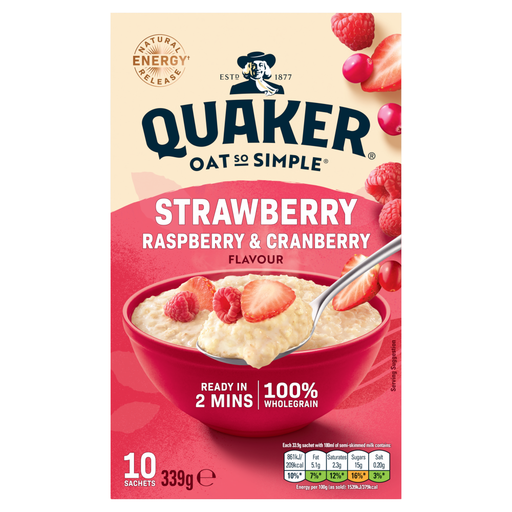
A flavoured option for a school-morning routine with bowl, milk and microwave access.
Contains 10 individual 33.9g portions; the stated method uses a bowl, milk and a 900W microwave for 2 minutes.
Contains cereals containing gluten and oats and may contain barley, soya and wheat. Check the current pack and school allergy arrangements before buying.
 No image available
A larger plain-oat sachet option for breakfast prepared before school or with supervised microwave access.
The box contains six 38.5g sachets, each stated as 33% bigger than a standard 27g sachet. The ingredient list states wholegrain rolled oats only.
A separate bowl, water or milk and microwave are still required. Check the current physical pack against the child’s allergy or coeliac plan.
 No image available
This option is for households specifically looking for a protein-containing porridge sachet that can be cooked before eating.
Each 43g sachet is stated to provide 9g plant protein. The method uses a microwave-safe bowl, 180ml water or milk and 2½ minutes, or a saucepan.
Contains oats and soya and may contain milk, peanuts and nuts. The added protein comes from soya.
 No image available
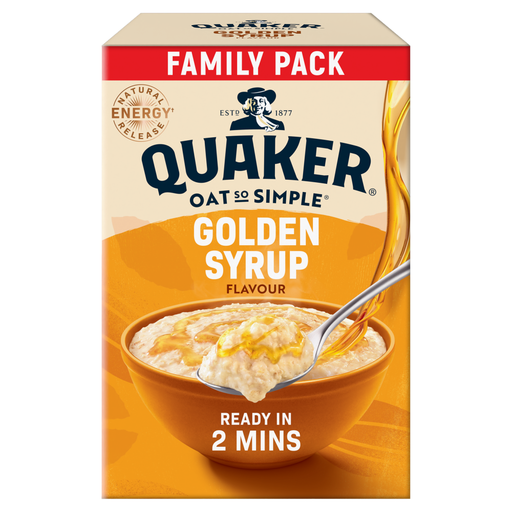
A larger pack of flavoured sachets for households preparing breakfast where a microwave is available.
The box contains 20 separate 36g sachets. The stated method uses a microwaveable bowl, about 180ml milk and a 2-minute cook time.
Contains gluten from oats and may contain barley, wheat and soya. Each 36g sachet lists 6.4g sugars.
 No image available
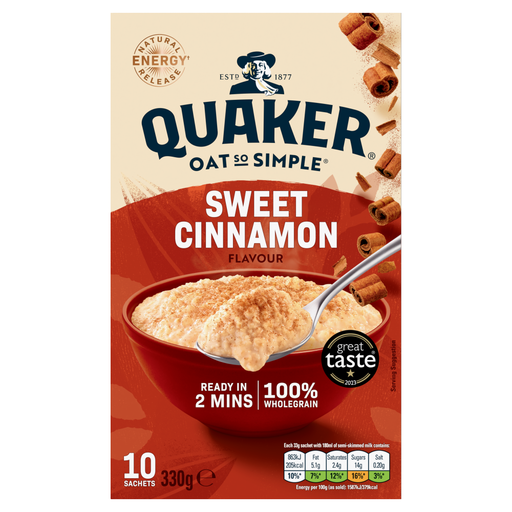
A cinnamon-flavoured, portioned option for quick breakfast preparation where a microwave is available.
The 10-pack method directs users to add 180ml milk or water and microwave for 2 minutes, followed by a standing time.
Contains oats and is produced in a facility that processes wheat. Ensure prepared porridge is at a safe eating temperature.
Only when the setting can safely provide boiling water. Quaker UK’s Original Pot requires 170ml boiling water and is not suitable for microwaving; a sachet is not self-contained either, as it needs a separate bowl, liquid and a microwave or hob method.
Do not assume so. The Food Standards Agency states that a gluten-free claim applies to food containing no more than 20mg/kg gluten as sold, while oats must still be emphasised as an allergen; check the current pack and the child’s clinical advice. M&S’s cited sachets and pot are marked not suitable for coeliacs.
Check the school’s current allergy safety or packed-lunch arrangements, any individual healthcare plan, and whether staff can provide or supervise the required hot water or microwave preparation. Department for Education guidance says schools in England must publish an allergy safety policy for known allergens; this should not be extended automatically to Scotland, Wales or Northern Ireland.
No. Quaker Protein Original is stated to provide 8g protein per sachet, but it uses soya protein and may contain wheat and barley. Choose it only if its ingredients suit the child and the same preparation requirements can be met.