Weight-management shoppers reducing added sweetness
You want a quick oat breakfast but prefer a plain or no-added-sugar base, so you can decide how much sweetness and how many toppings to add.


For a reduced-sugar instant-oat choice, start with plain or no-added-sugar oats and compare sugars per 100g alongside the prepared-serving information. Plain oats give you more control over sweetness and toppings, while flavoured pots and sachets need checking variant by variant because milk, added ingredients and portion size can change the final bowl.
You want a quick oat breakfast but prefer a plain or no-added-sugar base, so you can decide how much sweetness and how many toppings to add.
You need microwave or add-water convenience and want to compare the exact prepared-serving panel, as sachets and pots can differ from dry oats once milk is included.
You enjoy flavoured instant porridge but want a practical way to compare sugars per 100g, per pot or sachet, and in the ingredients list.
Choose this when: Reducing sugar is the main priority and you are happy to add your own toppings.
Consider: Milk and toppings change the finished bowl, so a no-added-sugar dry product is not the same as a sugar-free prepared meal.
Choose this when: A ready-set flavour and convenience matter more than starting with the lowest-sugar oat base.
Consider: Check the exact flavour, as fibre or wholegrain oats do not indicate the sugars content on their own.
Choose this when: You regularly make porridge at home and want to set your own dry serving size.
Consider: You need to measure the oats and include any milk, yoghurt, dried fruit or sweeteners in your breakfast calculation.
| Priority | What to check | Your needs and respondent concerns |
|---|---|---|
| Sugar comparison | Compare sugars per 100g first, then check the stated serving and whether it is dry or prepared. Read the ingredients list for sugar or syrup in the exact variant. | I want a genuinely lower-sugar starting point rather than relying on flavour names or front-of-pack wording. In a Food Standards Agency and Ipsos Northern Ireland survey of 611 consumers interviewed from September to November 2024, 49% said they actively used traffic-light labelling when shopping for food. |
| Portion and energy basis | Look at kcal per 100g and per serving. For loose oats, measure the dry amount; for any prepared bowl, account for the liquid and toppings you choose. | A quick breakfast still needs to fit the portion size I intend to eat, rather than treating a reduced-sugar label as an answer on its own. |
| Convenience format | Check whether the format needs a microwave, bowl, milk or only hot water. Compare preparation time and whether the product is plain or flavoured. | I need an option for home, work or travel without moving to a sweeter-flavoured product just for convenience. |
A product can appear higher or lower in sugars and calories simply because the preparation basis differs. Quaker Original lists 0.3g sugars per dry 27g sachet, while its serving prepared with 180ml semi-skimmed milk lists 8.4g.
Compare dry products per 100g first, then separately read or calculate the bowl you plan to make, including milk, yoghurt and toppings.
Flavoured oat products can contain much more sugar than plain versions. M&S Café Latte Porridge lists 20.4g sugars per 100g and includes demerara sugar.
Read the sugars line and ingredients list for the exact variant; do not apply the nutrition of a plain Original product to a flavoured pot or sachet from the same brand.
A manufacturer’s portion may differ from the amount you actually eat, particularly with loose instant oats.
Measure the dry amount for loose packs. With sachets and pots, decide whether one pack is your intended breakfast and include all additions.
Ordinary oat products can carry gluten-related suitability warnings or cross-contact statements. M&S Traditional sachets are stated as not suitable for coeliacs, and Quaker Original may contain wheat and barley.
Check the current allergen and suitability statement on the exact pack rather than relying on a general assumption about oats or a different variant.
A broad UK instant-oats range including original and flavoured sachets, pots and protein formats. For a reduced-sugar route, compare the Original sachet rather than treating every flavour as equivalent.
An own-label instant oat cereal option for shoppers who prefer a larger pack for home use rather than individually flavoured portions.
Own-label porridge is available in traditional sachets, pots and flavoured formats. Traditional sachets are the more relevant line when comparing reduced-sugar instant oats.
An oat specialist with natural organic sachets and quick oat pots; availability can vary by product and location.
A UK supermarket where branded and own-label instant-oat products can be compared using the current product page or shelf label for the exact item.
Joybuy product options for plain sachets, larger-format oats and a flavoured porridge-style powder relevant to this instant-oats topic.
 No image available
A plain-oat sachet option for a quick home or office breakfast, with water or milk chosen by the shopper.
Each sachet is 38.5g and is stated to microwave in 2½ minutes. The dry product lists 1.0g sugars per 100g and 0.4g per sachet; figures prepared with 245ml semi-skimmed milk use a different basis.
Check the current pack if wheat, barley or other allergen suitability matters.
 No image available
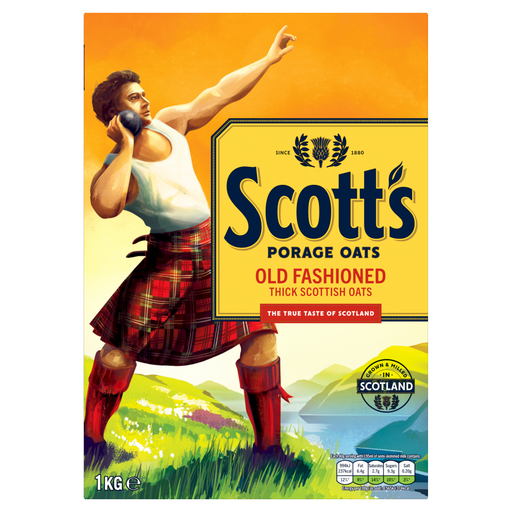
A loose oat pack for home breakfasts where you want to set the dry portion and choose water or milk.
The stated 40g serving can be cooked in a microwave in 2–3 minutes. The product lists 1.1g sugars per 100g and has rolled oats as its single ingredient.
It is not a single-serve sachet, so portion control depends on measuring the oats; it may contain wheat and barley.
 No image available
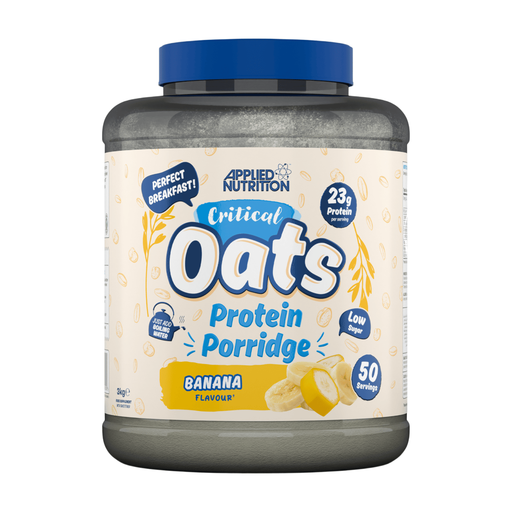
A banana-flavoured porridge-style powder for adults who want a breakfast or snack prepared with hot or cold water or milk.
The powder lists 2.3g sugars per 100g, 1.38g per 60g serving and 23.04g protein per 60g serving. Its nutrition values are for the powder, before any chosen milk is added.
This is not the same plain-oat route as an unflavoured sachet and contains oats, whey, milk and soya; follow the product warnings if relevant.
No. Check whether the panel refers to dry oats or oats made with milk. Quaker Original lists 0.3g sugars per dry 27g sachet, while its cited serving made with 180ml semi-skimmed milk lists 8.4g sugars. Toppings can also change the final bowl.
Use both for different purposes. The NHS explains that pre-packed food labels give nutrition per 100g or 100ml and sometimes per portion. Compare per 100g across products of different sizes, then use the stated serving and your preparation method to understand the breakfast you will eat.
Check the sugars and calories lines in the nutrition table, then inspect the ingredients and portion basis. NHS guidance defines low sugars for foods as 5g or less per 100g and high sugars as more than 22.5g per 100g. Where present, traffic-light labels can help compare sugar, calories, fat and salt at a glance.
No. The exact product, portion and the rest of your diet matter. Do not assume that fibre or a convenient pot format means reduced sugar: M&S Café Latte Porridge lists 20.4g sugars per 100g and includes demerara sugar, while M&S Traditional Porridge sachets list 1.0g sugars per 100g.
No. Check the exact pack and allergen statement. M&S Traditional Porridge sachets are stated as not suitable for coeliacs, and Quaker Original may contain wheat, barley and soya. Choose only a specifically appropriate product after checking the current label and any clinician advice relevant to you.