Hosts serving individual hot breakfasts
Individual pots suit a group when you want predictable portions, little washing-up and kettle-based preparation. Check that each guest can use the product’s milk and allergen profile.


Choose individual hot-water pots when guests need self-contained servings and the venue has a kettle. Choose sachets when bowls, milk and a microwave or hob are available; for coeliac guests, use a specifically labelled gluten-free product and check the current pack’s allergen statement.
Individual pots suit a group when you want predictable portions, little washing-up and kettle-based preparation. Check that each guest can use the product’s milk and allergen profile.
Compare pack weight and the retailer’s unit-price information alongside the shelf ticket, especially when choosing between pots, sachets and larger packs.
Choose a product specifically labelled for the relevant dietary requirement, then check the individual pack immediately before serving. A gluten-free oat product can still contain milk or have other allergen considerations.
Start with the serving setup, then compare portion format and the exact pack label for the guests you are feeding.
| Priority | What to check | Your needs |
|---|---|---|
| Portion value | Compare like-for-like formats; check pack weight, portion count and any retailer unit-price information. | For a larger brunch, I want enough portions without discovering that a small pack runs out halfway through serving. |
| Preparation setup | Check whether the product needs boiling water only, or bowls, milk and microwave or hob cooking. | A kettle-only venue points towards pots or hot-water oatmeal, while a kitchen setup gives more flexibility with sachets. |
| Allergen suitability | Read the current ingredients, allergen statement and any explicit gluten-free or coeliac wording on the exact pack. | I need to avoid treating ordinary oats, a gluten-free product and an allergy-safe option as the same thing. |
| Customisation | Decide whether guests need a plain base for separate toppings or whether a flavoured or protein-focused sachet suits the group. | Plain oats let guests choose toppings separately, while added ingredients may narrow who can eat a particular sachet. |
A pot, a dry sachet and a larger family pack differ in pack weight, portions and preparation inputs, so they are not directly interchangeable.
Compare equivalent formats first, then check the retailer’s unit-price information and portion count for your guest list.
The checked pots use boiling water, whereas Quaker Original sachets have milk-based microwave or hob instructions.
Use hot-water pots for a kettle-only venue. Choose sachets only when bowls, milk or a suitable alternative, and cooking equipment are available.
Sachets can also mean bringing bowls, milk and allowing extra serving time.
Ingredient and cross-contact statements vary between products. Some standard oat products include milk or list cereal, nut or peanut warnings.
Ask guests about requirements before buying, then check the current physical pack and keep toppings and serving utensils separate where relevant.
Flavoured and protein products can add ingredients and allergens that do not suit every guest.
For a mixed group, offer a plain option with separately served toppings and choose specialist variants only when their ingredient list fits the guests.
UK supermarket instant porridge pots designed as individual hot-water servings.
Supermarket pots including standard Original and Free From gluten-free options.
Microwaveable or hob-cooked rolled-oat sachets in original, flavoured, protein and gluten-free lines.
An oat specialist offering natural and organic sachets alongside quick oats and porridge products.
Foodhall porridge pots positioned as convenient hot-water servings.
Joybuy oat options for made-to-order brunch bowls, kettle-based serving and groups with specific gluten-free requirements.
 No image available
A plain sachet option for guests who want to add their own toppings.
Six 38.5g wholegrain rolled-oat sachets with a stated 2½-minute microwave preparation. Use bowls and check the current pack for gluten and cross-contact information.
 No image available
A protein-focused sachet for a group whose ingredient requirements suit it.
Eight 43g sachets, stated to provide 9g plant protein per serving, with microwave and hob cooking methods. Contains oats and soya; the listing states possible milk, peanut and nut cross-contact.
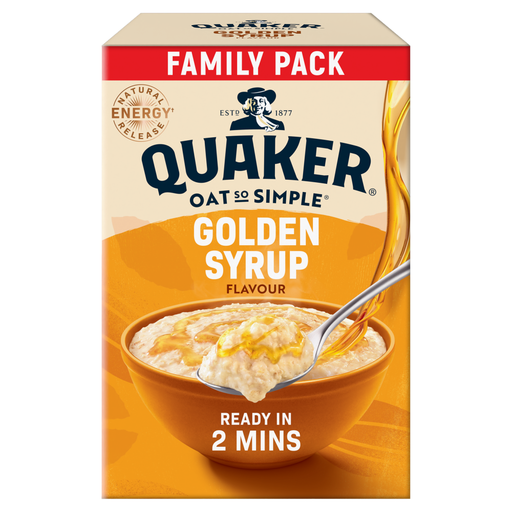 No image available
A larger sachet box for planning individual microwave portions for a friend group.
Contains 20 individually packed 36g sachets. Each sachet has milk-based microwave instructions with a two-minute cook and one-minute stand; it contains sugar and flavourings.
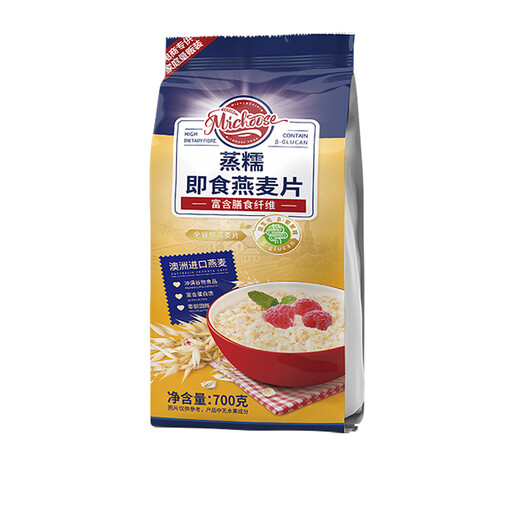 No image available
A shared, plain oatmeal option for hosts who can portion servings themselves.
The listing describes 700g of 100% oatmeal with one-minute hot-water preparation. Bring measuring equipment, bowls and serving utensils, and check the physical pack for dietary needs.
 No image available
A large plain-oat pack for topping-led bowls and guests needing gluten-free and wheat-free oats.
The listing states 1kg, 25 portions and 100% gluten-free oat flakes. Check the cooking instructions before relying on it for a fast brunch, and check the current pack for complete allergen requirements.
Not by default. Check the exact current pack for a gluten-free or coeliac statement: the checked Sainsbury’s Free From Original Pot is labelled gluten free and suitable for coeliacs, while the checked M&S Traditional Porridge Pot is not suitable for coeliacs and checked Quaker Original sachets may contain wheat and barley.
Do not assume so. The checked Tesco Original and Sainsbury’s Original pots instruct you to add boiling water and state that they are not suitable for microwave cooking. Follow the directions on the individual pot.
The checked Tesco Original 55g and Sainsbury’s Original 50g pots each specify approximately 170ml boiling water. For eight guests, that is about 1.36 litres before allowing for drinks or personal texture preferences.
The checked Quaker Original instructions specify 180ml milk for hob and microwave preparation. Follow the current pack instructions if you need a dairy-free preparation rather than assuming a water-only method will give the same result.
Check the exact ingredients and allergy statement on every pack immediately before serving. The checked products include milk in several pots, possible peanut, nut and wheat cross-contact on the Tesco pot, and possible wheat, barley and soya in Quaker Original sachets.