Adults who prefer soft, low-effort breakfasts
Suitable for people who can chew and swallow ordinary soft foods but want quick porridge with a smooth, moist texture. Fine or instant oats, enough liquid and no hard additions are useful checks.


For people who simply prefer softer meals, plain quick or instant oats with no hard inclusions are usually the simplest starting point. Cook them with sufficient liquid and stir until the porridge is smooth and moist; portioned sachets can be useful when measured servings and minimal preparation matter more than keeping the recipe simple. If easy-chew eating relates to coughing, choking or diagnosed swallowing difficulty, follow advice from a speech and language therapist or dietitian.
Suitable for people who can chew and swallow ordinary soft foods but want quick porridge with a smooth, moist texture. Fine or instant oats, enough liquid and no hard additions are useful checks.
Useful for shoppers comparing like-for-like pack formats and unit prices rather than choosing on the pack price alone. Plain oats and portioned branded sachets can meet different convenience needs.
Anyone advised to eat soft or easy-chew foods should put their prescribed texture and swallowing guidance ahead of convenience, flavour or pack format.
Start with the finished texture and ingredient list, then decide whether the extra convenience of flavoured or portioned formats suits your routine.
| Priority | What to check | Your needs |
|---|---|---|
| Finished texture | Use sufficient liquid, cook fully and stir well. The porridge should be soft and moist, without firm clusters or hard toppings. | I want a porridge I can comfortably manage as a soft meal, rather than relying on the word “instant” on the pack. |
| Pack format and value | Compare the unit price for similar oat products and check the number and size of sachets. Consider whether pre-measured portions save enough time for your routine. | For repeated breakfasts, I want to balance straightforward ingredients and pack size against the convenience of individual portions. |
| Texture inclusions | Read the ingredient list for dried fruit, seeds, nuts and other chewy additions. Check the cooked texture as well as the flavour description. | I prefer fewer texture variables, so a plain oat product lets me choose or leave out additions. |
| Allergens | Check the exact pack declaration for oats, milk, barley, wheat, soya and any relevant cross-contact information. A gluten-free label does not establish suitability for an oat allergy. | If allergies or dietary restrictions matter, I need the declaration on this specific product rather than assuming all oat sachets are alike. |
| Swallowing needs | Follow any clinician-prescribed texture plan. Coughing or choking during meals, food feeling stuck, or a wet or gurgly voice need professional assessment. | Where swallowing is a concern, I need individual guidance before choosing a food by convenience or flavour. |
Easy-chew suitability depends on the final soft, tender consistency and the individual’s chewing and swallowing ability, not just the speed of preparation.
Cook and stir porridge until it is soft and moist. If there are signs of swallowing difficulty, seek clinical advice before changing food textures independently.
Dried fruit, seeds and similar inclusions can make a porridge less suitable for some easy-chew diets. For example, apple-and-raisin oat products can contain distinct fruit pieces.
Read the full ingredient list and choose a plain oat-only option when hard or chewy inclusions need to be avoided.
Individual sachets can reduce measuring and preparation time, but their format does not automatically make them the most economical option for regular use.
Compare the unit price for similar products and decide whether portion convenience is worth the difference for your household.
Oats are themselves an allergen, and instant oat products can also contain or declare milk, barley, soya or wheat.
Check the allergen declaration on the exact pack. Do not treat a gluten-free claim as confirmation that a product is suitable for someone with an oat allergy.
Tesco Natural Oats Porridge is a plain instant-sachet route for shoppers who want an oat-only ingredient list.
Quaker Oat So Simple is a mainstream portioned-sachet option for shoppers who value quick microwave preparation in original and flavoured formats.
Flahavan's Natural Quick Oats are available in sachet and drum formats for shoppers seeking plain quick oats rather than fruit- or seed-containing flavour combinations.
M&S offers instant porridge pots including a chocolate option for shoppers with a specific protein requirement and access to an M&S Foodhall.
These Joybuy product options cover portioned original, flavoured and protein-focused instant oat sachets for easy-chew meal planning. Check the finished porridge texture and the exact pack declaration before choosing.
 No image available
A plain, portioned option for shoppers who want to control any toppings or flavour additions.
Six 38.5g sachets; wholegrain rolled oats only; stated microwave preparation time of 2½ minutes.
Cook, stir and assess the finished porridge for a soft, moist consistency. Check the exact allergen declaration if relevant.
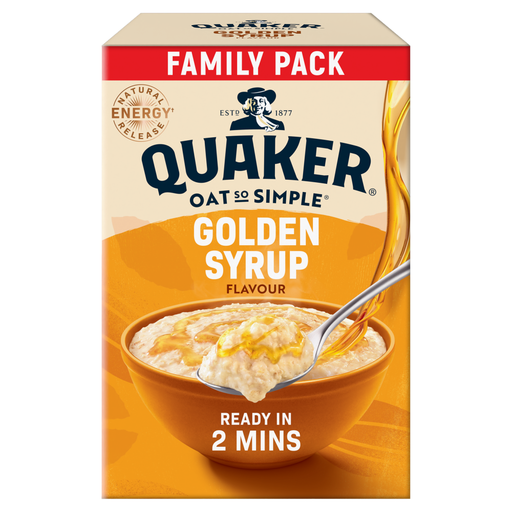 No image available
A flavoured, portion-controlled option when ready-made flavour is more useful than plain oats.
Twenty 36g sachets; a two-minute microwave method; listed ingredients include oats, sugar, natural flavourings and salt.
Check the exact allergen declaration, including any barley, wheat or soya information, and make sure the cooked porridge suits the individual texture need.
 No image available
A specialist sachet option for shoppers who specifically want protein in a quick oat breakfast.
Eight 43g sachets; stated 9g protein per serving; preparation with water or milk in 2½ minutes.
Contains soya and oats and may contain milk, peanuts and nuts. Follow professional advice for any prescribed dysphagia texture.
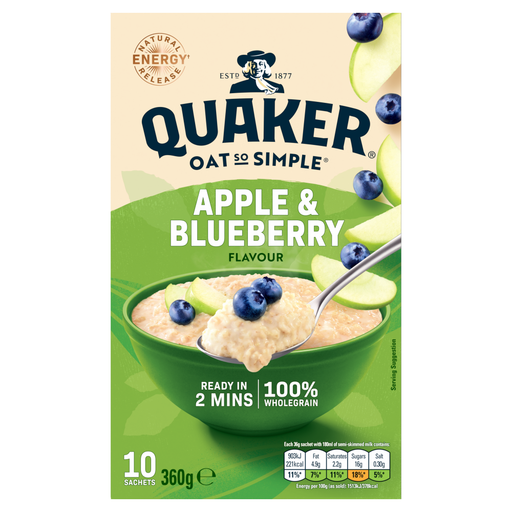 No image available
A portioned flavoured option only for people who can comfortably manage fruit inclusions in the finished porridge.
Ten 36g sachets with a stated two-minute microwave preparation method.
Contains dried apple and dried blueberry, which may be unsuitable where dried fruit or chewy inclusions need to be avoided. Check the exact allergen declaration.
They can suit someone who can safely manage soft, tender foods when the finished porridge is moist and soft. NHS easy-chew guidance says food should break apart easily with the side of a fork or spoon, so an instant label alone does not establish suitability for a prescribed dysphagia texture.
Choose plain oats when you need to minimise texture variables. NHS easy-chew guidance identifies dried fruit among foods not to include, and flavoured products can contain pieces such as raisins or dried apple; check every inclusion and the cooked texture.
Use the manufacturer’s liquid amount as a starting point, cook fully, stir well and allow the porridge to stand as directed. Tesco Natural Oats instructions use 160ml water per sachet; follow any individual clinical texture plan where applicable.
Yes, if there is coughing or choking when eating or drinking, food feeling stuck, a wet or gurgly voice, repeated chest infections or unexplained weight loss. The NHS advises seeking help for swallowing problems, and a speech and language therapist or dietitian may advise on texture changes.
No. The Food Standards Agency states that oats themselves can cause allergic reactions even where a food is labelled gluten-free or very-low gluten. Check the exact allergen declaration and seek medical advice for a diagnosed allergy.