
24/7 Customer Support

Free returns

Same-day & Next-day Delivery

Quality Guaranteed

Unlock Your Welcome Offers: FREE Delivery | Up to 80% OFF | Free 30-day JoyPlus trial
Download the APP
Instant ramen bowls are convenient for quick lunches, student kitchens, office cupboards and late-night snacks. However, the wrong product can leave you with noodles that are too spicy, a serving that is smaller than expected or a bowl that is awkward to clean and store.
Before buying, look beyond eye-catching packaging and flavour names. The most useful checks are preparation style, portion size, allergens, salt content and whether a reusable ramen bowl suits your daily routine.
A 63g Japanese instant ramen bowl and a 125g spicy beef ramen bowl serve very different purposes. Smaller bowls may work well as a light lunch or snack, while larger portions are more suitable for a main meal. Multipacks can offer better cupboard convenience, but only if the flavour is one your household will actually eat.
Check the net quantity per bowl, not just the number of cups in the pack.
Spice levels vary significantly between Korean instant noodles. Buldak hot chicken ramen, kimchi ramen and chilli-based Korean street food noodles can have a stronger kick than a mild soy-based soup.
Flavour descriptions such as “sweet and spicy”, “fiery” or “bold” are useful indications, but they are not a standardised heat scale. If you prefer a gentler bowl, start with shoyu ramen, tonkotsu ramen or a savoury Korean BBQ-style sauce rather than a chilli-heavy stir-fried noodle.
Some instant ramen cups are soup-based, while others require most of the water to be drained before the sauce is added. A stir-fried cup can taste diluted if you leave in too much water. Conversely, a soup bowl may not deliver the intended texture if you drain it.
Look for the actual instructions: standing time, water level, draining steps and whether the noodles require cooking in a pan.
For busy UK routines, a three-to-four-minute preparation time is convenient, but the required equipment still matters. Several cup products only need boiling water, making them suitable for a desk with access to a kettle. Others require a saucepan or microwave.
For example:
A microwave ramen bowl can be useful, but always check whether the bowl and lid are microwave-compatible. Metal or stainless-steel products should not normally be placed in a microwave unless the manufacturer gives specific, clear instructions.
When buying reusable noodle bowls, consider:
Many instant ramen bowls contain wheat, soya or sesame. Japanese-style shoyu products may also contain fish ingredients such as bonito. Some Korean flavours contain barley, mustard, celery, milk or other ingredients. Read the bold allergen information on the packaging every time, particularly when buying a new flavour.
Salt levels can also differ. The listed nutrition for ACECOOK IPPIN Tonkotsu is 6.8g salt per 100g, while the Korean Street Chicken bowl lists 3.5g per 100g. These figures are not directly equivalent to the amount consumed unless the serving size and preparation method are considered, so use the product label as your reference and consume instant noodles as part of a varied diet.
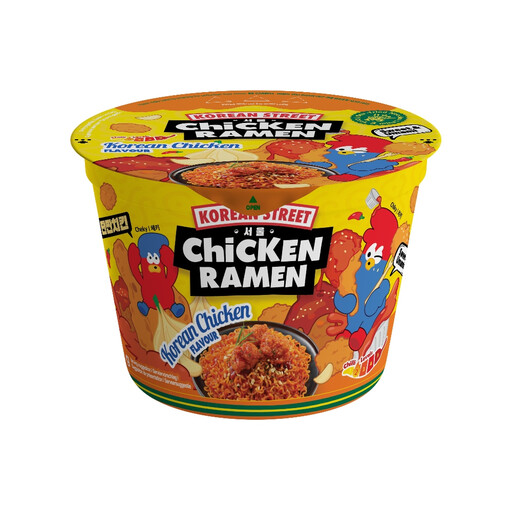
Why This Fits Their Persona: A straightforward single bowl for shoppers trying Korean-style sweet and spicy noodles without committing to a larger multipack.
The label states a 112g quantity and gives clear three-to-four-minute instructions, including the amount of water to leave after draining.
Boiling-water preparation; sweet and tangy chicken-style sauce with chewy noodles.
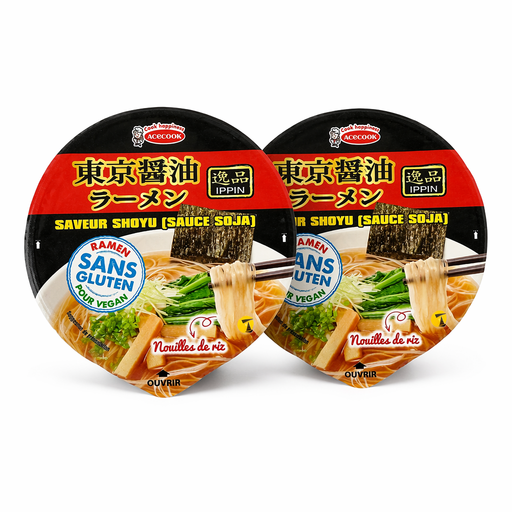
Why This Fits Their Persona: Suits ramen enthusiasts who prefer a Japanese-style soy-based broth and a smaller, clearly portioned format.
The two-pack format makes the quantity clear, while the ingredient information identifies wheat, soya and bonito fish allergens.
Straight noodles; shoyu-style seasoning with bonito and umami ingredients.
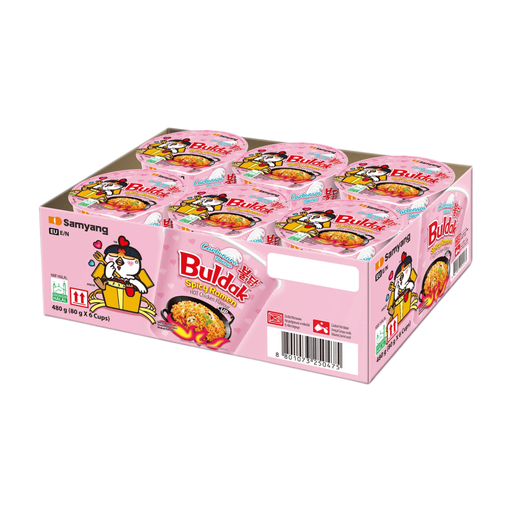
Why This Fits Their Persona: A practical cupboard multipack for households, work lunches or regular fans of creamy carbonara-style sauce with Korean chilli heat.
Each cup is individually packed and the product details specify six 80g portions, avoiding vague multipack sizing.
Six servings; stir-fried format with separate sauce and carbonara-style powder.
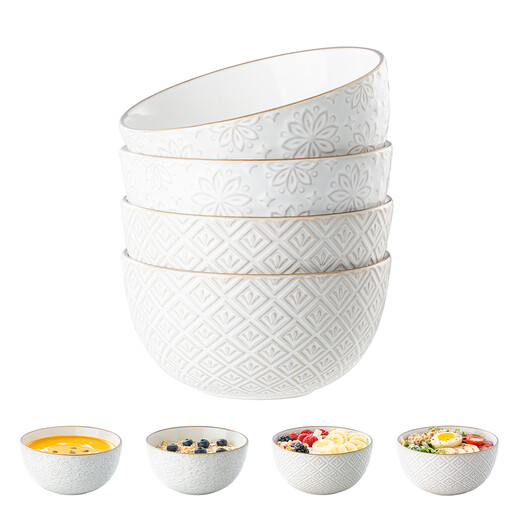
Why This Fits Their Persona: Suitable for people who buy instant noodles in cups but prefer serving them in reusable noodle bowls at home.
The set format and stated capacity make it easier to plan for shared meals, while stackability addresses limited cupboard space.
Ceramic construction; stated microwave, oven, freezer and dishwasher compatibility.
We have compiled a complete, real-time list of products that fully satisfy these strict selection criteria and UK safety regulations.
Yes. Many Korean and Japanese instant ramen bowls are designed for boiling water from a kettle. Follow the fill line and standing time on the packaging. Stir-fried products may also require draining before the seasoning is added.
Lifespan depends on material, washing and handling. Ceramic can remain suitable for regular use when protected from chips and cracks. Plastic bowls should be checked for warping or damage, while stainless steel can resist rust but may show scratches. Follow the care instructions and replace any bowl with significant cracks, chips or deformation.
Cup noodles are convenient for work if you have access to boiling water and a stable surface. For prepared meals, choose a ramen bowl with lid only when the lid is designed for transport and the bowl can be carried safely. Hot food can cause burns, so allow steam to escape carefully and handle the container with a cloth or heat-resistant grip.