Older adults who want a straightforward cup
Instant coffee can be prepared in a cup with hot water. Ground filter coffee needs a brewing method, so the familiar flavour or preparation ritual has to be worth that extra step for the person making it.


For an older person who wants a cup made with a spoon and hot water, a decaffeinated instant jar avoids the separate brewing step needed for ground filter coffee. Choose decaffeinated ground coffee if filtered coffee is preferred and the equipment, hot water and clean-up are manageable; regular instant coffee is another option when there is no reason to limit caffeine. The NHS says coffee counts towards fluid intake, but older adults are at greater risk of dehydration, so a coffee choice should not stand in for a broader food and drinks routine.
Start with how the person likes their coffee made, then consider whether limiting caffeine matters to them.
Instant coffee can be prepared in a cup with hot water. Ground filter coffee needs a brewing method, so the familiar flavour or preparation ritual has to be worth that extra step for the person making it.
A carer may need to balance the person's preferences with preparation they can manage consistently. The NHS notes that older adults are at greater risk of dehydration and that coffee counts towards daily fluid intake; neither point makes coffee a substitute for attending to poor food or fluid intake.
Decaffeinated instant coffee offers a jar-based alternative to regular coffee, while decaffeinated ground coffee retains the filter-brewing route. If symptoms, a medical condition or medicines affect the decision, ask a clinician or pharmacist about the individual's circumstances rather than relying on the word “decaf” alone.
Decide whether the person wants instant coffee or brewed filter coffee before comparing jars. Then check caffeine preference, pack instructions and how the drink fits into their usual routine.
| Priority | What to check | Your needs |
|---|---|---|
| Preparation format | Look for “instant”, “soluble” or “freeze-dried” for a cup made with hot water. Choose ground coffee only if filter-brewing equipment and clean-up are manageable. | I want to make a cup without setting up a filter, or I prefer brewed coffee enough to take the extra steps. |
| Caffeine | Check whether the pack says decaffeinated or regular. Consider other sources of caffeine; ask a clinician or pharmacist for individual advice if symptoms, a condition or medicines make suitability uncertain. | I'd prefer to limit caffeine, or I want to know whether regular coffee fits the person's circumstances. |
| Drinks routine | Consider coffee alongside the person's other drinks and meals. The NHS says tea and coffee count towards fluid intake and that older adults are at greater risk of dehydration. | I want a drink the person enjoys without treating coffee as an answer to poor fluid or food intake. |
| Pack directions | Check the serving instructions, storage directions and pack size on the specific product. If a consistent cup matters, use the measure on that pack rather than assuming all jars give the same directions. | Someone else may prepare the coffee, so clear instructions would help us make it consistently. |
Soluble instant coffee is prepared differently from ground coffee for filter brewing. A packet of ground coffee adds a brewing step if what the person wanted was a quick cup.
Check the format on the label before choosing: look for instant or soluble coffee for a jar-based cup, and ground coffee for filter brewing.
The NHS says coffee counts towards daily fluid intake, but older adults are at greater risk of dehydration. Choosing a coffee format does not address persistent difficulty eating or drinking.
Keep the person's wider food and drinks routine in view. Seek appropriate professional advice if poor intake or swallowing difficulties are a concern.
The European Food Safety Authority says its general caffeine assessment does not cover people affected by a disease or medical condition. Gloucestershire Hospitals NHS Foundation Trust advises limiting caffeinated drinks in its bladder and bowel guidance.
If bladder symptoms, other conditions or medicines are relevant, discuss the individual's caffeine intake with a clinician or pharmacist instead of assuming regular coffee or decaf settles the question.
These named product lines illustrate the distinction between instant jars and ground coffee; a brand name alone does not tell you which format is in the pack.
Tesco Classic Decaffeinated Coffee is a 200 g instant coffee option.
Sainsbury's Rich Roast Decaffeinated Instant Coffee Granules is a 200 g soluble coffee option.
Pure Decaf is a 190 g freeze-dried decaffeinated instant coffee.
M&S Gold Decaf is described by M&S as a freeze-dried instant coffee. Its separate Decaf Americano Micro-Ground product combines instant and finely ground coffee.
Lavazza Decaf Classico Ground Coffee is a decaffeinated ground-coffee option, not an instant jar.
Taylors Decaffe Roast Ground Coffee is another decaffeinated option for brewing rather than an instant-jar choice.
These options focus on decaffeinated coffee for a cup made without separate filter-brewing equipment. Compare the named variant and pack size, then check the individual pack directions for preparation.
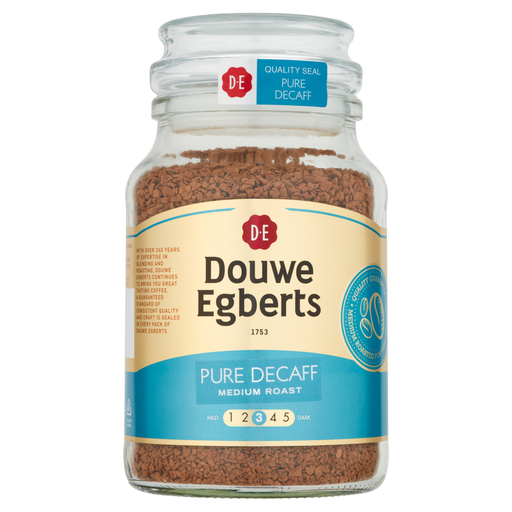 Image unavailable
Consider this 190 g decaffeinated instant coffee if a cup without filter brewing is the aim. Check the pack for its preparation directions and the serving measure you prefer.
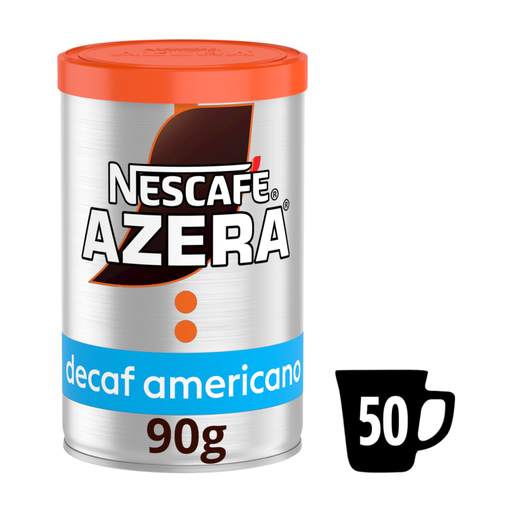 Image unavailable
This 90 g decaf Americano option is worth considering if the person wants a cup prepared without filter equipment. Check the pack's composition and directions if a wholly soluble coffee or a particular serving measure matters.
 Image unavailable
The stated 300 g pack size may suit a household that uses decaf coffee regularly. Check the pack's preparation instructions before relying on a particular spoon measure.
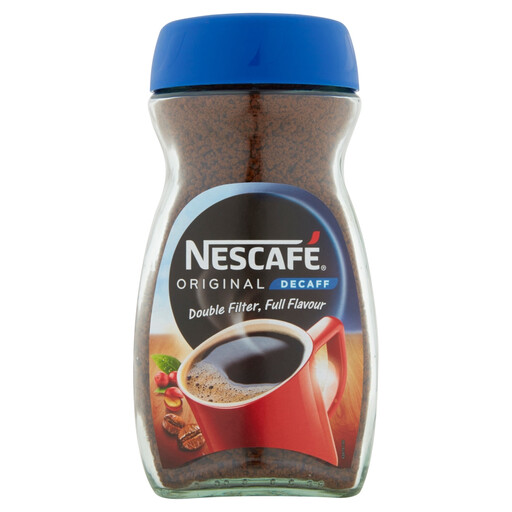 Image unavailable
This 200 g decaf option fits a preference for keeping a jar of coffee in the cupboard. Check its pack directions for preparation and storage.
Image unavailable
Consider this 190 g decaf coffee when a jar-based cup is preferred over filter brewing. Use the directions on the pack to determine the amount for each cup.
No. Instant or soluble coffee is prepared in a cup with hot water, while filter coffee starts with ground coffee and needs a brewing method. Check the pack format before buying, particularly if someone else will be making the drink.
No; age alone does not make decaf a universal requirement. It is an option when the person prefers to limit caffeine. The European Food Safety Authority says its general caffeine assessment does not cover people affected by a disease or medical condition, so ask a clinician or pharmacist for individual advice where symptoms, conditions or medicines are relevant.
Yes. The NHS includes tea and coffee in daily fluid intake and notes that older adults are at greater risk of dehydration. If someone is struggling to drink or shows signs of dehydration, address that concern directly rather than relying on a change of coffee.
Follow the measure and water instructions on the specific pack. The directions can differ between products, so keeping those instructions accessible helps when more than one person prepares the coffee.