Budget households baking regular biscuit batches
Plain loose oats suit repeated baking when you want flexible quantities rather than individually portioned sachets.


Choose plain bulk rolled oats for regular biscuit baking, as they are easier to measure for different batch sizes and give you more control over texture. Plain instant-oat sachets can work when portioned convenience matters or you already have them, but check that they are unflavoured and suitable for the recipe.
Plain loose oats suit repeated baking when you want flexible quantities rather than individually portioned sachets.
Plain, unflavoured instant-oat sachets can be useful when portioning is convenient, although a recipe may need several sachets.
Check the exact pack label rather than assuming that oats described as organic, pure or 100% oats are gluten free. The Food Standards Agency and Coeliac UK both distinguish these descriptions from a gluten-free label.
Choose this when: You bake biscuits regularly, make larger batches or need to measure oats freely.
Consider: Portions are not individually packed, and ordinary oats are not automatically suitable for a gluten-free diet.
Choose this when: You want measured plain-oat portions for occasional baking as well as breakfast.
Consider: Larger recipes may require several sachets, and allergen statements still need checking.
Choose this when: The recipe is designed around the added flavours or inclusions.
Consider: Fruit, seeds, milk ingredients and flavourings can change sweetness, moisture, texture and allergen exposure.
| Priority | What to check | Your needs |
|---|---|---|
| Texture and recipe control | Choose plain porridge or rolled oats; check that the ingredients list contains oats only; pulse briefly if smaller pieces are wanted. | I want an oaty biscuit without unexpected sweetness, fruit pieces or other additions. |
| Value per batch | Compare pack formats on the retailer's stated per-kilogram basis; consider whether loose oats or fixed sachets suit the quantity in your recipe. | I bake often enough to need flexible quantities rather than opening a set number of portions. |
| Gluten and allergen suitability | Look for an explicit gluten-free label where required; read the current allergen statement on every pack, including plain oats. | I need an oat product that fits the dietary requirements of everyone eating the biscuits. |
Individual sachets add portioning convenience even when a biscuit recipe needs a flexible amount of plain oats.
Compare the retailer's per-kilogram information and choose loose oats for regular baking when measured portions are not essential.
Sweeteners, dried fruit, seeds, milk ingredients and flavourings can alter biscuit sweetness, moisture, texture and allergen exposure.
For a recipe that simply calls for oats, choose an oats-only product. If using a flavoured product, check every ingredient and allergen statement first.
Standard oats can be contaminated with wheat, barley or rye, while some people with coeliac disease remain sensitive even to gluten-free oats.
Where gluten-free suitability is necessary, select a pack explicitly labelled gluten free and follow individual clinical advice where appropriate.
Relevant for shoppers comparing loose Scottish porridge oats with Easy Oats sachets.
Relevant for shoppers choosing between Oat So Simple sachets and larger rolled-oat bags.
Relevant for shoppers looking for a plain quick-oat format beyond single sachets.
Relevant for shoppers considering portioned traditional porridge sachets.
Joybuy product options for biscuit baking, including loose rolled oats for flexible batches and plain sachets for portioned use.
 No image available
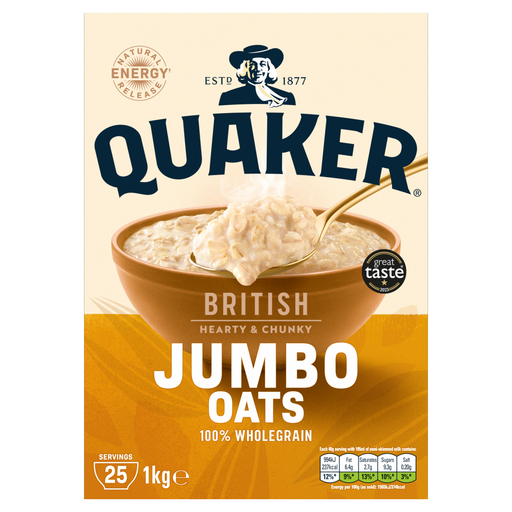
A loose rolled-oat option for regular biscuit batches where you want to measure the quantity yourself.
1kg pack; stated to contain 100% wholegrain oat flakes and to be suitable for baking. Check the physical label if gluten-free suitability is required, as the product states it may contain traces of wheat.
 No image available
A larger plain-oat supply for repeated biscuit baking and recipes needing flexible quantities.
Two 1kg packs; stated to contain 100% organic wholegrain oat flakes. Organic and 100% oats wording does not establish gluten-free suitability, so check the current label where needed.
 No image available
A plain rolled-oat format for crisp oat-biscuit recipes and flexible batch sizes.
1kg pack; stated to contain 100% rolled oats with no artificial flavourings, colourings or preservatives. The product may contain wheat and barley.
 No image available
A plain instant-oat choice for occasional biscuit baking when measured sachets are useful.
Six 38.5g sachets; stated to contain Quaker wholegrain rolled oats without added flavourings or preservatives. Larger recipes may require opening more than one sachet.
Yes, if the instant oats are plain, but they are not the default choice for frequent biscuit baking. Quaker Original sachets are described as wholegrain rolled oats with no added sugar, while Hamlyns Of Scotland's oat-biscuit recipe uses porridge oats and recommends only a brief pulse when smaller pieces are wanted. Use flavoured sachets only when you want their additional ingredients in the finished biscuit.
Use plain porridge oats or rolled oats, pulsing them briefly only if you want a slightly finer texture. Hamlyns Of Scotland advises against turning the oats into flour, helping retain rougher oat pieces in the biscuit.
Not automatically. The Food Standards Agency states that food labelled gluten free must contain no more than 20 mg/kg gluten as sold, and Coeliac UK says that terms such as 100% oats, pure oats and organic do not establish gluten-free status. Choose a product explicitly labelled gluten free where that is required.
Yes. The Quaker Original instant value pack states that it may contain wheat, barley and soya, while M&S Traditional Porridge is listed as unsuitable for coeliacs and for people with milk, nut, peanut or wheat allergy. Read the current physical pack label before use because food information can change.